Tiny Motors, Big Impact: Battling Ammonia with Zinc Micromotors
Hey there! Let’s chat about something pretty fascinating that’s happening in the world of medicine. You know how sometimes when the liver isn’t doing so hot, things can get tricky? One big problem is when too much ammonia builds up in the blood. This isn’t just bad for the liver; it can actually sneak into the brain and cause a really serious condition called hepatic encephalopathy. Think of it like a traffic jam in your system, but instead of cars, it’s ammonia, and it’s causing chaos, especially upstairs in your brain.
Traditional ways to deal with this can be a bit… well, not always targeted perfectly. So, scientists have been dreaming up smarter ways to send help exactly where it’s needed. And guess what? We’re talking about tiny, self-propelled helpers – micromotors!
What’s the Big Deal with Ammonia and Your Liver?
Okay, so normally, our livers are like superheroes, cleaning up ammonia that comes from breaking down proteins and stuff in our gut. They turn it into something less harmful that our bodies can get rid of. It’s a neat balancing act. But when the liver gets damaged, say from something like liver fibrosis or cirrhosis, it can’t do its cleaning job properly. Ammonia levels in the blood start to climb – this is called hyperammonemia.
High ammonia is really nasty. It can cause more damage to the liver cells, making the problem worse. And because ammonia in a certain form (NH3) can easily cross into the brain, it starts messing with brain cells, particularly astrocytes. These brain cells get swollen and unhappy, which can lead to all sorts of neurological issues – confusion, changes in behavior, and in severe cases, even coma. It’s a cascade of problems, all starting with that ammonia buildup. So, finding a way to specifically target and clear out this excess ammonia? That’s a really meaningful goal for treating hepatic encephalopathy.
Enter the Micromotors!
Now, nature is full of amazing examples of things moving purposefully. Think of how insects find food by following a scent, or how our own immune cells, like neutrophils, rush to a site of infection by following chemical signals (chemokines). Scientists looked at this and thought, “Hey, can we make tiny artificial things do that?”
That’s where the idea of artificial micro/nanomotors comes in. These are microscopic machines that can move on their own, powered by different things like chemicals, light, or magnetic fields. The really cool part is trying to get them to move *towards* something specific – a process called chemotaxis, just like those insects or immune cells. This kind of targeted movement holds massive promise for medicine, letting us send treatments directly to diseased areas.
How Do These Tiny Motors Work?
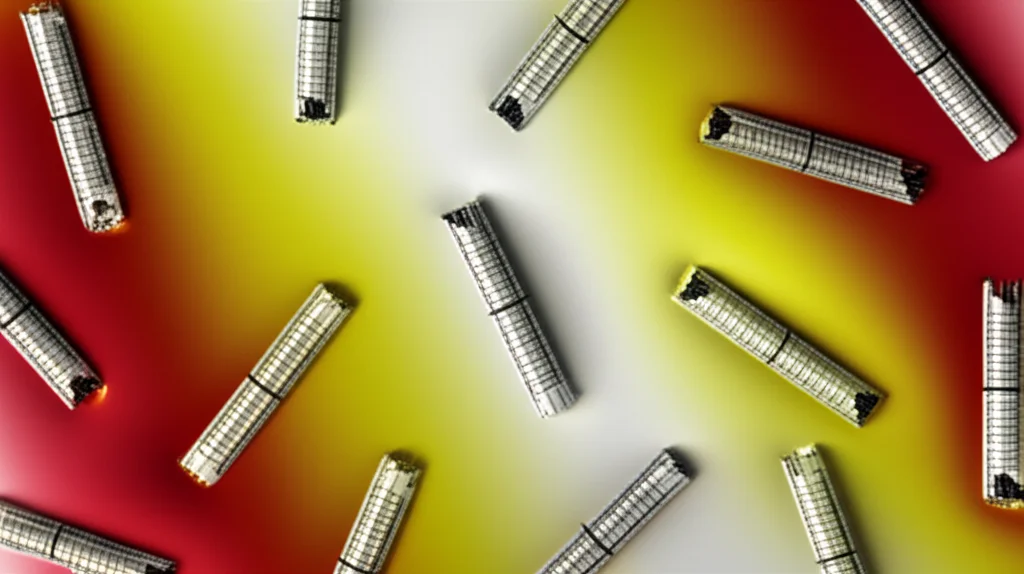
So, we got inspired and set out to build a micromotor specifically designed to chase ammonia. We landed on using zinc (Zn) because it’s biocompatible (meaning it’s safe for the body) and it reacts in water. We made these tiny tube-shaped motors using a clever method involving a template, kind of like using a mold. We deposited zinc inside tiny pores in a membrane, then dissolved the membrane away. What we were left with were these minuscule zinc tubes, about 3 micrometers long and 0.4 micrometers wide. That’s smaller than a red blood cell!
Here’s the neat part about how they move: When these zinc micromotors are in water, the zinc reacts slightly with hydrogen ions. We designed them to be a little thicker at one end and thinner at the other. This asymmetry means the reaction, and the buildup of zinc ions (Zn2+), happens unevenly around the motor. This creates a tiny electrical field, and because the micromotors are slightly negatively charged, they get pushed towards the thinner, higher potential end. It’s like they’re giving themselves a little push! We saw them moving in a kind of spiral path, and they weren’t producing any bubbles, which is different from some other micromotors. We even used a special fluorescent dye to *see* the zinc ion gradient around them, confirming our theory.
Following the Scent: Ammonia Chemotaxis
Okay, so they can move on their own, but can they find ammonia? That was the big question. We wanted them to exhibit *collective* chemotaxis – a whole bunch of them moving together towards the ammonia source, like a tiny, helpful swarm.
We did some tests, first in a simple Petri dish. We put some cotton soaked in ammonia on one side and the micromotors on the other. Without any external magnets or fields, these little guys started moving towards the ammonia! The stronger the ammonia solution, the faster and more directly they moved. When we used just water, they just zipped around randomly. This was a great sign!
We then stepped it up to a microfluidic channel – basically, tiny channels that mimic flow conditions in the body. We flowed ammonia into one channel and the micromotors into another. Sure enough, as they met, the micromotors veered off and moved into the ammonia stream. This proved they could navigate towards ammonia even in a dynamic, flowing environment.
To really test their long-distance targeting, we used a Z-shaped glass channel. We put ammonia at one end and the micromotors in the middle. We made sure temperature differences or random water currents weren’t affecting them. What we saw was fantastic: the micromotors consistently moved down the channel towards the ammonia source, even around corners! They clustered where the ammonia was strongest. This wasn’t just random drifting; control experiments with salt water showed that. It was specifically the ammonia molecules (NH3·H2O) that were attracting them.
How does this happen? We figured out that the zinc in the micromotors reacts with ammonia to form complex ions, like [Zn(NH3)1](OH)+ and [Zn(NH3)2](OH)+. These complex ions build up more where the ammonia concentration is higher. Because the micromotors are asymmetric and negatively charged, this buildup of positive ions creates an electric field that pulls the micromotors towards the higher ammonia concentration. It’s a clever chemical dance that guides them!
Healing Cells in a Dish
Before putting these micromotors into living creatures, we wanted to see how they interacted with cells, especially liver and brain cells, when high ammonia was around. We used mouse liver cells (AML-12) and mouse hippocampal neuron cells (HT22) in lab dishes.
We exposed these cells to different levels of ammonia, some of which were quite high, mimicking the conditions in hepatic encephalopathy. As expected, the high ammonia caused stress to the cells – specifically, oxidative stress, which is like cellular rust. We measured markers like GSH, SOD (which fight this stress) and MDA (a sign of damage). High ammonia lowered the good guys and increased the bad guy. Ammonia also reduced how well the cells could survive and move around.
Then, we added our zinc micromotors to the mix along with the ammonia. What a difference! The micromotors significantly improved the oxidative stress markers in both liver and neuron cells. The good guys went up, and the bad guy went down. Cell viability improved, meaning more cells survived the ammonia onslaught. And in scratch tests (where we scratch a line of cells and see how fast they fill it in), the cells with micromotors and ammonia migrated and healed the gap much faster than cells with just ammonia. This showed that the micromotors could improve the cellular environment damaged by ammonia toxicity.
Putting Them to the Test: Mice Trials
Okay, lab dishes are one thing, but the real test is in a living system. We used mice that had been given a chemical called TAA (thioacetamide) to induce liver injury and fibrosis, which leads to high blood ammonia and hepatic encephalopathy – just like the human condition we’re trying to treat. These mice developed all the classic symptoms: high blood ammonia, liver damage markers in their blood, signs of fibrosis in their livers, and neurological problems.
We then treated these mice with our zinc micromotors. We tried two ways of giving the micromotors: intravenously (into the vein) and intragastrically (basically, oral administration). We also tested different doses to find the most effective ones.
Micromotors to the Rescue: Liver and Blood
The results were really encouraging! In the mice treated with micromotors, the high blood ammonia levels dropped significantly compared to the untreated mice. The micromotors, by chasing the ammonia and trapping it through that coordination reaction we talked about, were effectively clearing it from the bloodstream.
Beyond just ammonia levels, we looked at markers of liver function in the blood (like AST, ALT, ALB, TBIL). These markers improved significantly in the treated mice, indicating that the micromotors were helping to alleviate the liver damage caused by the high ammonia. Zinc itself might even lend a hand in the liver’s natural ammonia metabolism, which is a nice bonus.
We also examined the liver tissue directly. The untreated mice had significant liver fibrosis (scarring), which we could see with special staining. The mice treated with micromotors showed a noticeable reduction in this fibrosis. This means the micromotors weren’t just clearing ammonia; they were helping to break the cycle where high ammonia causes more liver damage and fibrosis.
Protecting the Brain
Remember how high ammonia messes with the brain? That’s the hepatic encephalopathy part. The TAA mice showed clear signs of this. We tested their neurological function using things like a balance beam test (seeing how well they could walk across a narrow beam), a Y-maze test (checking their spatial memory), and tracking their general movement in an open area. The untreated mice were clumsy, had poor memory, and didn’t move around much.
After treatment with the zinc micromotors, these neurological symptoms improved dramatically! The mice were better at balancing, their spatial memory improved, and they moved around much more, almost like the healthy control mice.
We also looked inside their brains. The treated mice had lower levels of ammonia and its harmful metabolites (like glutamine) in their brain tissue. Signs of oxidative stress in the brain decreased, and importantly, we saw less neuronal damage. Using special stains, we counted healthy neurons versus damaged “dark” neurons. The micromotor treatment, especially the intravenous one, led to more healthy neurons and fewer damaged ones in key brain areas like the cerebral cortex and hippocampus. Brain swelling, another feature of hepatic encephalopathy, was also reduced in the treated mice. It seems by reducing the ammonia getting into the brain, the micromotors help protect those vital brain cells.
Safe and Sound?
Of course, putting something new into the body means asking: Is it safe? We did a bunch of tests to check this out.
First, we looked at how long the zinc micromotors last. In solutions with ammonia, they stayed stable and active for over 3 days, which is plenty of time to do their job. But they also gradually degraded over time, which is important – we don’t want them hanging around forever.
We checked if they would damage red blood cells (hemolysis). Even at concentrations higher than what we used for treatment, the hemolysis rate was very low, showing they are highly compatible with blood.
We also wondered if they might react with other important nitrogen-containing molecules in the body, like ones involved in energy or building proteins. We tested this and found they were quite specific – they reacted readily with ammonia but not significantly with these other molecules. This ammonia specificity is key for targeted therapy.
What about the zinc itself? When the micromotors degrade, they release zinc ions. We monitored zinc levels in the blood after treatment. The levels went up temporarily but returned to normal within 12-24 hours, meaning the body could handle and clear the zinc without it building up to toxic levels.
Finally, we looked at the major organs (heart, spleen, lungs, kidneys) under a microscope after treatment. We didn’t see any significant damage compared to healthy mice. This suggests the micromotors didn’t cause systemic toxicity.
So, putting it all together, we’ve got these tiny, self-propelled zinc micromotors that can actively seek out areas of high ammonia concentration. They work by a clever chemical reaction that not only powers their movement towards the ammonia but also traps the ammonia itself, helping to clear it from the system.
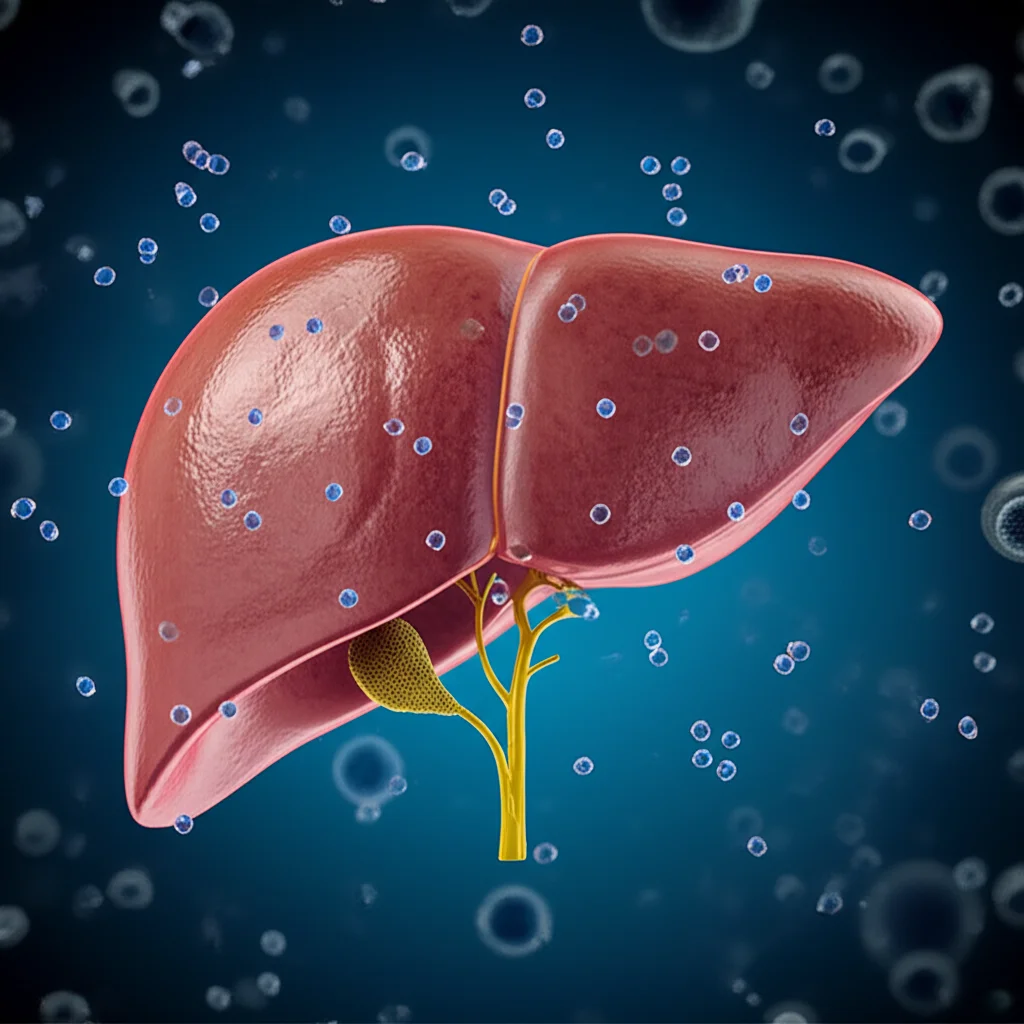
In our studies, they significantly reduced blood and liver ammonia, improved liver function and reduced fibrosis, and importantly, protected the brain from ammonia toxicity, leading to better neurological function in mice with hepatic encephalopathy. They showed good targeting to the liver and appear to be biocompatible, degrading over time without causing widespread toxicity.
Compared to current treatments for high ammonia and hepatic encephalopathy, which can be less targeted, these micromotors offer a really exciting, mild, and precise approach. It’s a step towards “green” and personalized medicine, where tiny smart agents can go exactly where they’re needed to fix problems at a microscopic level. Pretty cool, right? It gives us a lot of hope for future therapies!
Source: Springer