
Your Pulse Knows Your Breath: A New Era in Respiratory Monitoring
Hey there! Ever tried to get your breathing monitored long-term? Maybe you or someone you know needed it for a health condition? Yeah, it’s not exactly a walk in the park, is it? Traditional methods often involve bulky chest straps or uncomfortable gadgets near your nose, which, let’s be honest, can be a real drag. They get in the way, they’re not comfy for long periods, and they can totally disrupt your day.
But what if I told you there’s something new on the horizon? Something lightweight, flexible, and so tiny it just sits on your wrist, quietly keeping tabs on your breathing? Sounds pretty cool, right? That’s exactly what some clever folks have been working on – a system that can figure out your respiratory status just by listening to your pulse wave.
The Big Idea: Breathing from Your Wrist Pulse
Think about it: your pulse wave, that rhythmic beat you feel at your wrist, is packed with information. It’s not just telling you how fast your heart is pumping; it’s also subtly influenced by your breathing. As you inhale and exhale, the pressure and flow of blood change ever so slightly, and these changes show up in the shape and timing of your pulse wave. Scientists have known about this connection for a while – it’s called Respiratory Sinus Arrhythmia (RSA) – but using it for continuous, accurate respiratory monitoring hasn’t been easy.
Older indirect methods tried to estimate breathing rate from signals like heart rate variability or pulse, but they often lacked the precision of direct methods (like measuring airflow or chest movement). The challenge has been to make an indirect method accurate enough for real-world, long-term use.
Meet the Star: A Super-Sensitive Flexible Sensor
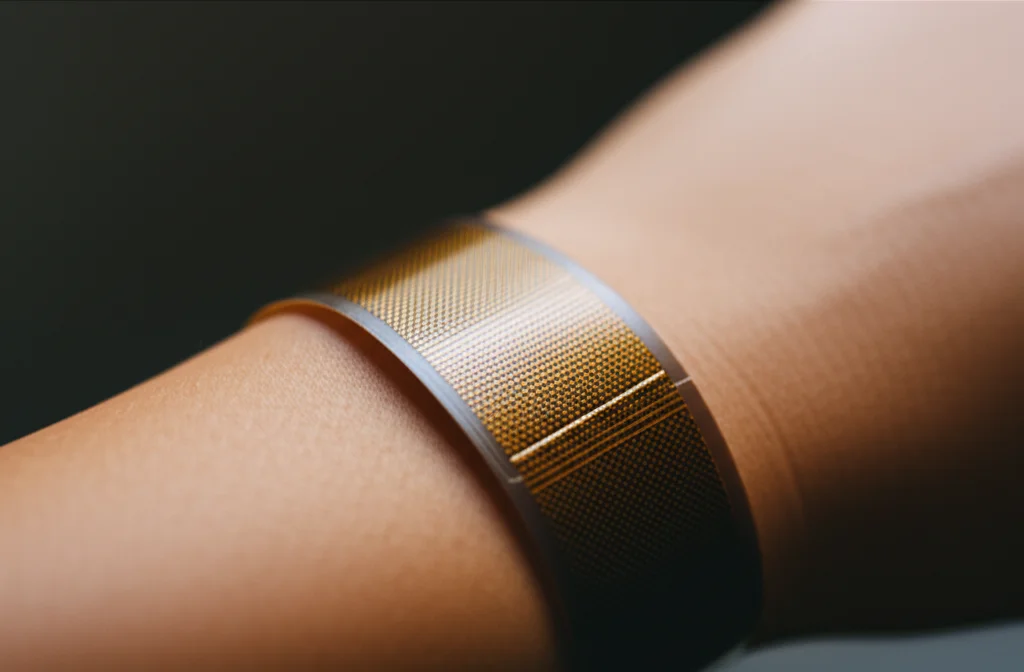
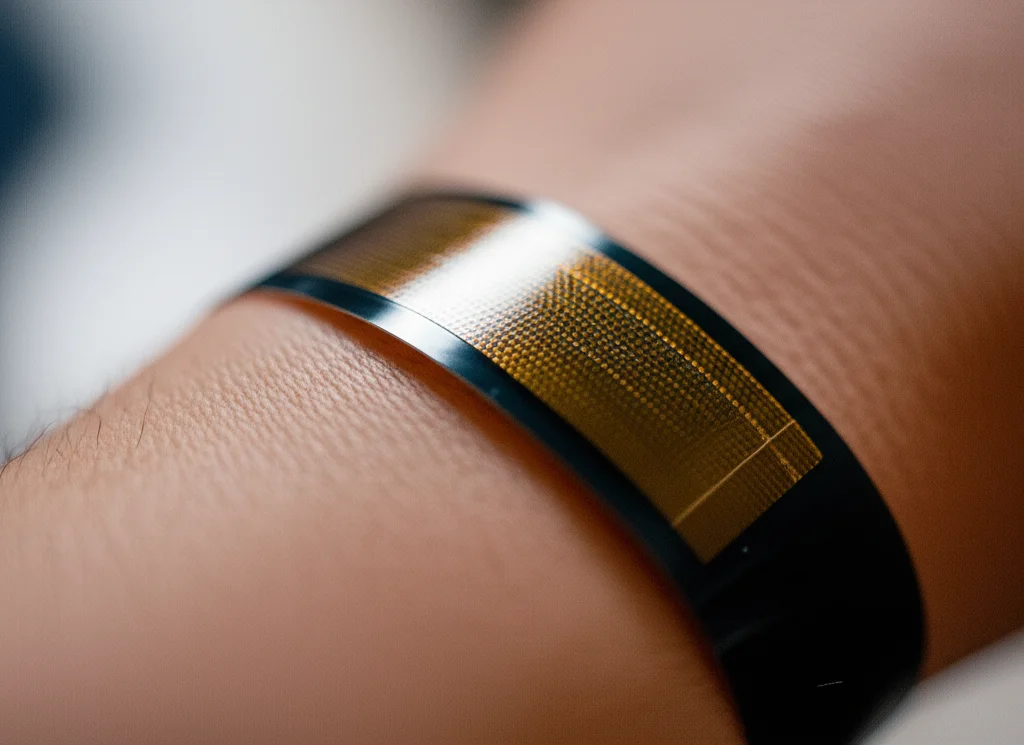
The core of this new system is a really special sensor. It’s a flexible pressure sensor, inspired by the intricate patterns of fingerprints. This design isn’t just for show; it helps the sensor get a better grip and maintain stable contact with your skin, which is crucial for picking up those tiny pulse variations. It’s made using a process called screen printing, layering materials like TPU and carbon nanotubes (CNTs) onto a flexible base.
This sensor is seriously impressive:
- Highly Sensitive: It can detect very small pressure changes, essential for feeling the subtle pulse.
- Durable: It can withstand over 70,000 cycles of use, meaning it’s built for the long haul.
- Flexible and Thin: At only 300μm thick, it’s super thin and flexible, designed to contour comfortably to your wrist.
By placing this sensor over your radial artery (that spot on your wrist where you usually check your pulse), the system can precisely measure the pulse wave as it’s affected by your breathing.
The Brains of the Operation: Deep Learning Magic
Capturing the pulse signal is one thing, but making sense of those subtle breathing-induced changes (like variations in pulse amplitude, baseline, and frequency – known as RIAV, RIFV, and RIIV) requires some heavy lifting. This is where advanced tech comes in. Traditional methods using simple thresholds just aren’t smart enough to differentiate complex breathing patterns reliably.
The researchers turned to deep learning, a powerful type of Artificial Intelligence. They specifically used a combination called ResNet-BiLSTM. Again, don’t get hung up on the name! What’s important is that this model is particularly good at analyzing sequences of data over time, like a pulse wave. It can look at the pulse signal and figure out which respiratory state you’re in: slow, normal, fast, or even simulated breathing patterns used in testing.
Why this specific AI combo? Well, standard Recurrent Neural Networks (RNNs) can struggle with long sequences, and even basic BiLSTM models can sometimes get stuck during training. Adding the ‘ResNet’ part helps the model learn more effectively and stay stable during training, especially with complex data like pulse waves. The result? An incredibly high classification accuracy exceeding 99.5% in their tests! That’s pretty phenomenal.
The Full Package: Wearable, Lightweight, and Smart
This isn’t just a sensor; it’s a complete system. It includes the flexible sensor, a tiny, flexible circuit board for acquiring and processing the data, and it connects wirelessly (via Bluetooth Low Energy) to a mobile app. The whole microsystem weighs a mere 9 grams! Seriously, that’s less than a few coins. This makes it incredibly comfortable to wear for extended periods, minimizing any physical or psychological burden.
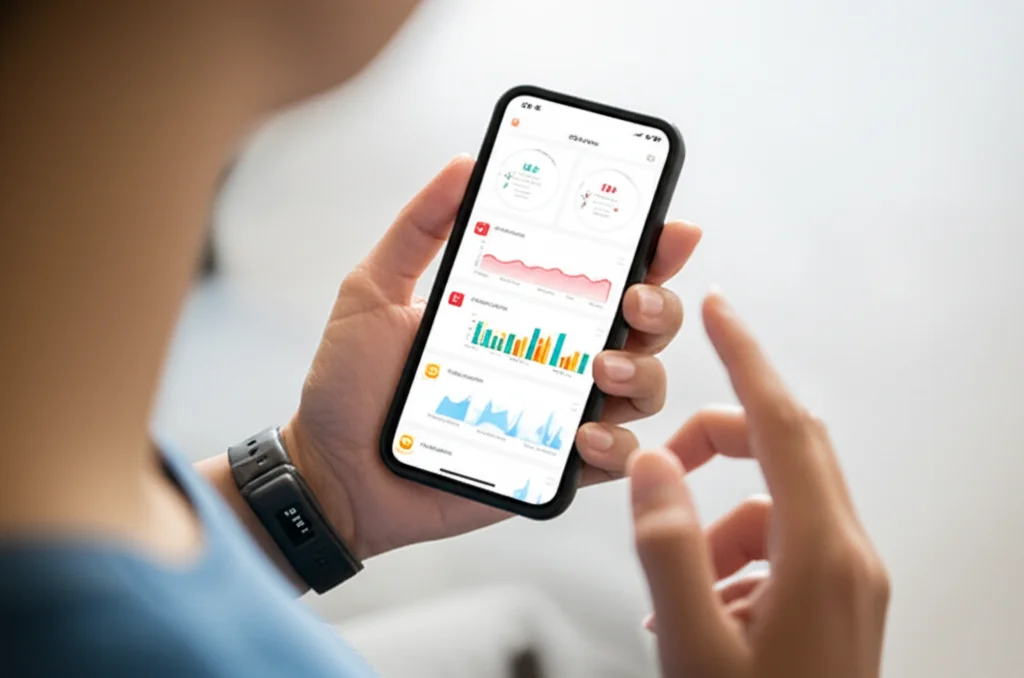
The system is designed for ease of use. You don’t need a medical professional to find the exact spot; the sensor’s design and size (with multiple sensing regions) make it easy for anyone to position it correctly over the radial artery. The mobile app lets you see your respiratory data in real-time and stores it for long-term tracking. This is a huge leap from bulky, uncomfortable hospital equipment.

Putting it to the Test
To prove it works, they tested the system rigorously. They had volunteers wear the wrist device alongside a standard commercial respiratory sensor (the kind you’d strap to your chest) to compare the results. They monitored different breathing states – slow, normal, and fast – over extended periods.
The ResNet-BiLSTM model consistently showed high accuracy in identifying these states, even during transitions between them. It was also much more robust to external disturbances compared to simpler methods or even the standalone BiLSTM model. The system could collect and analyze pulse data continuously, providing a stable, long-term picture of respiratory status.
They even used a pulse simulator to generate consistent data and further refine the AI model, ensuring it could handle a wide range of pulse patterns and respiratory rhythms.
Why This Matters
So, why is this such a big deal? Well, continuous respiratory monitoring is vital for preventing and managing various respiratory diseases. Conditions like asthma, COPD, and sleep apnea require ongoing assessment. Current methods are often impractical for daily life.
This new wearable system changes that. By providing accurate, comfortable, and non-intrusive monitoring from the wrist, it opens up possibilities for:
- Early Detection: Identifying subtle changes in breathing patterns that might signal a problem.
- Disease Management: Helping individuals and healthcare providers track the effectiveness of treatments and manage chronic conditions.
- Personalized Health: Giving people quantitative data about their own physiological signals for better self-management.
- Improved Comfort: Making long-term monitoring feasible and pleasant, rather than a burden.
It’s a cost-effective and durable solution that could potentially move respiratory monitoring out of the clinic and into everyday life.
Looking Ahead
This research is a fantastic step forward. Developing a system that can reliably extract respiratory information from something as accessible as your pulse wave, using a comfortable, wearable device and powerful AI, is pretty groundbreaking. It tackles the major limitations of existing methods – discomfort and impracticality for long-term use – while maintaining high accuracy.
Imagine a future where keeping an eye on your respiratory health is as simple as wearing a lightweight band on your wrist. This system brings that future much closer. It’s exciting to think about the impact this could have on healthcare and how we understand our own bodies.
Ultimately, it feels like we’re entering a new era where our own bodies are giving us more insights than ever before, thanks to smart, comfortable technology like this. And it all starts with your pulse knowing your breath.
Source: Springer