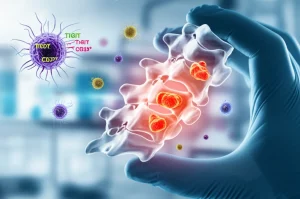

Unlocking the Muscle Mystery: How a Missing ‘Brake’ Fuels Autoimmune Myositis
Hey there! Let’s talk about something pretty fascinating happening inside our bodies, specifically when things go a bit haywire in our muscles. We’re diving into the world of autoimmune myositis, a group of diseases where the immune system mistakenly attacks muscle tissue, leading to inflammation and weakness. Polymyositis (PM) is a classic example, and it’s characterized by this persistent muscle inflammation and breakdown. For a long time, we’ve known that certain immune cells, particularly T cells, are major players in this attack, but the exact reasons *why* they go rogue haven’t always been crystal clear.
Think of our immune system like a finely tuned orchestra. T cells are some of the most powerful musicians, capable of incredible feats, but they need strict conductors to keep them in line and prevent them from playing out of tune and damaging our own tissues. One of these conductors is a molecule called TIGIT. It sits on the surface of T cells and acts like a “brake,” helping to keep immune responses in check and maintain tolerance – basically, telling the T cells, “Hey, chill out, these are our own tissues, don’t attack!”
The Case of the Missing Brake in Myositis
So, what happens if this brake isn’t working properly? That’s exactly what we started wondering about in the context of PM. We looked closely at CD4+ T cells from patients with PM, and guess what we found? The expression of TIGIT was significantly lower compared to healthy individuals. It’s like the conductors were missing their batons! These TIGIT-deficient CD4+ T cells weren’t just sitting around; they were primed to turn into inflammatory troublemakers, specifically the types known as Th1 and Th17 cells. These guys are notorious for pumping out signals (cytokines like IFNγ and IL-17A) that fuel inflammation in tissues.
When we took these T cells from PM patients and tried to give them back their TIGIT (by making them express more of it), it was like handing the conductor their baton back – their tendency to become Th1 and Th17 cells was reduced. This strongly suggested that the *lack* of TIGIT was directly contributing to these cells becoming overly aggressive and autoreactive.
Mouse Models Confirm the Problem
To really nail down the role of TIGIT deficiency, we turned to our mouse friends. We used a model of experimental autoimmune myositis (EAM), which mimics many features of human PM. We compared mice that had normal TIGIT levels to mice where TIGIT was knocked out (Tigit-/- mice). The results were pretty striking: the Tigit-/- mice developed much more severe muscle inflammation. Their muscles were weaker, and we saw a lot more inflammatory cells infiltrating the muscle tissue compared to the mice with TIGIT. This confirmed our suspicion from the human data – without TIGIT, the immune system’s brakes are off, leading to a full-blown attack on the muscles.
Interestingly, we also looked at other related molecules like CD226 and CD96, which compete with TIGIT for binding to the same partners on other cells. We didn’t see significant differences in their expression in PM patients or Tigit-/- mice, suggesting that while they are part of the same family, TIGIT’s specific role here seems distinct.
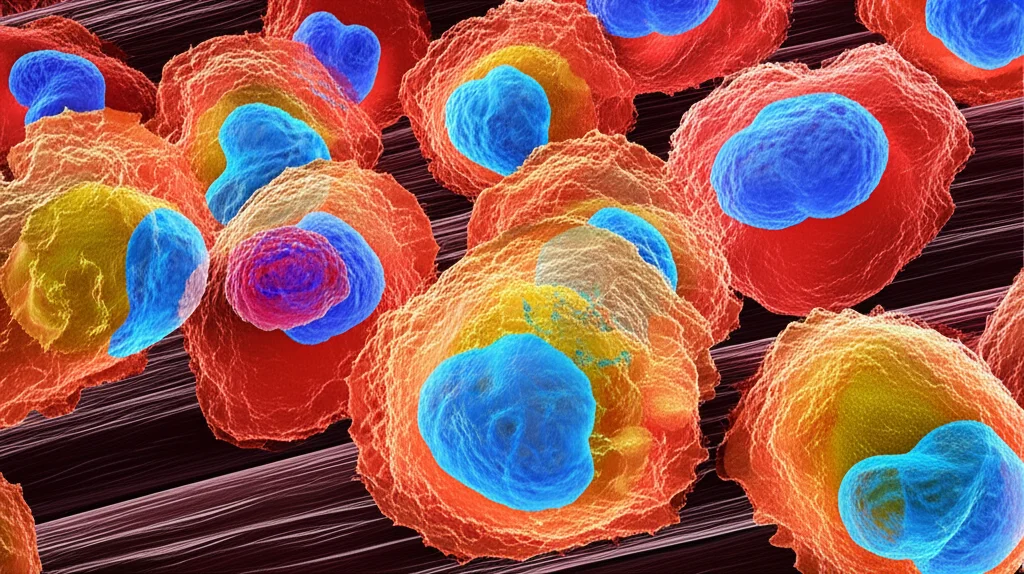
The Metabolic-Epigenetic Connection: How TIGIT Works Its Magic
Okay, so we know TIGIT deficiency leads to hyperactive T cells and worse myositis. But *how* does TIGIT normally put the brakes on? This is where the story gets really cool, involving a deep dive into cell metabolism and epigenetics.
Think of cell metabolism as how cells process energy and building blocks. Activated T cells, especially the inflammatory ones like Th1 and Th17, are metabolic powerhouses. They ramp up their glucose uptake and processing to fuel their rapid growth and function. We found that TIGIT deficiency is like taking the speed limit off glucose metabolism in CD4+ T cells. These cells were gobbling up more glucose and pushing it through metabolic pathways, including the TCA cycle (the cell’s main energy-generating hub in the mitochondria).
One key intermediate produced in the TCA cycle is citrate. Normally, citrate stays mostly in the mitochondria, but it can also be transported out into the cytosol (the main body of the cell). Here’s the twist: in TIGIT-deficient cells, we saw increased levels of citrate making its way into the cytosol. This cytosolic citrate is a crucial source for generating something called acetyl-CoA, a molecule that’s not just involved in energy but also acts as a building block for adding chemical tags to our DNA packaging proteins, called histones. This process is called histone acetylation, and it’s a major way cells control which genes are turned on or off – it’s part of the epigenetic code.
So, the chain of events we uncovered looks like this: TIGIT deficiency -> increased glucose metabolism -> more citrate exported to the cytosol -> more cytosolic acetyl-CoA -> increased histone acetylation. We saw this increase in histone acetylation (specifically on histones H3K9 and H3K27) in both TIGIT-deficient mouse T cells and T cells from PM patients.
Epigenetic Reprogramming and T Cell Fate
Why is this histone acetylation important? Because it can dramatically influence T cell differentiation. When histones around certain genes get acetylated, it can make the DNA more accessible, essentially making it easier for those genes to be read and expressed. We found that in TIGIT-deficient T cells, there was increased histone acetylation around the genes that drive Th1 and Th17 differentiation (like Ifng and Il17a). This epigenetic “reprogramming” essentially biases these cells towards becoming inflammatory Th1 and Th17 cells.
To test this, we used a drug (C646) that inhibits histone acetylation. When we treated TIGIT-deficient T cells (both mouse and human PM cells) with this inhibitor, it was like removing those “sticky notes” from the DNA. Their tendency to differentiate into Th1 and Th17 cells was significantly reduced. This was a big deal because it showed that the increased histone acetylation was a *direct* consequence of TIGIT deficiency and was crucial for driving the inflammatory T cell response.

Pinpointing the Signaling Pathway
Now, what triggers this metabolic and epigenetic shift when TIGIT is low? We looked at different signaling pathways within the T cells. T cells get activated by signals from their T cell receptor (TCR) and costimulatory molecules like CD28. TIGIT is known to interact with CD28 signaling in some contexts. We found that TIGIT deficiency didn’t seem to affect the primary TCR signaling pathway. However, when we looked at the CD28 pathway, which is known to boost metabolism and activation, we saw a significant increase in signaling downstream of CD28 (specifically the PI3K/AKT/mTOR pathway) in TIGIT-deficient cells.
It seems TIGIT normally dampens this CD28-mediated pathway. Without TIGIT, the CD28 signal is stronger, which in turn ramps up glucose metabolism, leading to the increased acetyl-CoA and histone acetylation, ultimately driving the Th1/Th17 differentiation. We confirmed this by showing that inhibiting the PI3K pathway could reverse the hyperactive state of TIGIT-deficient cells.
Implications for Treatment
This whole picture is incredibly important because it reveals TIGIT as a critical checkpoint that links immune signaling, cellular metabolism, and epigenetic programming to control T cell fate. In autoimmune myositis, this checkpoint seems to be faulty, leading to autoreactive T cells.
The good news is that understanding this mechanism opens up new possibilities for treatment. Since inhibiting histone acetylation calmed down the inflammatory T cells and reduced muscle inflammation in our mouse models (including a humanized mouse model using PM patient cells), targeting this metabolic-epigenetic pathway could be a promising therapeutic strategy for PM and potentially other autoimmune diseases driven by similar T cell responses.

Important Considerations
Of course, science is rarely a straight line, and there are always nuances. Polymyositis itself can be a bit complex, with different subtypes that might have slightly different underlying causes. Our study focused on PM broadly, and while the findings are strong, we need to be mindful that they might apply differently to specific PM subtypes (like those associated with certain antibodies). Also, while the mouse model is super helpful, it doesn’t perfectly capture the full complexity of human disease. Future studies will definitely need to look at larger groups of patients with more precise disease classification and maybe even develop new models that better reflect the diversity of human myositis.
Wrapping It Up
But despite these points, what we’ve found is pretty exciting. We’ve functionally linked TIGIT deficiency in CD4+ T cells to the enhanced autoreactive responses seen in autoimmune myositis. We’ve shown, for the first time in CD4+ T cells, that TIGIT directly controls how Th1 and Th17 cells differentiate by influencing their metabolism and the epigenetic tags on their DNA. It’s a metabolic-epigenetic checkpoint, and when it’s faulty, things go wrong.
This new understanding of how TIGIT, metabolism, and epigenetics are intertwined in driving autoimmune T cell responses gives us fresh targets for therapy. It’s a big step towards potentially developing new ways to treat these challenging diseases by helping to restore the immune system’s balance.

Source: Springer