
Taurolidine: Could This Existing Drug Be a Game Changer Against Influenza?
Hey there! Let’s chat about something pretty important: influenza. We all know the flu can be a real pain, causing seasonal sniffles and coughs, but it can also be seriously dangerous, leading to widespread outbreaks and even pandemics. Tackling this persistent threat is a huge challenge for healthcare worldwide.
Right now, our main tools are vaccines and antiviral meds. But, honestly? Vaccines aren’t always perfect at predicting the exact strains that will hit us, and the viruses are getting clever, developing resistance to the drugs we have, like oseltamivir. This means we’re always on the hunt for new ways to fight back, new strategies with different mechanisms so the virus can’t just shrug them off.
One of the scariest things about severe flu isn’t just the virus itself replicating, but how our body *reacts* to it. Sometimes, the immune system goes into overdrive, releasing a flood of inflammatory signals called a “cytokine storm.” Think of it like your body shouting so loud it starts hurting itself. This storm is thought to be a major reason why people get really sick or even die from the flu. It can cause a buildup of immune cells and gunk in the lungs, making it hard to breathe. So, finding ways to calm this storm while still letting the body fight the virus is super important.

Now, here’s where it gets interesting. There’s this substance called Taurolidine. It’s actually a derivative of taurine, which you might have heard of. Taurolidine isn’t new; it’s already used in some places as an antibacterial agent, known for stopping microbes from sticking to things. It’s also been shown to potentially inhibit some inflammatory signals like IL-1 and TNF in certain human cells. This got some folks thinking: could this existing drug, with its known safety profile and anti-inflammatory hints, also help against viruses, specifically influenza?
What We Found Out About Taurolidine and the Flu
In this study, we decided to dive in and see if Taurolidine had any tricks up its sleeve against the influenza virus. We tested it in lab dishes with different human and animal flu strains, and then we moved to mouse models to see how it worked in a living system.
First off, the lab results were pretty promising. We saw that Taurolidine was effective at stopping the influenza virus from multiplying in different types of cells (like kidney cells and human lung cells). It worked against several strains, including common ones like H1N1 and H3N2, and even an influenza B strain. The cool part? It seemed particularly good at inhibiting the *later stages* of the virus’s life cycle. We even saw that it inhibited neuraminidase activity, which is something the virus needs to release new viral particles from infected cells. This suggests it might be interfering with the virus’s ability to spread from cell to cell. Importantly, at the concentrations where it was effective against the virus, Taurolidine didn’t seem to harm the host cells themselves, which is always a good sign.
Beyond Just Stopping the Virus
But the story doesn’t end there. The real test is in a living system, right? So, we gave Taurolidine to mice that were infected with lethal doses of the flu virus. And guess what? The mice that got Taurolidine treatment did significantly better than the untreated ones. They lost less weight and, crucially, a good percentage of them survived the infection, unlike most of the untreated mice.
When we looked inside the mice, we saw why. Taurolidine treatment led to much lower levels of the virus in their lungs. This means the drug was actively helping to keep the viral load down.

Calming the Storm and Protecting the Lungs
Remember that nasty cytokine storm we talked about? We checked the levels of those inflammatory signals in the mice, and Taurolidine treatment significantly reduced the concentrations of key cytokines like IL-6, IFN-γ, TNF-α, and IL-1β in their blood. It also lowered the expression of various inflammatory genes in the lung tissue. This is a big deal because it means Taurolidine isn’t just fighting the virus; it’s also helping to prevent that dangerous overreaction from the immune system that causes so much damage.
Speaking of damage, we also looked at the mice’s lungs. In the untreated, infected mice, we saw a lot of inflammation, cell death, and even bleeding. But in the mice treated with Taurolidine? The lung pathology was much less severe. The drug seemed to protect the lung tissue and reduce the infiltration of inflammatory cells. We also saw improvements in some blood cell counts that were thrown off by the infection.
The Surprising Vascular Connection
Now, here’s a really interesting twist. Blood vessels play a key role in how our body responds to infection, helping to transport immune cells where they need to go. We noticed that flu infection in mice caused an increase in blood pressure and changes in the pulmonary artery, like thickening of the walls and reduced diameter – signs of vasoconstriction (blood vessels tightening).
Turns out, Taurolidine treatment helped reverse these effects! It lowered the elevated blood pressure and improved the condition of the pulmonary artery in the infected mice.
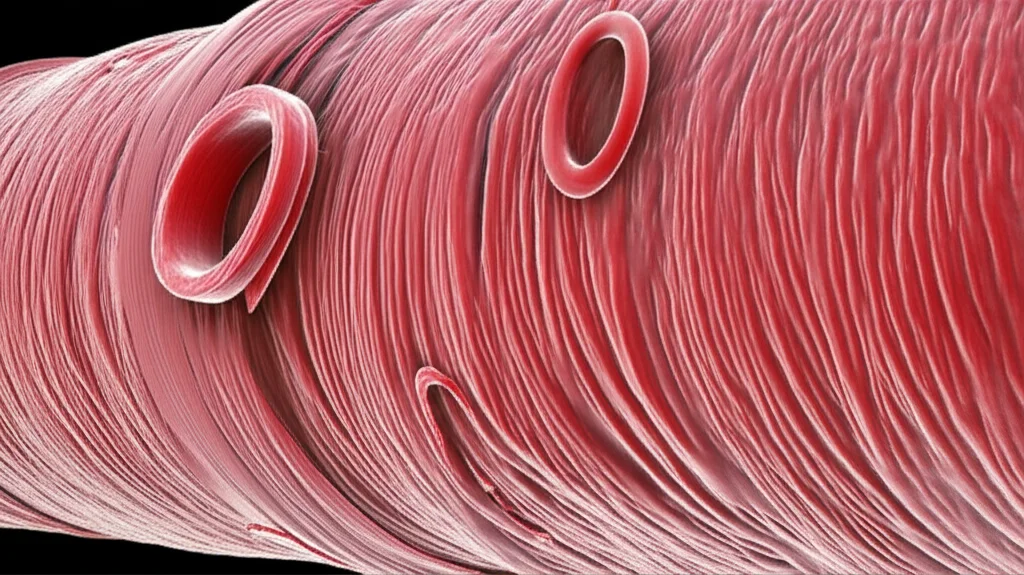
We dug a bit deeper into *why* this might be happening and found that the vascular smooth muscle contraction pathway was heavily involved during the infection. This pathway is regulated by things like calcium levels inside cells. We observed that flu infection increased intracellular calcium in vascular smooth muscle cells, which is linked to tightening of the vessels. Taurolidine treatment actually reduced this calcium increase. It also seemed to inhibit key components in the signaling pathway that controls muscle contraction in these blood vessels (specifically, the MLCK/p-MLC pathway).
This suggests that Taurolidine’s ability to modulate vascular smooth muscle contraction is another important way it helps the host fight off the severe effects of influenza. It’s like it’s helping the body maintain better control over its internal plumbing during the chaos of infection.
Why This All Matters
So, what does this all mean? Well, we’ve shown that Taurolidine, an existing drug, has significant potential as an anti-influenza agent. It doesn’t just hit the virus directly; it also tackles some of the most dangerous consequences of infection – the cytokine storm and harmful changes in blood vessels.

Finding new ways to fight the flu is critical, especially with drug resistance being a growing problem. Repurposing an existing drug like Taurolidine, which is already known to be relatively safe in clinical use for other conditions, could be a faster path to new treatments.
This study really highlights that fighting influenza isn’t just about killing the virus; it’s also about managing the host’s response. Taurolidine seems to be doing both, offering a dual punch against the infection and its severe complications. The findings about its effects on the vascular system and calcium signaling are particularly exciting and open up new avenues for understanding how our bodies respond to viral threats and how we might intervene.
In a nutshell, our work provides a solid basis for looking much more closely at Taurolidine as a promising candidate for preventing and treating influenza infections, potentially offering a new layer of defense against this persistent global health challenge.
Source: Springer