Unlocking Solar Secrets: Meet SUSI, Our Eye in the Stratosphere
Hey There, Let’s Talk About the Sun!
So, picture this: we want to understand the Sun, our star, right? Especially those tricky bits in its atmosphere, where magnetic fields and hot plasma are doing this wild dance. The thing is, observing the Sun from here on Earth is tough, especially when you want to look at certain wavelengths of light, like the near-ultraviolet (NUV). Our atmosphere, bless its protective heart, blocks a lot of that good stuff out. Plus, the wobbling and shimmering of the air – what we call ‘seeing’ – blurs everything.
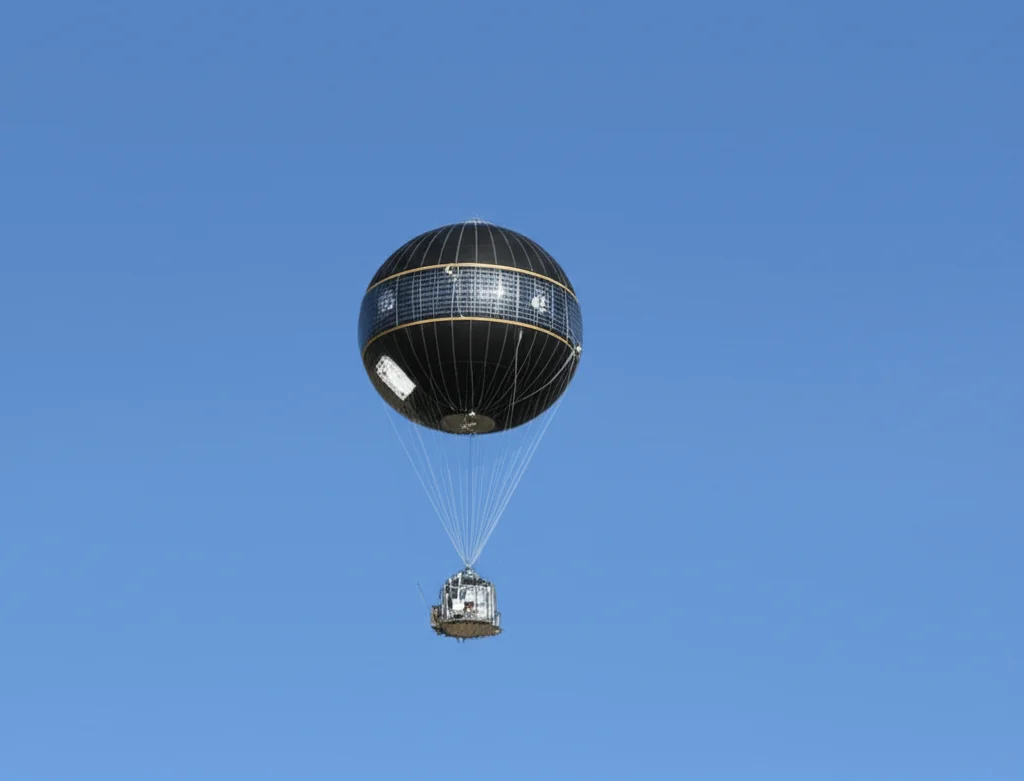
That’s where something like the Sunrise project comes in. Think of it as a super cool solar observatory that we lift way up high, into the stratosphere, using a giant balloon. We’re talking about 37 kilometers up! At that altitude, we’re above most of the atmosphere’s annoying effects, giving us a crystal-clear view, almost like being in space, but for a fraction of the cost and complexity of a satellite. The latest mission, Sunrise III, is a big leap forward, carrying brand new instruments to peek even deeper into the Sun’s secrets.
Meet SUSI: Our NUV Superstar
Among the new gadgets on Sunrise III, there’s one I’m particularly excited about: the Sunrise UV Spectropolarimeter and Imager, or SUSI for short. This instrument is designed to look at the Sun in that specific NUV range, between 309 and 417 nanometers. Why this range? Because it’s packed with spectral lines – think of them as unique fingerprints left by different elements and conditions in the Sun’s atmosphere – that tell us a lot about what’s happening from the lower photosphere right up into the chromosphere, covering a height range of over 1300 km!
Previous missions, like Sunrise I and II, were already super successful, giving us amazing data on the Sun’s magnetic fields and plasma flows. But Sunrise III, with its upgraded gondola, image stabilization, and these new instruments like SUSI, is designed to cover an even larger height range simultaneously. It’s all about understanding how energy moves and couples these different layers.
Why SUSI is a Game Changer
Okay, so what makes SUSI so special? Well, it’s the combination of capabilities. From its perch high up, SUSI gives us:
- Sub-arcsecond resolution: That means incredibly sharp images, letting us see tiny details on the Sun’s surface and atmosphere.
- Access to the NUV: As I mentioned, this spectral range is hard to see from the ground due to atmospheric extinction. SUSI gets around that.
- Spectropolarimetric capabilities: This is a fancy way of saying it can measure not just how bright the light is (intensity), but also its polarization. Polarization is key because it’s directly influenced by magnetic fields. By measuring it across many spectral lines, we can map out the magnetic field structure in different layers.
- Simultaneous observation of hundreds of spectral lines: This is huge! Instead of looking at just one or a few lines at a time, SUSI captures hundreds simultaneously. This allows for something called ‘many-line inversions,’ a powerful technique that combines information from all these lines to get a much more accurate picture of temperature, velocity, and magnetic fields at different heights.
- Synchronized 2D context imaging: While the main spectrograph scans the Sun line by line, a separate camera (the Slit-Jaw or SJ camera) takes continuous 2D images of the area around the slit. This helps us correct for any tiny wobbles or distortions, ensuring our spectral data is perfectly aligned.
While there have been pioneering NUV observations from places like the Jungfraujoch station or Kitt Peak, and amazing polarization measurements like the Second Solar Spectrum atlas, they often lacked either high spatial resolution or full polarization information across a wide field, or they averaged over large areas. SUSI brings it all together, giving us spatially resolved NUV spectra with full polarization at sub-arcsecond resolution. It’s the first instrument to do this!
A Peek Inside SUSI: How It Works
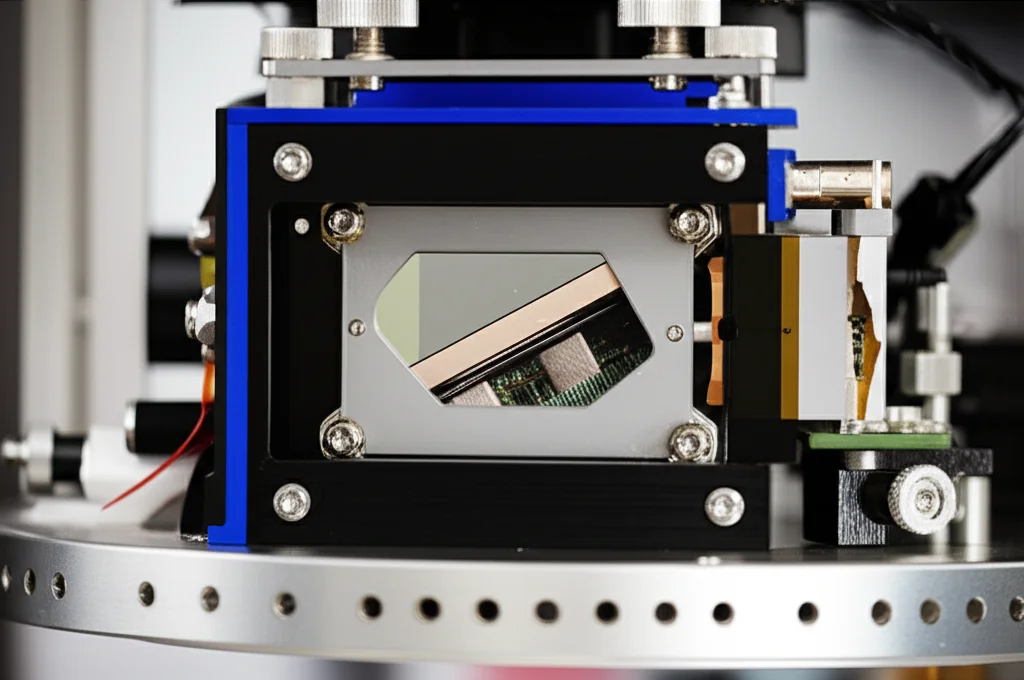
Building an instrument for a balloon flight means you have to be smart about design. We needed something reliable, relatively compact, and not *too* expensive compared to a space mission. So, we went with a conservative approach, using well-established concepts and commercial parts where possible. The structure itself is pretty neat – a double-decker design made of stiff carbon fiber, keeping everything stable.
SUSI is basically split into four main functional units:
- The Scan Unit: This unit moves the image of the Sun across a tiny slit, like scanning a barcode. This lets us build up a 2D map of the Sun, one strip at a time, using the spectrograph.
- The Spectrograph (SP) Unit: This is the heart of the spectral analysis. Light from the slit hits a diffraction grating, which splits the light into its different wavelengths, creating a spectrum. This spectrum is then projected onto cameras.
- The Polarization Modulation Unit (PMU): This unit, with a rotating waveplate and a polarizing beamsplitter, encodes the polarization information into changes in intensity that the cameras can measure. By analyzing how the intensity changes as the waveplate rotates, we can figure out the polarization state of the light.
- The Slit-Jaw (SJ) Unit: This unit takes the light that *doesn’t* go through the slit and forms a regular 2D image of the area around the slit. This image is crucial for seeing where the slit is on the Sun and for correcting for image motion later. It also has a clever feature called a Phase-Diversity Image Doubler (PID) that helps us measure how blurry the image is, so we can sharpen it up in processing.
The optical path involves several mirrors guiding the light from the telescope, through the scan unit, onto the slit, into the spectrograph, through the polarization optics, and finally onto the cameras. It’s a carefully designed path to ensure the light is focused and directed exactly where it needs to go. The cameras themselves are custom-built CMOS sensors, chosen for their high sensitivity in the NUV and low noise. They have to be kept at a stable temperature, which is a challenge in the stratosphere, so we use a combination of passive cooling (radiators viewing the cold sky) and active heating.
Making Sense of the Light: Calibration and Data
Getting the data is one thing, but making it useful is another. A huge part of the project is calibrating the instrument and processing the massive amount of data it produces. We’re talking terabytes of data from a single flight!
Before the flight, we do extensive lab tests to characterize everything – how the optics perform, how the cameras respond, and crucially, how the instrument handles polarization. This involves shining known types of light through the instrument and measuring what comes out. We need to know the instrument’s ‘polarimetric response’ matrix with incredible accuracy to pull out the tiny polarization signals from the Sun.
Once the data is recorded (onboard storage is key, as telemetry bandwidth is limited), it goes through a sophisticated data reduction pipeline. This pipeline is a series of steps implemented in software:
- Basic Camera Calibration: Fixing things like dark current and sensor non-linearities.
- Flat-Fielding: Correcting for variations in sensitivity across the cameras and slit. We do special flat-field measurements during the flight by scanning the telescope across a featureless part of the Sun.
- Wavelength Calibration: Mapping each pixel in the spectrum to a precise wavelength by comparing it to known solar atlases.
- Stray Light Correction: Removing any unwanted background light scattered within the instrument.
- Polarimetric Demodulation: This is where we use the polarization calibration data to convert the measured intensity variations into the actual Stokes parameters (I, Q, U, V) that describe the light’s polarization state.
- Image Restoration: Using the data from the SJ camera’s PID, we can computationally sharpen the spectrograph scans, overcoming any residual blurring.
The data rate is massive, so we had to develop efficient ways to handle it in real-time during the flight, including lossless compression. The software controlling SUSI is designed for robustness, essential for a remote-controlled mission high above the Earth. We even have a separate small computer just for controlling the mechanisms!
And remember how I said SUSI is part of a team? We also spend time ensuring SUSI is perfectly aligned and synchronized with the other instruments on Sunrise III, like SCIP (which looks in the near-infrared) and TuMag (another magnetograph). This co-alignment is critical so we can observe the *exact same spot* on the Sun simultaneously with different instruments, giving us complementary information across different heights and wavelengths. For example, combining SUSI’s NUV Calcium lines with SCIP’s near-IR Calcium line allows us to probe the chromosphere with unprecedented accuracy.
What’s Next?
Sunrise III’s second flight attempt in July 2024 was a great success! While the first attempt had a technical hiccup, the functional tests showed SUSI was performing beautifully. Now, the real work begins: processing all that amazing science data. We’re incredibly confident that SUSI will deliver unique and valuable information about the Sun’s atmosphere.
By combining high spatial and spectral resolution with full polarization information in this previously underexplored NUV range, SUSI is poised to make significant discoveries about how magnetic fields, plasma flows, and waves interact and transfer energy through the solar atmosphere. It’s a complex puzzle, but with instruments like SUSI, we’re getting better and better tools to solve it. It’s an exciting time for solar physics, and I can’t wait to see what secrets the Sun reveals in the NUV!
Source: Springer