Stitching Up Ears: The High Success Rate of Primary Closure
Hey there! Let’s chat about something a bit specific, but super interesting if you’ve ever wondered how folks fix up a torn ear. We’re talking about auricle lacerations – basically, cuts or tears to that wonderfully complex outer ear of yours. You know, the part that collects sound and helps you figure out if a noise is coming from above or below, front or back? Yeah, that bit.
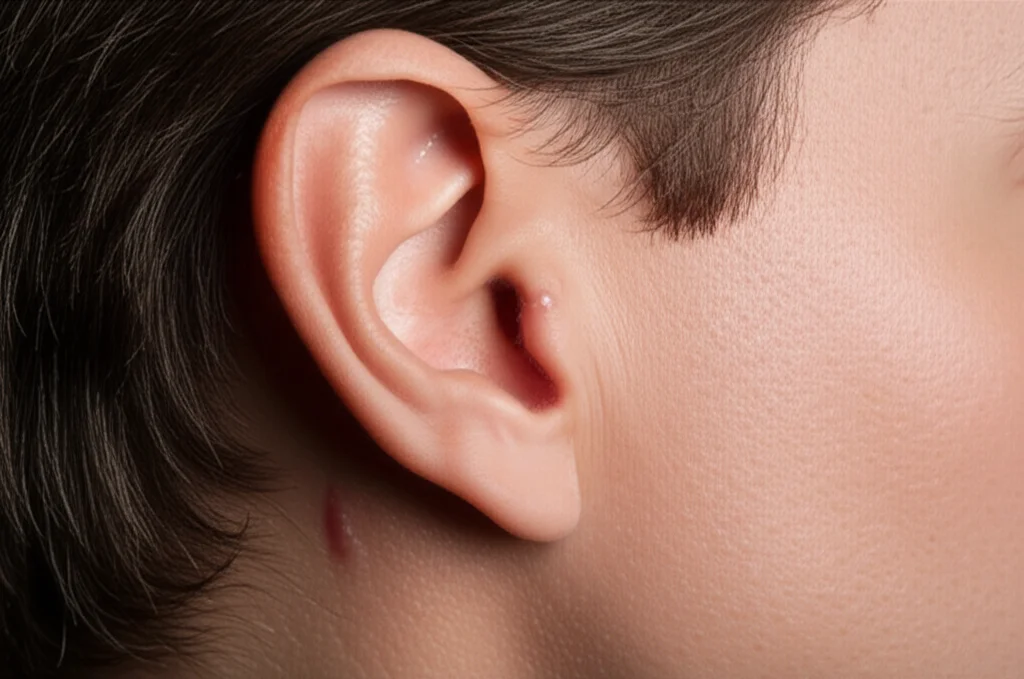
Because of where they sit, sticking out on the side of your head, ears are pretty vulnerable. Accidents happen – traffic mishaps, tumbles at home, sports gone wrong, even animal bites. When the ear gets cut, it’s not just about how it looks (though that’s a big deal, honestly, ear shape is surprisingly important for self-esteem!), but also about preserving its function and structure. The ear is this delicate framework of cartilage covered by thin skin, not a lot of padding there, which makes fixing it a bit of an art.
So, What’s the Big Deal About Ear Lacerations?
Well, aside from the potential for permanent cosmetic changes, a bad ear injury can mess with that clever sound-localizing ability. Plus, the cartilage needs careful handling. If it gets infected or doesn’t heal right, you can end up with deformities. For ages, the go-to method for fixing these tears, especially when the ear isn’t completely torn off, has been something called primary closure. This is just a fancy way of saying they clean it up really well and stitch it back together right away.
It’s been the prevailing wisdom among ear specialists for decades, based on studies from way back. But, you know, science likes to double-check things. So, a recent study decided to take a fresh look at how well primary closure actually works for ear lacerations treated right there in the emergency department.
How Did They Study This?
I looked into this study, and here’s the gist: They rounded up patients who came into their hospital with ear lacerations over several years. They made sure the wounds were squeaky clean – getting rid of any dirt or gunk is step one! Then, they stitched them up. If the cut only went through the skin, they used one layer of stitches. If the cartilage was involved (which is common), they used two layers – one for the cartilage and one for the skin. They used different types of sutures depending on the layer.
They also gave everyone antibiotics for a week, which is a common practice because ear wounds can easily get infected, and an infection in the cartilage (perichondritis) is bad news for the ear’s shape. What’s neat is they took pictures of the ear at different stages: when the patient first came in, after stitching, after a week, and then importantly, after three months. This allowed them to really see the final result.
Introducing a New Way to Grade Success
To figure out *how* successful the repair was, they needed a way to measure it consistently. They developed a classification system, building on previous work, but adding a category for what they considered a truly perfect outcome. Here’s how they broke it down after three months:
- Class 1: Full Success – Absolutely no irregularities. Looked like new!
- Class 2: Partial Success – Only minor irregularities. Maybe a tiny bump or slight scar, but overall good shape.
- Class 3a: Unsuccessful – Major irregularities. Noticeable distortion of the ear’s shape.
- Class 3b: Unsuccessful – (Partial) Necrosis. Part of the ear tissue died off. Definitely not what you want.
Three independent ear specialists looked at the three-month photos and graded the results using this system. They even checked how well they agreed with each other, and they agreed most of the time, which means the system is pretty reliable.
What Did They Find Out?
Okay, so the big question: how did primary closure fare? The results were overwhelmingly positive! Out of the patients they could follow up with at three months (most of them), a whopping 60.7% had full success (Class 1), and another 32.1% had partial success (Class 2). That means over 92% of patients had a good to excellent aesthetic outcome after primary closure. That’s a really high success rate, supporting what doctors have believed for years.
Interestingly, they looked at a bunch of factors to see if anything predicted a better or worse outcome. Things like the patient’s age, the cause of the injury (accident, assault, etc.), how quickly they got to the hospital, the doctor’s experience level, or even the type of stitches used didn’t seem to make a significant difference to the final result at three months.
However, one thing *did* stand out: involvement of the helix. The helix is that outer rim of the ear. If the laceration involved the helix, patients were more likely to have an inferior surgical result compared to those whose helix wasn’t injured. They tried to see if a specific part of the helix was the problem, but couldn’t pinpoint one area with a really strong effect.
Why the Helix Might Be Tricky
The study authors think the helix might be harder to fix perfectly because of the tension in the skin and cartilage in that area. Also, while the ear has a pretty good blood supply from two main arteries, the network of tiny vessels, especially around the edge of the helix, is complex. Maybe injuries here are just more prone to healing with some irregularity, even with the best stitching.
They also mentioned a previous classification system for ear injuries that’s based on blood supply. While that system didn’t correlate with the success rates in *this* study (maybe because the study was a bit small), they suggest it’s worth looking into further, especially since injuries involving a “narrow pedicle” (a small bit of tissue connecting the torn part) might overlap with helix involvement and could be a risk factor for poorer healing.

Lessons Learned
So, the big takeaway here is that primary closure is a really effective way to treat most ear lacerations, leading to great aesthetic results for the vast majority of patients. The study confirms that the long-standing practice holds up under scrutiny, using their new, more detailed success classification system.
The finding about the helix is important. It tells us that while primary closure is generally excellent, surgeons might need to be extra meticulous or consider specific techniques when the helix is involved, as these injuries seem a bit more challenging to get a perfect outcome.
The new classification system they introduced seems promising too. It’s a practical tool that other doctors can use to evaluate their own results consistently and maybe help future studies identify other factors that might influence healing.
Of course, like any study, this one had limitations, mainly the number of patients. To really dig into all the potential factors affecting outcome, a larger study involving multiple hospitals would be needed. But for now, it’s reassuring to know that stitching up a torn ear right away gives you a really good shot at a successful, natural-looking result!
Source: Springer