

Breaking the Mold: Identity and School Vibe as Superpowers Against Stereotype Threat
Hey there! Let’s talk about something pretty important that affects how some students perform in school, especially those with a migration background. It’s called **stereotype threat**. Sounds a bit heavy, I know, but stick with me. It’s basically that sneaky fear you might feel that you’ll confirm a negative stereotype about your group. And guess what? That fear can actually mess with your performance.
Imagine you’re taking a test. If there’s a stereotype out there that says people from your background aren’t great at this subject, just being aware of that stereotype can add a ton of pressure. It’s like an extra weight on your shoulders, making it harder to focus and show what you really know. This study, which took a look at students in Austrian secondary schools, really dug into this.
What’s the Deal with Stereotype Threat?
So, back in the 90s, some clever folks named Steele and Aronson figured out that students from groups hit by negative stereotypes often don’t do as well on tests when those stereotypes are brought to mind. They called it the “threat of being judged by, or treated in terms of, a negative stereotype about one’s group.” Think about it: if you’re constantly hearing or sensing that people expect less from you because of who you are, that’s going to get inside your head.
Steele and Aronson did these experiments, like giving tough tests to African American and white college students. In one setup, they told the students the test was diagnostic of their abilities, hinting at group differences. The result? The African American students performed worse in that condition compared to when the test wasn’t framed that way. It shows how just making a stereotype “salient” – basically, bringing it to the forefront of someone’s mind – can create a psychological barrier.
Stereotypes are like these widely shared beliefs about groups. When those beliefs are negative, especially about something like academic ability, they don’t just hurt performance in the moment. Over time, they can chip away at confidence and even make students feel like they don’t belong in educational settings. That’s a real bummer, right? It can seriously jeopardize their educational journey.
The “Migration Background” Puzzle in Austria
Now, in Austria, the term “migration background” is a bit complicated. Officially, it often means your parents weren’t born there. But in everyday chats and even some discussions, it can unfortunately become a way to label and categorize people as “the others.” This whole “Othering” thing isn’t cool because it simplifies complex identities and experiences. Even though students with a migration background are super diverse, they’re often talked about in a way that focuses on perceived deficits.
This study wanted to see how these societal labels and narratives actually affect young people’s performance in school, especially in those high-stakes test situations. They basically activated this “student with a migration background” category in a quasi-experimental setup to see how it plays out. The idea was that just mentioning this category in a test instruction could trigger that psychological threat – the stereotype threat effect.
The cool part of this study was looking at what might *lessen* this effect. They focused on two potential protective factors:

Protective Factor #1: Connecting with Your Roots
First up, they looked at how much students identify with their own ethnic-cultural group. Think about your identity – it’s a big part of who you are, and figuring out where you fit in is a key part of growing up. Social identity theory says we all want to feel good about the groups we belong to. Ethnic-cultural identity is one piece of that puzzle. It’s about your beliefs and feelings about being part of an ethnic group and how that shapes your self-concept.
Interestingly, previous research on this has been a bit all over the place. Some studies suggested that a strong identification with your group might actually *increase* stereotype threat, especially if that group is negatively stereotyped in that specific area (like math for certain groups). The thinking here is that if your group identity is super important to you, a threat to your group’s reputation feels like a direct threat to *you*. You feel more pressure not to confirm the negative stereotype, and that stress hurts performance. Studies with Asian Americans and Latino Americans in math, and women in math, sometimes showed this pattern.
But wait! Other studies found the opposite! They suggested that a strong ethnic identification could actually *buffer* against stereotype threat and *improve* performance. Why? Well, maybe identifying strongly with your group acts as a psychological resource. It’s like having an inner strength or self-affirmation that helps you maintain your integrity even when faced with threats. It can reduce stress and provide protection against collective threats. Plus, feeling connected to your community, having social support, and feeling “ingroup pride” can give you emotional backup and a sense of safety, helping to lessen the blow of stereotype threat.
With conflicting findings out there, this study aimed to add clarity, especially in the German-speaking context where research is limited. They hypothesized two opposite things: either strong ethnic identification makes the threat worse, or it makes it better.
Protective Factor #2: The School Vibe
The second thing they looked at was the “warmth” of the school climate. What does that mean? It’s basically how students feel about their school as a whole – is it supportive, caring, and do they feel personally valued? How they interact with their teachers plays a huge role here.
Research has shown that a positive school climate can be a really powerful protective factor, reducing the negative impact of various risks. A school that’s both challenging *and* warm is particularly important for students from disadvantaged groups, helping them academically. So, the hypothesis here was that a warm school climate would reduce the negative effects of stereotype activation on performance for students with a migration background.
How They Studied It
Alright, let’s get a little peek behind the curtain of this study. It was a quasi-experimental design with a control group, involving 220 students (mostly 9th and 10th graders) from five high schools in Austria. About a third of the students had a migration background. The study happened right before the pandemic school closures, in their regular classrooms.
Students were randomly assigned to one of two conditions:
1. **Experimental Group:** The test instructions explicitly mentioned that the test was looking at why students from different groups (with/without migration background, girls/boys) perform differently on thinking tasks. This was designed to activate the stereotype threat. Demographic data was collected *before* the test.
2. **Control Group:** The instructions were neutral, just saying they were interested in how students handle school challenges. Demographic data was collected *after* the test.
The performance test included both language and math tasks. They also measured ethnic-cultural identification using a shortened scale asking how important their cultural background was to their self-image. For school climate, they used a questionnaire asking about the school’s atmosphere and how they felt treated by teachers (e.g., cheerful vs. depressed mood, treated personally vs. like a number).

What the Study Found
Now for the juicy part – the results!
First, the study confirmed the basic stereotype threat effect. Students with a migration background in the experimental group (where the stereotype was activated) performed worse than those in the control group. Bummer, but expected based on previous research.
But here’s where the protective factors come in:
* **Ethnic-Cultural Identification:** The results showed that students with a *stronger* identification with their ethnic group performed *better* under stereotype activation than those with weak identification. This is super interesting! It supports the idea that strong ethnic identification can act as a buffer, neutralizing the negative effects of stereotype activation. The threat effect was significant for students with *low* ethnic identification, but not for those with medium or high identification. This aligns with the studies suggesting identity is a resource.
* **School Climate:** The study also found that the perceived warmth of the school climate moderated the stereotype threat effect. In schools perceived as *less* warm, the stereotype threat effect was significant – students with a migration background performed worse under threat. However, in schools perceived as *warmer*, there was no significant difference in performance under stereotype activation. This means a warm, supportive school environment can really help mitigate the negative impact of stereotypes.
Why This is a Big Deal
These findings are pretty significant because they give us clues about how to help students with migration backgrounds overcome psychological barriers in education. It turns out that both internal factors (how connected they feel to their roots) and external factors (how supportive their school feels) play a crucial role.
The finding that strong ethnic identification can be protective goes against some earlier studies and also pushes back against societal pressures that sometimes demand assimilation. It suggests that embracing one’s identity isn’t a barrier to success, but can actually be a source of strength, especially when faced with challenges. This could be because identifying with your group boosts self-esteem and provides social support, helping you cope with threats. It supports the idea that members of stigmatized groups develop strategies to protect their self-worth.
However, the study also noted that strong ethnic identification seemed helpful specifically *under threat*. In the control group (no stereotype activation), it didn’t show the same performance boost. This highlights the complexity and suggests that the context matters. Future research needs to look deeper into *when* and *how* ethnic identity is protective, considering factors like the intensity of the threat, the specific ethnic group, and identification with the host culture.
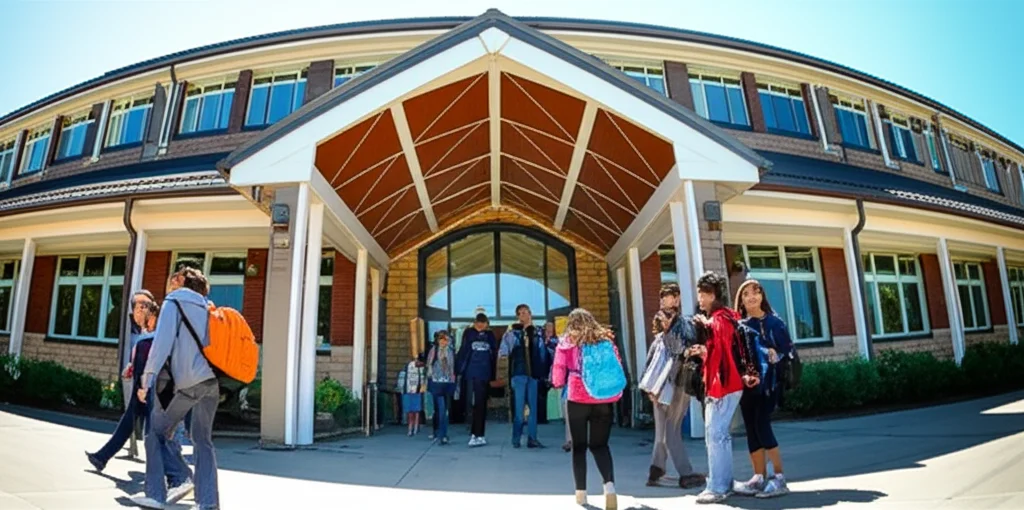
The finding about school climate is also really promising, especially since dropout rates are high for this group in secondary education. A warm, supportive school environment, where students feel safe, valued, and have positive relationships with teachers, can reduce the negative effects of stereotypes. This is super important during transition periods like starting secondary school. It reinforces the idea of “warm demanders” – teachers who are caring but also maintain high academic expectations.
What Can We Do?
So, what are the takeaways? To counter stereotype threat, we need strategies that address those subtle identity conflicts and boost students’ sense of belonging. Stereotype threat is seen as a person-environment mismatch – when your group identity feels incompatible with the expectations of the environment (like school), it creates pressure that drains your mental resources.
Here are a few ideas based on this and other research:
- Embrace Identity: Schools could support students in exploring their ethnic-cultural identity in a positive way. Things like “identity projects” can help young people understand who they are and actively push back against negative stereotypes. Research shows that feeling good about your ethnic background is linked to better academic engagement, performance, and well-being.
- Boost Belonging: Interventions based on social influence theory can help. This means addressing students’ worries about whether they “fit in” and offering alternative perspectives. For example, sharing stories from older students from similar backgrounds who talk about challenges as normal and temporary, not a sign they don’t belong. This can make students less likely to interpret difficult situations as a threat to their identity. A “belonging intervention” could also contribute to a warmer school climate!
- Highlight Role Models: Seeing successful people from your own group can be incredibly powerful. Role models show that success is possible without having to hide or abandon your identity. This can reduce the perceived conflict between your ethnic identity and the demands of the educational institution.
A Few Caveats
Of course, no study is perfect. This one was a snapshot in time (cross-sectional), so we can’t say for sure that identification or school climate *cause* the reduction in stereotype threat. Maybe students who are *less* vulnerable to stereotype threat are also the ones who report stronger ethnic identification. Future studies should follow students over time to get a clearer picture of these relationships.
Also, the sample wasn’t representative of all students, and the study couldn’t look at different ethnic groups separately, which would be really interesting since some groups face stronger stereotypes than others. Some scales were shortened for time, which could affect how accurate the measurements were.
Wrapping It Up
Despite the limitations, this study offers valuable insights. It highlights that both students’ individual identities and the school environment are key to reducing the negative effects of stereotypes on academic performance and participation. By paying attention to these factors, educational institutions can become more inclusive places where students with migration backgrounds feel they belong and can truly thrive, contributing to a more diverse and equitable society.
Source: Springer