STAT! What Brain Scans in a Huge Study Tell Us Immediately
You know, in the world of medicine, sometimes things just can’t wait. And that’s where “STAT” comes in. It’s from the Latin word “Statim,” which basically means “right now!” When we talk about STAT image reporting, especially in something as complex as brain MRI, it means getting those results out *immediately* because something potentially life-threatening might be going on. The whole point is to get doctors the information they need super fast so they can jump on severe conditions before they get worse.
Who’s involved in this speedy reporting? Well, it can be the folks who actually run the scanner, the radiological technologists, or the doctors and radiologists overseeing things. Ideally, the tech doing the scan is the first one to spot something that looks urgent. The need for this kind of rapid reporting has really grown, especially for conditions where every second counts, like a stroke or an aortic dissection.
Over in Japan, there’s a big push to make STAT reporting more common. It’s part of an effort to improve how doctors and radiologists work. The Japan Radiological Society (JRS) and the Japan Association of Radiological Technologists (JART) have even put out guidelines for it. According to their recommendations, things that need a STAT report on a brain MRI include bright spots on certain images that could mean a recent stroke, or unusual signals outside the brain itself, suggesting things like bleeding around the brain (subarachnoid hemorrhage, subdural hematoma, epidural hematoma). These are the kinds of findings that scream “pay attention now!”
The TMM Study: A Unique Setting
Now, let’s talk about the Tohoku Medical Megabank (TMM). This whole initiative was set up after the devastating 2011 Great East Japan Earthquake and tsunami. It’s a massive project looking at the long-term health impacts on the population and aiming to pave the way for personalized medicine in the future. They’ve built this huge group of participants (a cohort) and a biobank, collecting all sorts of health data – blood pressure, lab tests, and yes, even brain MRIs and neuropsychological tests over time.
One cool thing they do is report back any unexpected findings from the brain MRIs to the participants. This includes urgent notifications, all with the goal of helping people stay healthier.
Diving into the Data: What We Found
In the second phase of the TMM brain MRI study, which ran from late 2019 to early 2024, they scanned 7,403 participants. They did a bunch of different types of scans on everyone – 3D-T1, T2, susceptibility-weighted imaging, MR angiography, and diffusion tensor imaging. It’s a pretty comprehensive look!
Out of those 7,403 scans, the radiological technologists flagged findings for STAT reporting immediately after the scan in 93 cases. That’s about 1.3% of the participants. So, not a huge number, but definitely something the techs felt needed a quick look.
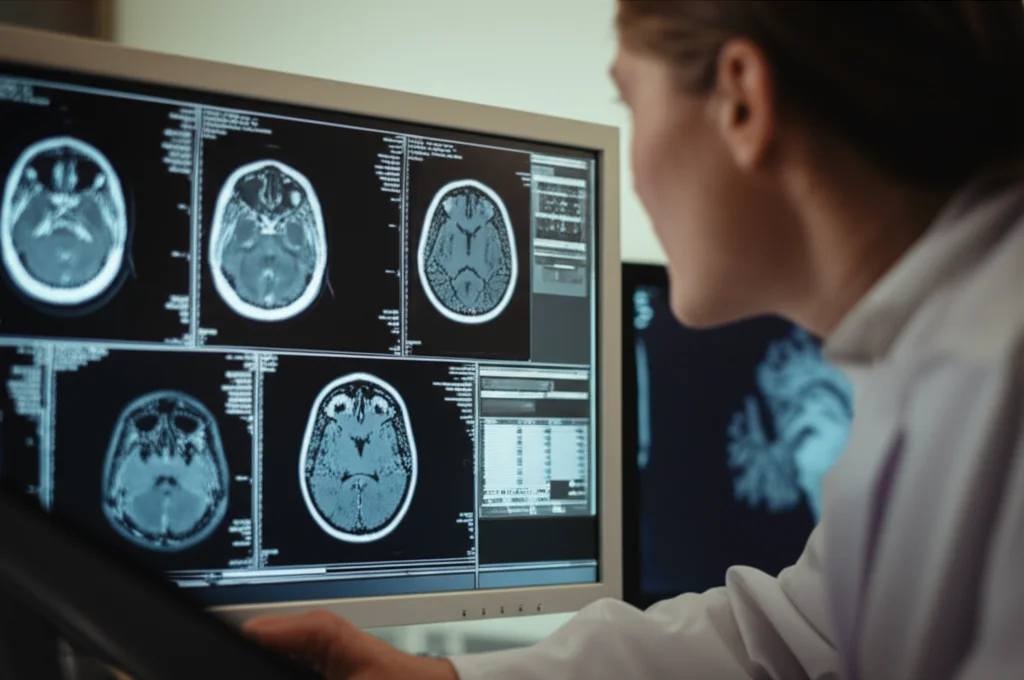
What happened next? The radiologists reviewed these 93 flagged cases pronto. It turns out that out of those 93:
- 5 cases (about 5.4% of the flagged ones) were deemed *medically significant and urgent* and the participants were notified right away.
- 12 cases (about 12.9%) were *medically significant but not urgent*.
- The remaining 76 cases (a big chunk, 81.7%) were classified as *minor changes* or even *within the normal range* after the radiologist compared them to the participant’s previous MRI scan from the first study phase. That comparison is key!
Breaking Down the Findings
So, what kinds of things were the techs flagging? The most common finding they reported for STAT review was intracranial aneurysms – they flagged 32 of those. Other things included narrowed or blocked brain arteries, vascular malformations, and even signs of acute stroke.
But what were the *really urgent* findings that led to participants being notified immediately by the radiologists?
- Intracranial aneurysms (2 cases)
- Cerebral artery stenosis or occlusion (1 case)
- Subdural hematomas (2 cases)
Interestingly, some findings like aneurysms or acute infarctions that were *flagged* by techs weren’t always classified as *urgent* by the radiologists after their full review, often because they were small, unchanged from previous scans, or the clinical context didn’t suggest immediate danger.
It’s worth noting that the types of findings flagged as STAT in a large population study like TMM are a bit different from what you might see in a hospital setting, where you’re dealing with acutely ill patients. Hospital STATs often involve things like acute bleeding (subdural, intracerebral, epidural, subarachnoid), brain tumors, or infections like encephalitis. While the TMM study included some of these, it also picked up things like aneurysms and vascular issues in a generally healthier population.
We found a lower frequency of STAT reporting by techs (1.3%) compared to some systematic reviews (like one by Gibson et al. reporting 2.5% serious incidental findings in asymptomatic adults). But here’s the thing: our 1.3% is specifically about what the *techs* flagged *immediately* after the scan. The 2.5% figure from other studies is usually based on a *full radiological interpretation* of *all* scans. We haven’t analyzed the full set of TMM scans by radiologists for *all* incidental findings yet – that’s something for the future! A complete radiologist review will give us a better comparison and a clearer picture of how common these findings really are in this group.
The Nuance of Classification
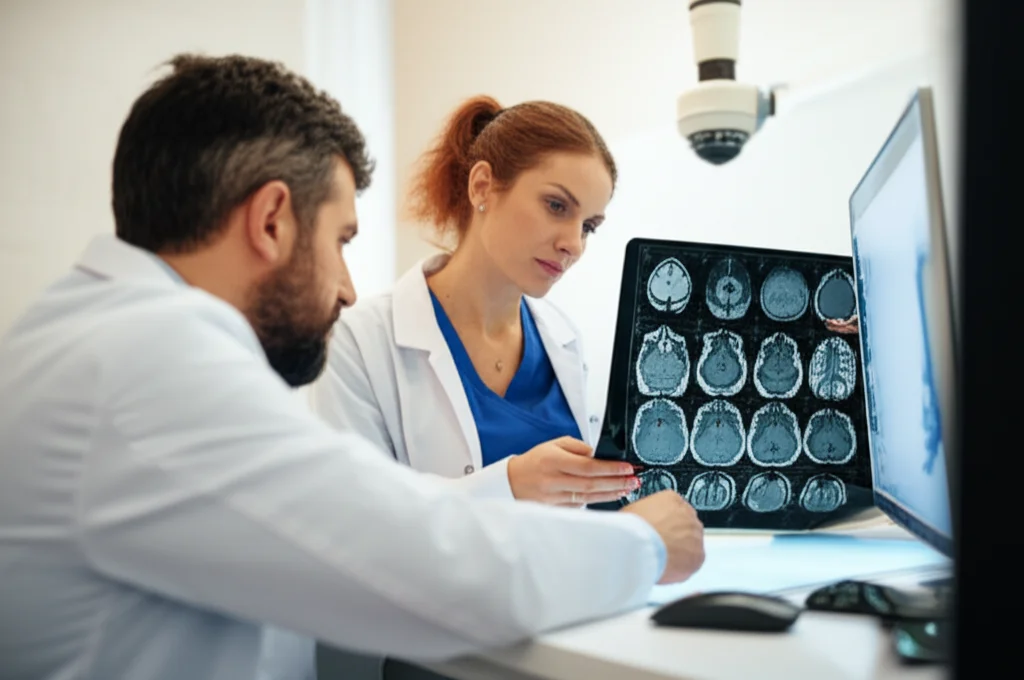
Deciding whether a finding is “medically significant urgent,” “medically significant but non-urgent,” “minor change,” or “within normal range” is a crucial step. In our study, the radiologists made these calls based on their clinical judgment. For example, an aneurysm might be called “urgent” if it had features suggesting a high risk of rupture, like being large or having an irregular shape.
Right now, there isn’t a universal, standardized definition of what counts as “urgent” in cohort studies like TMM. So, developing clear criteria for this classification is definitely needed down the road.
Another really valuable aspect of the TMM study is that participants had two brain MRIs, about four years apart. This allowed radiologists to compare the new scan to the old one. If they saw a small aneurysm that hadn’t changed at all since the first scan, they might classify it as a “minor change” rather than something more serious. If something looked suspicious on the new scan but wasn’t clearly confirmed, especially compared to the previous one, it might even be put in the “within normal range” category. This longitudinal comparison helps radiologists make more informed decisions about the significance of findings.
Making it Better: Training and Standardization
Based on the JRS and JART guidelines, it’s clear that having a good STAT reporting system is important, and so is making sure the techs and radiologists are on the same page about what needs immediate attention. They recommend setting up training programs for techs specifically focused on identifying urgent findings, along with regular meetings and feedback sessions.
In fact, the STAT Image Reporting Committee, under the guidance of JRS and the Japanese College of Radiology, has already launched a “STAT Image Reporting Learning System.” It’s hosted by JART and provides structured training to help techs get better at spotting those critical findings. Pretty neat, right?

To really make STAT reporting consistent and reliable, we also need clearer rules about *how* decisions are made. Right now, it relies a lot on individual experience. But if we introduce standardized ways to assess findings and give techs feedback based on real cases, it could really boost accuracy and make sure everyone is reporting urgent things in the same way.
Why This Matters
The findings from this large-scale cohort study are super valuable. They give us real-world data on what kinds of potential issues are being flagged immediately in a large group of people undergoing brain MRI as part of a health study, and how often it happens. This kind of evidence can help shape future guidelines for STAT image reporting in population-based health screening programs. Knowing the types and frequencies of these findings helps us figure out which imaging abnormalities truly need prompt medical follow-up. It’s all about using big data to make better decisions for individual health!
Source: Springer