Plasma Proteins Spill the Beans: How Selonsertib Helps Diabetic Kidneys
Hey There, Let’s Talk Kidneys!
Alright, let’s dive into something pretty important that affects a whole lot of people: Diabetic Kidney Disease, or DKD for short. If you or someone you know has Type 2 Diabetes, you know the kidneys can take a hit. It’s a massive global health challenge, affecting up to 40% of folks with T2DM, and honestly, it’s a leading reason why people end up needing dialysis or a kidney transplant. The numbers are staggering, and the cost, both human and economic, is just immense. Finding ways to keep those kidneys humming along is a really big deal.
The Body’s “Rust” and the ASK1 Alarm
So, what’s going on in DKD? It’s complicated, sure, but one of the main culprits is something scientists call oxidative stress. Think of it like rust building up inside your body’s cells, caused by things like high sugar levels. This “rust” triggers a bunch of signals, and one key player in this whole mess is a protein called ASK1 (Apoptosis signal-regulating kinase 1). ASK1 is kind of like an alarm system that gets tripped by oxidative stress, leading to damage, inflammation, and scarring in the kidneys. Basically, when ASK1 is activated, bad things happen to kidney cells.
Naturally, scientists thought, “Hey, what if we could turn off that ASK1 alarm?” That’s where selonsertib comes in. It’s a drug designed to block ASK1‘s activity. It’s been tested in a few different conditions, and while it didn’t hit the mark in everything, there was a glimmer of hope in an earlier DKD trial.
The MOSAIC Trial: A Closer Look
Fast forward to the MOSAIC trial, a Phase 2b study looking specifically at selonsertib in people with moderate to advanced DKD. Now, clinical trials can be tricky. Sometimes the way we measure things gets complicated. In this case, selonsertib had a weird effect on creatinine levels, which is often used to estimate kidney function (eGFR). This initially made interpreting the results a bit confusing.
But, after doing some clever analysis to account for that, the MOSAIC trial actually showed that selonsertib *did* slow down the decline in eGFR compared to placebo. That’s a win! What was even more interesting was that the drug seemed to work *better* in patients who started the trial with more severe kidney dysfunction (lower eGFR). This was a big hint, but we still didn’t fully understand *how* selonsertib was achieving this effect at a molecular level in humans.

Our Deep Dive into the Blood
So, that’s where my colleagues and I came in. We decided to take a really deep dive into the blood samples from the MOSAIC trial participants. We used a super cool technology called SomaScan, which lets us measure thousands of different proteins floating around in the plasma. Think of it like taking a molecular snapshot of what’s happening inside someone’s body.
Our goal was twofold: First, to see which proteins in the blood were linked to kidney function (eGFR) and its decline in these DKD patients (even without treatment, just to validate our approach – and yep, we found lots of known DKD markers, which was reassuring!). Second, and most importantly, we wanted to identify a signature of proteins that changed specifically because of selonsertib treatment. We wanted to find the molecular fingerprints of ASK1 inhibition in action.
The Selonsertib Signature Revealed
And we found it! We identified a “Selonsertib Activity Signature” (SAS) consisting of 58 proteins whose levels were significantly changed by selonsertib treatment over the 48 weeks of the study (mostly downregulated, meaning their levels went down). What’s fascinating is that these changes showed up pretty early in treatment, within just four weeks, and stuck around.
When we looked at what these 58 proteins actually *do*, it was like putting together a puzzle. They are heavily involved in pathways known to drive DKD progression:
- Inflammation: Proteins that call in immune cells and stir up trouble.
- Fibrosis: Proteins that cause scarring and hardening of kidney tissue.
- Apoptosis: Proteins linked to cell death.
- Oxidative Stress Response: Proteins involved in dealing with that “rust” we talked about.
This makes perfect sense because ASK1 is known to play a role in all these processes. It was really cool to see that the drug was hitting the very pathways we expected it to.
Where Do These Proteins Come From?
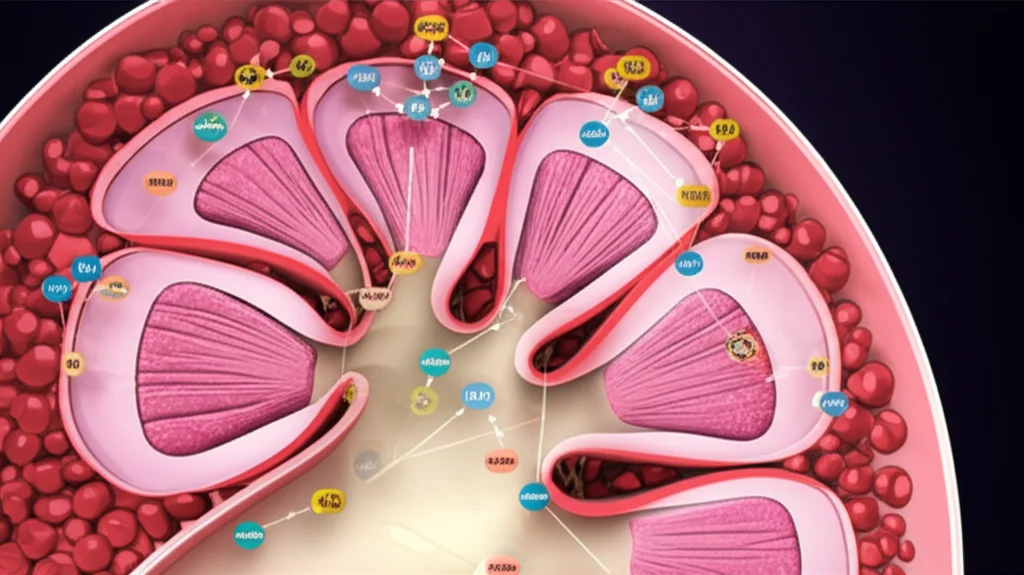
We also wondered if these proteins were actually coming from the kidneys themselves, since that’s where the disease is happening. By comparing our SAS proteins to databases of gene activity in healthy and diabetic kidneys, we found that a lot of the genes for these proteins are highly expressed in kidney cells and are actually *upregulated* (more active) in DKD kidneys. This strongly suggests that many of the proteins selonsertib is lowering in the blood are indeed originating from the struggling kidney tissue.
Why This Matters, Especially for Some
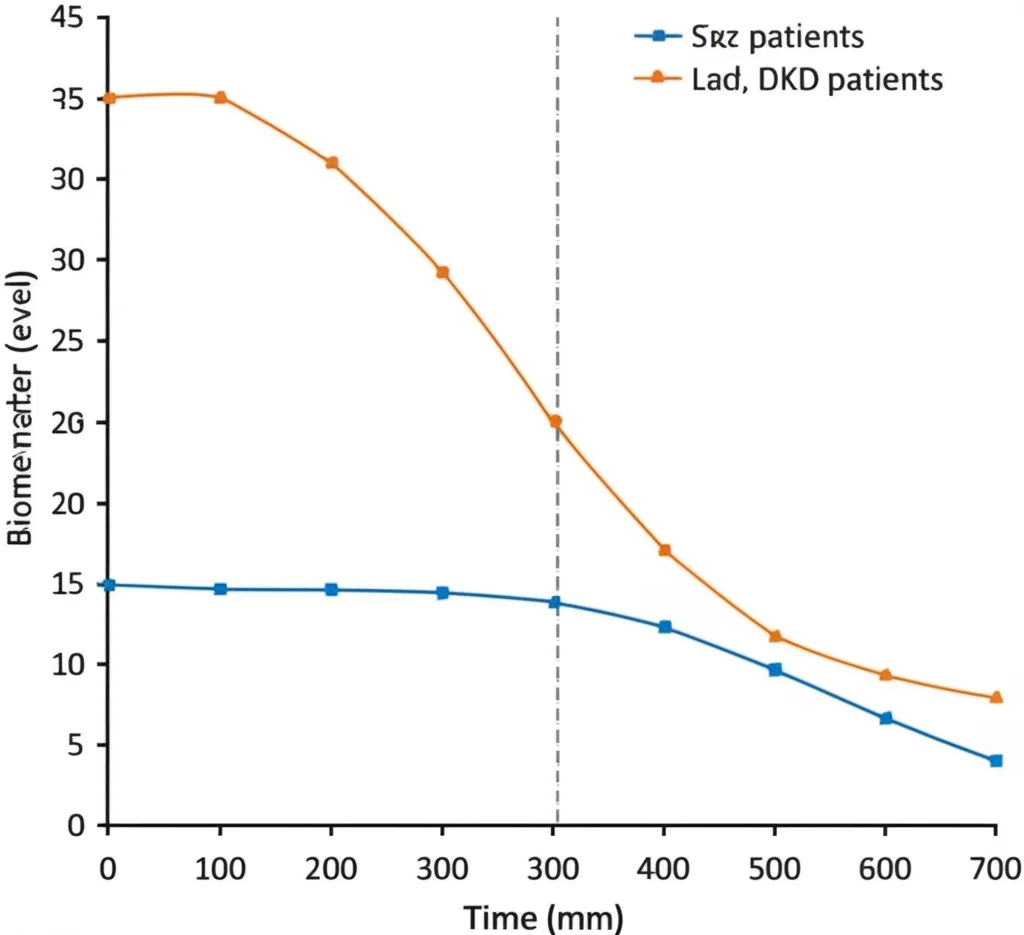
Remember how the MOSAIC trial hinted that selonsertib might work better in patients with more severe DKD at the start? Our protein data really backed this up. When we looked at the SAS proteins in different groups based on their starting eGFR (severe, moderate, or mild), we saw the biggest difference between selonsertib and placebo in the *severe* group.
In the placebo group with severe DKD, the levels of these “bad guy” SAS proteins tended to *increase* over the 48 weeks – a clear sign of the disease getting worse. But in the severe group treated with selonsertib, these protein levels mostly stayed stable or even declined! It was like selonsertib was putting the brakes on the molecular processes driving the disease progression, and this effect was most obvious in the patients whose disease was most active.
We even found a quantitative link: for many SAS proteins, the amount they increased in placebo patients per 10-point drop in eGFR was roughly the same magnitude as the amount selonsertib *reduced* them. This suggests these proteins aren’t just bystanders; they’re actively involved in the disease process, and selonsertib is directly counteracting their harmful effects.
Looking Ahead: Biomarkers and Beyond
So, what does this all mean? Well, first, it gives us a much clearer picture of *how* selonsertib works in DKD patients. It confirms that blocking ASK1 really does impact key pathways like inflammation and fibrosis in humans, just like we thought from lab studies.
Second, and perhaps most excitingly, this SAS of 58 proteins could be incredibly useful. These proteins could potentially serve as biomarkers – molecular signposts – to monitor how well ASK1 inhibitors are working in patients. Imagine a simple blood test that could tell doctors if the drug is hitting its target and slowing down the disease process. This could be huge for future drug development and maybe even for managing patients in the clinic someday.
Our findings also strongly support the idea that ASK1 inhibition might be most beneficial for patients with more advanced DKD, where the disease activity is higher. This could help doctors identify which patients are most likely to benefit from this type of treatment.
Finally, since ASK1 and oxidative stress are involved in many other diseases besides DKD (like certain heart, lung, and neurological conditions), the insights gained here could potentially be relevant for developing treatments for those too. It’s a reminder that understanding the fundamental biology of disease can open doors to treating many different conditions.
In a nutshell, by looking closely at the proteins in the blood, we’ve gained valuable insights into how selonsertib works and who might benefit most. It’s another step forward in the fight against DKD and other diseases driven by oxidative stress.

Source: Springer