
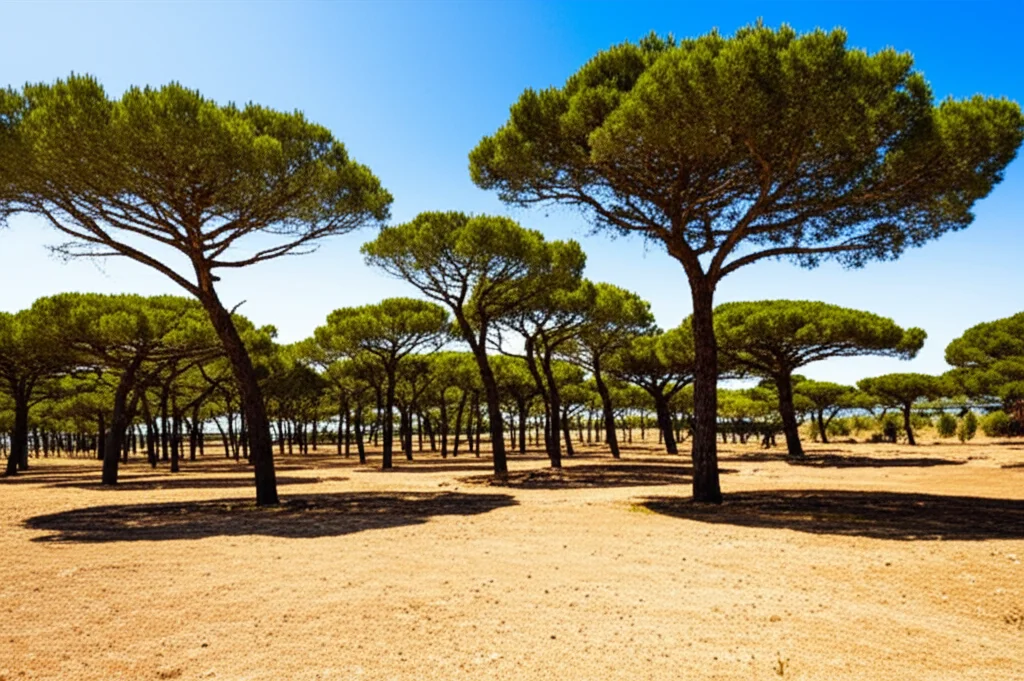
Battling the Heat: How We’re Helping Scots Pine Forests Adapt
Hey there! Let me tell you about something pretty important we’ve been looking into. You know how everyone’s talking about climate change? Well, it’s not just about hotter summers or weird weather patterns; it’s having a real impact on our forests, and specifically, on some of our beloved tree species. We’ve been focusing on Scots pine (*Pinus sylvestris*), a tree you might recognize, especially if you’ve spent time in Europe or Asia. It’s super widespread, but down here in the Mediterranean, where things are getting noticeably warmer and drier, our Scots pines are having a bit of a tough time.
The Climate Change Challenge for Scots Pine
Here’s the deal: climate change predictions for the Mediterranean Basin are a bit stark. We’re talking about temperatures rising faster than the global average, especially in summer, and less rain overall, leading to longer dry spells. For forests that are already a bit limited by water, this means less productivity and a reduced ability to soak up carbon, which is the opposite of what we need right now. This increased dryness, combined with forests expanding into old farmland (thanks, rural abandonment!), is causing all sorts of headaches: trees are declining, and wildfires are becoming more frequent and severe.
Scots pine, being at its southern distribution limit here, is particularly vulnerable. Think of it like someone from a cooler climate trying to live comfortably in the desert – it’s a struggle! These trees are sensitive to increasing aridity. When water is scarce, they clamp down on their stomata (those tiny pores on needles for breathing) to save water. This is called isohydric behavior. It’s smart for saving water, but it can mess up their carbon balance, potentially starving the tree of the energy it needs to survive. We’re already seeing signs of this: defoliation (losing needles), trees dying, and a lack of new seedlings popping up.
Sometimes, when Scots pine struggles, other species that are better suited to dry conditions, like oaks, start to move in and take over. Understanding how mortality, growth, and regeneration are affected by this changing climate is crucial if we want to help these forests adapt.
Finding Ways to Adapt
Forest management has traditionally focused on trying to reduce climate change (mitigation) or helping forests cope with the changes already happening (adaptation). Both are important, but adaptation is key for the here and now. Adaptive management isn’t a one-size-fits-all thing. It can range from trying to keep the forest pretty much as it is, just making it more resistant to stress, to accepting that change is inevitable and actively helping the forest transform into something new that’s better suited for the future climate.
Researchers have identified a few strategies for adaptation in the Mediterranean, like thinning out trees to reduce competition, managing the stuff growing on the forest floor, promoting mixed forests with different species, changing the species composition entirely, or making the landscape more varied to slow down fires. Most of the work so far has focused on short-term fixes like thinning or clearing undergrowth to reduce fire risk. But there hasn’t been much experimental work on actively changing the mix of species in the long run.
That’s where we come in! We wanted to set up an experiment right here in the Mediterranean to see if we could use different forest treatments (what we call silvicultural treatments) to nudge a mixed Scots pine forest towards a composition that might be more adapted to climate change. We aimed to see how these treatments affected:
- The survival and health (measured by defoliation) of the trees already there.
- How well different species grew, especially during droughts.
- Whether new trees were regenerating.
Basically, we wanted to know if we could improve the forest’s health and future prospects through smart management.
Our Experiment in Montesquiu
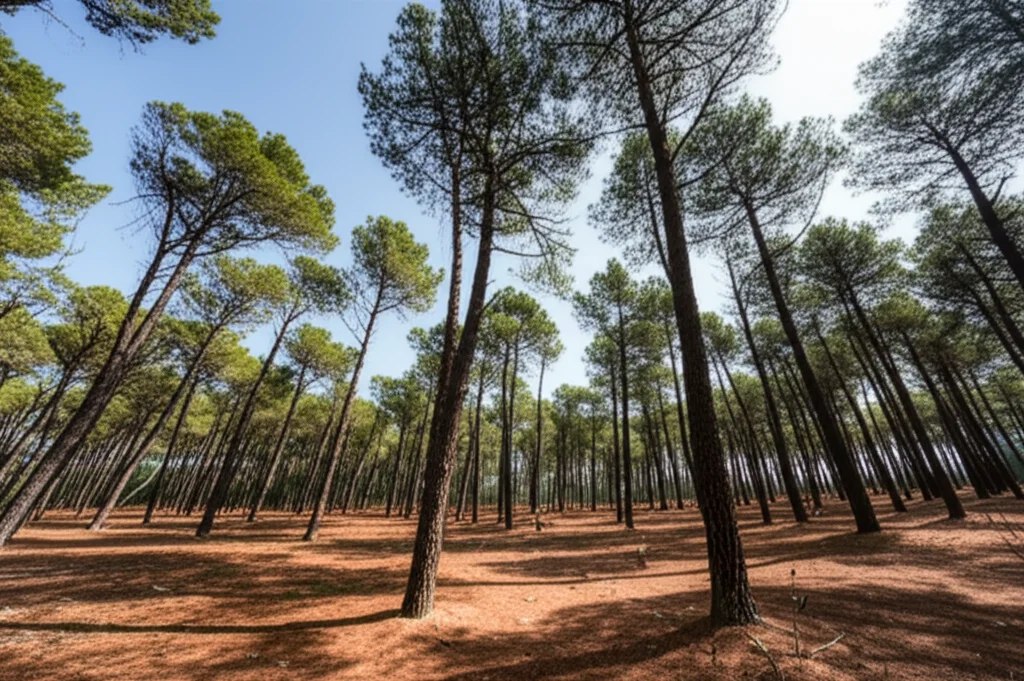
We set up shop in Montesquiu Castle Park in northeastern Spain. This place was perfect (or maybe, unfortunately, *ideal* for studying climate impact) because it had already been hit by a nasty drought in 2012 and some pest attacks. Plus, the park managers were really keen to get some scientific insights into how to manage their forest in the face of these challenges.
The forest there is a mix, dominated by Scots pine, but with a good amount of pubescent oak (*Quercus pubescens*), and a scattering of other species like maples, holm oak, and whitebeam. For decades, people managed the forest to favor the pines, but that stopped in the 1970s.
We marked out four large areas, about a hectare each, and applied different treatments in 2014:
- Control (CO): We left this area completely alone, no management at all.
- Understory Clearing (UC): We cleared out the shrubs and smaller trees growing underneath the main canopy.
- Understory Clearing and Pine Thinning (UCPT): We cleared the understory *and* thinned out some of the Scots pines to reduce competition.
- Pine Logging (PL): We removed most of the Scots pines, essentially trying to accelerate the shift towards oak dominance.
Obviously, after applying these treatments, the areas looked pretty different in terms of how dense they were and what species were left standing.
We then monitored these areas from 2014 to 2021. We kept track of every tree (those with a diameter of 7.5 cm or more at chest height), noting if they died. For a selection of Scots pines, we also visually estimated how much defoliation they had – basically, how many needles were missing compared to a healthy tree. We measured how much the trees grew each year by looking at their diameter and, for some pines, by taking core samples to count and measure tree rings. Tree rings are like a history book for a tree’s growth!
We also checked on the regeneration – the number of young trees (saplings) and tiny new sprouts (seedlings) of different species. Finally, we used local weather data to understand the climate, especially drought periods, and analyzed the tree rings to see how the pines in different treatments responded to dry years, specifically 1994 and 2017, which were particularly dry summers.
What We Found
After six years, the good news is that tree mortality was generally low across the board, for both Scots pine and pubescent oak, and there weren’t statistically significant differences between the treatments yet. This suggests the treatments didn’t cause a sudden wave of death, which is positive.
However, when we looked at Scots pine defoliation, things got interesting. Right after the treatments in 2015, the defoliation levels were similar. But over time, differences started showing up. By autumn 2020, the control area (no management) had the highest defoliation (42%), the understory clearing area had less (25%), and the area with understory clearing and pine thinning (UCPT) had the lowest (18%). This suggests that management, particularly thinning, can actually help reverse the trend of increasing defoliation and improve tree health.
Growth also varied. The overall increase in basal area (a measure of stand density and growth) for Scots pine wasn’t significantly different between treatments. But for pubescent oak, removing the pines entirely (PL treatment) led to significantly higher growth. This makes sense – less competition from the dominant pines means more resources for the oaks.
Looking at individual Scots pine growth via tree rings, the UCPT treatment (understory clearing and thinning) resulted in wider annual rings, meaning faster growth compared to the control and UC treatments. This is a common finding after thinning and is likely due to increased water availability for the remaining trees.
We also checked how the pines responded to drought using the tree-ring data. For the 1994 drought (before treatments), there were no differences. But for the 2017 drought (after treatments), the pines in the UCPT treatment showed higher resistance (ability to tolerate the stress without growth dropping too much) and resilience (ability to recover growth afterwards) compared to the other treatments. This is pretty neat – thinning seems to make individual pines tougher against dry spells.
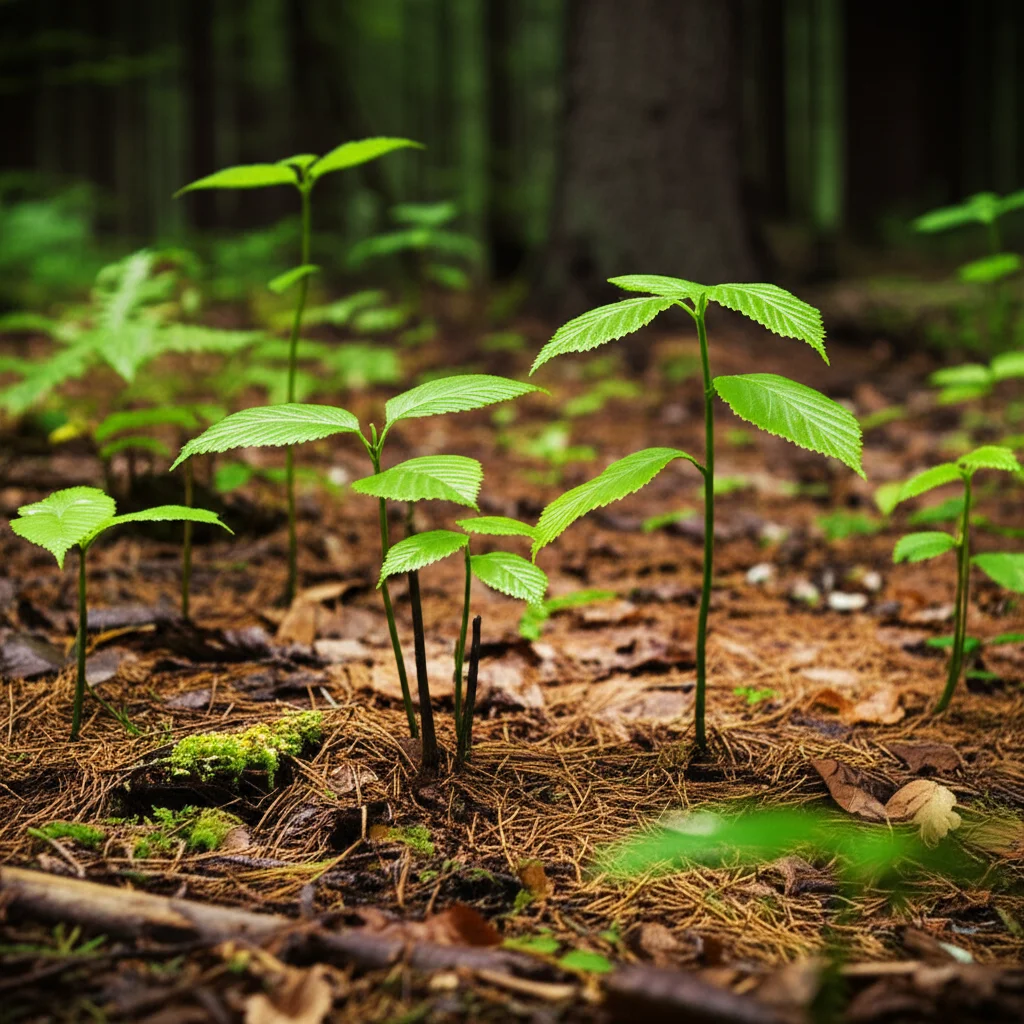
Now, let’s talk regeneration. This is a big one. In 2021, we found *zero* Scots pine seedlings in *any* of the treatments, even where we thinned heavily (UCPT), which should create gaps for light. The lack of new pine sprouts is a real concern for the long-term future of Scots pine here. Saplings were also low in density everywhere.
Pubescent oak, on the other hand, had high numbers of seedlings and saplings in all treatments, even though the numbers weren’t significantly different between them. This species seems much better at getting established, likely because its young trees can handle shade better and it’s generally more drought-tolerant.
What It All Means
So, what can we take away from this? While Scots pine mortality was low during our study period, the increasing defoliation in unmanaged areas is a worrying sign of stress. Our results confirm that thinning (UCPT) can improve the health and growth of individual Scots pines and make them more resistant and resilient to drought. This is probably because thinning reduces competition for water, which is key in this drying climate.
However, the almost complete lack of Scots pine regeneration is a major red flag. Even with thinning, the conditions might still be too dry for seedlings to get started, or the gaps created weren’t quite right. This suggests that even if we help the existing pines hang on for longer, new ones aren’t coming up to replace them.
Pubescent oak, in contrast, seems much better positioned for the future. It grows well when competition is reduced (like in the PL treatment where pines were removed) and, crucially, it’s regenerating much more successfully. This aligns with other studies showing oaks are generally more drought-tolerant than Scots pine in this region.
Given the climate predictions for this area – less rain, higher temperatures, more severe droughts – it seems likely that the forest in Montesquiu is naturally heading towards becoming more oak-dominated and less pine-dominated. This shift is already being observed in other places.
Looking Ahead: Managing for the Future
Our experiment shows that forest management can play a significant role in adapting forests to climate change, but different strategies achieve different things. Simply clearing the understory didn’t have a big impact on the main tree species dynamics in our study period.
Thinning (UCPT) seems effective in the short to medium term for improving the health and drought tolerance of individual Scots pines. This could be a good strategy if the goal is to maintain Scots pine in certain areas for as long as possible, perhaps in less severely affected sites or for specific habitats. We expect these positive effects on the remaining pines to continue, though delayed mortality from past stresses might still occur.
On the other hand, actively removing pines (PL) successfully boosted the growth of pubescent oak, accelerating the natural successional change towards a more drought-adapted forest composition. This strategy might be more appropriate in areas where Scots pine is really struggling and the priority is the long-term resilience of the ecosystem as a whole, even if it means a shift in dominant species.
These findings are really valuable for forest managers. They highlight that there isn’t one single “right” way to manage forests under climate change. The best approach depends on the specific goals for the forest – whether it’s trying to maintain a species like Scots pine where possible, or facilitating a transition to a more resilient mix for the future.
Ultimately, being proactive and using strategies like thinning or promoting better-adapted species will be essential to help these forests survive and thrive in a warmer, drier world. It’s about giving nature a helping hand to navigate the challenges ahead.
Source: Springer