Beyond the Spike: A Promising New SARS-CoV-2 Vaccine Platform
Hey there! Let’s Talk Vaccines!
So, we’ve all been on quite a journey with SARS-CoV-2, haven’t we? We’ve got vaccines, which is fantastic, but this virus keeps throwing curveballs with new variants. It makes us think, are our current vaccines the *only* way? Do we need something that offers broader protection, something that doesn’t just focus on that famous spike protein, which seems to be the virus’s favorite spot for mutations?
That’s where things get really interesting. Scientists are constantly looking for better ways to fight this bug, and a recent study caught our eye. It explores a totally different approach: a modified SARS-CoV-2 virus itself, one that’s been cleverly engineered to be safe but still teach our bodies how to fight back effectively. Think of it as a highly specialized training dummy for your immune system.
The Challenge with Current Vaccines
Most of the vaccines we know and love – the mRNA ones, the viral vector ones, protein-based jabs – are designed to get our bodies to recognize and produce antibodies against the spike (S) protein. And look, they’ve done a great job! They induce strong immune responses, but primarily against that S protein.
The problem is, the S protein is a bit of a moving target. The virus mutates, especially in the S protein, often to escape our immune defenses. This is why we see new variants popping up and sometimes needing updated boosters. Plus, these vaccines, usually given in the arm, don’t always trigger a super strong immune response right where the virus first enters – our nose and lungs. We need better *mucosal immunity* there.
Scientists have been trying different things: boosting with S protein, developing nasal vaccines, or using platforms that present multiple parts of the virus, not just the spike. Another classic approach is using *live-attenuated vaccines (LAVs)*. These are weakened versions of the virus that can replicate a little bit but don’t cause serious disease. Administering them intranasally (up the nose!) could potentially trigger a more natural, broad immune response right at the entry point.
Introducing ΔEM: A Cleverly Modified Virus
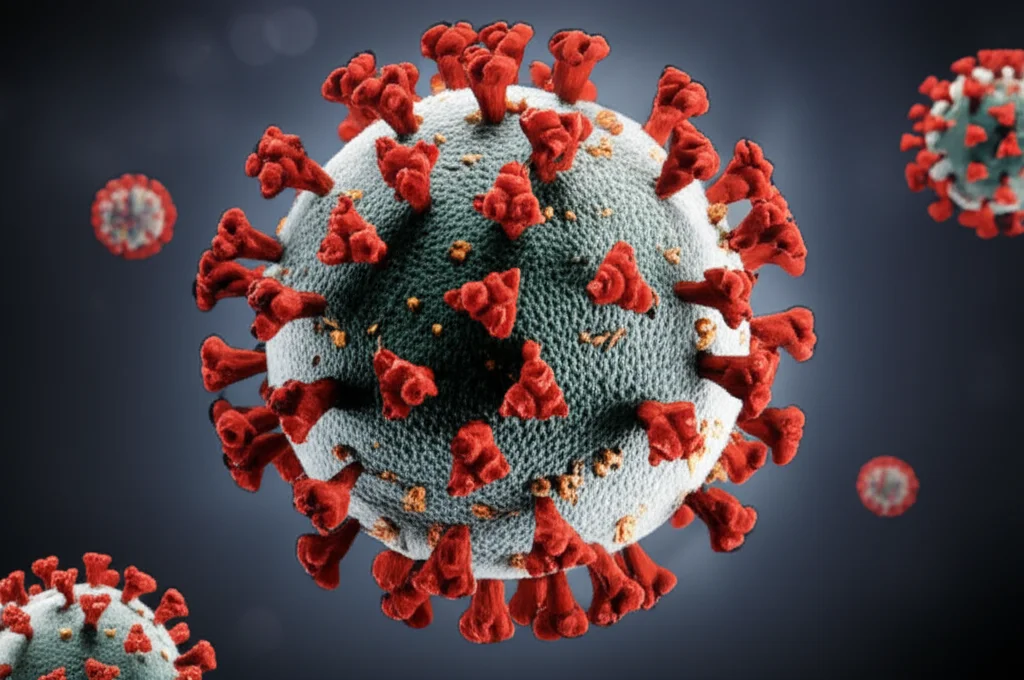
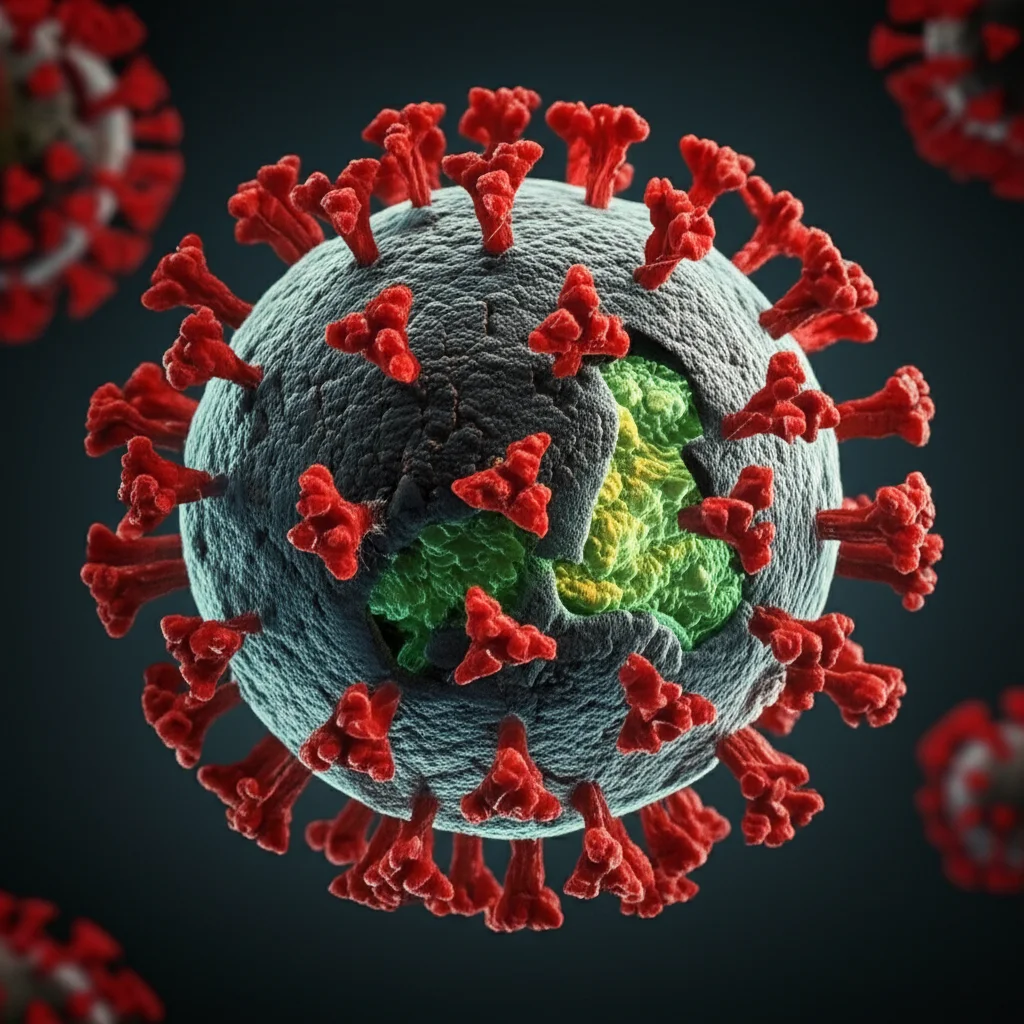
This new study dives into the LAV idea by creating a SARS-CoV-2 virus with a twist. They’ve deleted the genetic instructions (the open reading frames, or ORFs) for two key structural proteins: the Envelope (E) and Membrane (M) proteins. They call this modified virus ΔEM.
Why delete E and M? Well, these proteins are essential for the virus to assemble properly and create new infectious particles. By taking them out, the virus can still get into cells and start its replication machinery, expressing its other proteins (like the S and Nucleocapsid (N) proteins), but it can’t package them up into *new, infectious viruses* in normal cells. It’s designed for a single round of replication.
Think about it: it gets in, shows your immune system all its parts (S, N, etc.), triggers a response, but can’t spread further. This is different from typical LAVs that replicate multiple times, albeit weakly. This single-cycle replication approach aims to mimic the immune stimulation of a natural infection without the risk of disease.
Making and Testing the ΔEM Virus
The researchers had to get creative to even *make* this ΔEM virus. They used special lab cells (like HEK293T and Vero cells) that they engineered to *stably express* the missing E and M proteins. In these special cells, the ΔEM virus *can* replicate because the cells provide the missing pieces. This allowed them to grow enough virus for their studies.
But the real test is in normal cells, like those in our bodies. And indeed, when they put the ΔEM virus into regular Vero cells, they saw very limited spread and no signs of the typical cell damage (cytopathic effect, or CPE) that a wild-type virus causes. This confirmed that it’s replication-deficient in standard cells.
Next, they moved to animal models. They used special mice (hACE2 transgenic mice) that are susceptible to SARS-CoV-2 infection, much like humans. They gave these mice the ΔEM virus intranasally. What happened? Unlike mice given the original, wild-type virus (which lost weight and sadly, many didn’t survive), the ΔEM-vaccinated mice showed no weight loss and all survived. Crucially, when they checked the tissues (lungs, nasal turbinates, brain), they found *no detectable infectious ΔEM virus* three days after inoculation. This strongly supports that it doesn’t replicate or spread in living organisms either. They saw the same lack of replication in hACE2 transgenic hamsters.
Protection Against the Ancestral Strain
So, it’s safe and doesn’t replicate wildly. But does it protect? They vaccinated mice with one or two doses of the ΔEM virus intranasally and then challenged them with an ancestral SARS-CoV-2 strain.
The results were pretty impressive:
- Neither the one-dose nor the two-dose vaccinated mice lost weight after challenge.
- All vaccinated mice survived the challenge, unlike the control group where some didn’t make it.
When they looked at viral loads in the respiratory tissues (lungs and nasal turbinates) three days after challenge:
- A single dose significantly reduced virus titers (by 1000–10,000-fold!).
- Two doses provided even better protection, with *no detectable infectious virus* in both the lungs and nasal turbinates of the mice tested.
This suggests that even a single dose offers good protection, and a second dose really seals the deal, especially for clearing the virus from the respiratory tract.
Boosting Mucosal and T-Cell Immunity
One of the big hopes for an intranasal LAV like ΔEM is its ability to stimulate immunity right at the site of infection. They looked for Spike-specific IgA antibodies in the nasal wash and lung fluid (BALF) of vaccinated mice. While similar to mRNA vaccines initially, by day 5 after challenge, the ΔEM-vaccinated mice had *higher* levels of IgA in both nasal wash and BALF compared to mRNA-vaccinated and control mice. This is a good sign for mucosal protection.
But it’s not just about antibodies! Cell-mediated immunity, particularly involving T cells, is super important for clearing infected cells and providing broader protection against variants. The study found that ΔEM vaccination strongly induced specific types of IgG antibodies (Th1-biased) that are linked to cell-mediated responses.
They then looked at T cells in the lungs of vaccinated mice. Using an ELISpot assay, they saw that ΔEM vaccination induced T cells that reacted to *both* the S protein and the N protein, producing IFN-γ (a key signaling molecule for immune responses). Standard mRNA vaccines, as expected, mainly induced S-reactive T cells. The number of S-reactive T cells induced by ΔEM was comparable to a high dose of mRNA vaccine.
Using flow cytometry to get more detail, they found that ΔEM vaccination significantly increased the frequency of S-reactive CD4+ (helper) and CD8+ (cytotoxic) T cells in the lungs. What’s really cool is that ΔEM also induced N-reactive CD8+ T cells, and these were significantly higher than in both control and mRNA-vaccinated groups. CD8+ T cells are like the immune system’s assassins – they kill infected cells. Targeting the N protein, which is less prone to mutation than the S protein, could offer more durable protection against variants.

These findings suggest that ΔEM vaccination helps build a population of resident memory T cells in the lungs, ready to jump into action against the virus, targeting multiple viral proteins.
Efficacy Against Variants (Delta and Omicron XBB)
Okay, ancestral strain protection is good, but what about those pesky variants? They tested the ΔEM vaccine candidate in hamsters against the Delta and Omicron XBB variants.
A single dose showed some reduction in viral titers in the lungs against both variants, but less effect in the nasal turbinates. However, two doses were much more effective. After two doses, challenged hamsters (both female and male) showed:
- *No detectable infectious virus* in the lungs three days after challenge with either Delta or Omicron XBB.
- Significantly reduced virus titers (up to 10,000-fold reduction against XBB) in the nasal turbinates three days after challenge.
- By six days after challenge, no infectious virus was detected in the respiratory tissues of *any* vaccinated hamsters, while it was still present in many control animals.
This level of protection in the lower respiratory tract against variants after two doses was almost as strong as that seen in hamsters previously infected with the original virus and then challenged with Delta – which is a high bar!
Interestingly, after two doses, hamsters developed neutralizing antibodies against the ancestral strain and the Delta variant (which is quite similar to the ancestral spike), but *not* against the Omicron XBB variant. This is a bit surprising but highlights that protection isn’t *just* about neutralizing antibodies. The strong T-cell response, especially the CD8+ T cells targeting N, likely plays a crucial role in this variant protection, particularly in the lungs.
Histopathological analysis of lung tissue after challenge also showed dramatically less severe pathology in ΔEM-vaccinated hamsters compared to controls, confirming the protective effect at the tissue level.
ΔEM as a Booster?
Given that many people already have some immunity from prior infection or vaccination, the potential for a new vaccine to act as a booster is important. The study looked at using ΔEM as a booster after an initial mRNA vaccination in hamsters.
Boosting with ΔEM after an mRNA prime resulted in similar levels of overall IgG antibodies against both ancestral and Omicron XBB spike proteins compared to boosting with mRNA again. However, the *protection* against the Omicron XBB challenge was significantly better in the ΔEM-boosted group.

Specifically, in the lungs of ΔEM-boosted hamsters, there was virtually no detectable infectious virus after challenge, a much better outcome than boosting with mRNA. In the nasal turbinates, ΔEM boosting also led to much lower virus titers.
Why the better protection despite similar antibody levels? They checked the T cells again. ΔEM boosting after an mRNA prime led to a *higher* number of S-reactive IFN-γ-secreting T cells in the lungs compared to boosting with mRNA. This reinforces the idea that the T-cell response, particularly in the respiratory tract, is a key player in the protection offered by ΔEM, especially against variants where neutralizing antibodies might be less effective.
What Does This All Mean?
This study presents the ΔEM virus as a really promising *vaccine platform*. By deleting the E and M proteins, they’ve created a virus that can stimulate a broad immune response, including T cells targeting multiple viral proteins (S and N), and potentially induce better mucosal immunity, all while being replication-deficient in normal cells. This is a big deal because:
- It could offer better protection against future variants that escape S-protein-focused immunity.
- Intranasal delivery targets immunity where it’s needed most for a respiratory virus.
- It seems effective as a booster, potentially enhancing protection from existing immunity.
- It doesn’t require an adjuvant (an ingredient often added to vaccines to boost the immune response).
Of course, there are always things to explore further. They need to look at how well it prevents transmission and how long the immunity lasts. Safety concerns like potential recombination with circulating viruses need careful assessment, though the rapid clearance of ΔEM in animals is reassuring. They also want to see if a lower dose works and how to produce higher amounts of the vaccine virus.
But overall, the data from mice and hamsters is incredibly encouraging. The ΔEM vaccine candidate successfully induces resident memory T cells in the lungs and provides robust protection against both ancestral and newer variants, particularly in the lower respiratory tract. It represents a significant step forward in exploring live-attenuated vaccine approaches for SARS-CoV-2, potentially offering a more durable and broadly protective option for the future.
Source: Springer