Tough Grass, Tough Ground: Unpacking Ryegrass Survival in Karst Regions
Hey there! Ever looked at those rugged, rocky landscapes known as Karst regions and wondered how anything tough enough to survive there gets started? I mean, these places cover a huge chunk of the planet – about 15% of the land area globally! And in places like southwestern China, they’re super concentrated, but also incredibly fragile. They face a double whammy: challenges from things like grazing animals and human activity, *and* tough environmental factors like drought, soil erosion (hello, rocky desertification!), salinity, and wonky pH levels. It’s a tough neighborhood for a plant, especially when it’s just a tiny seed trying to sprout or a fragile seedling finding its feet.
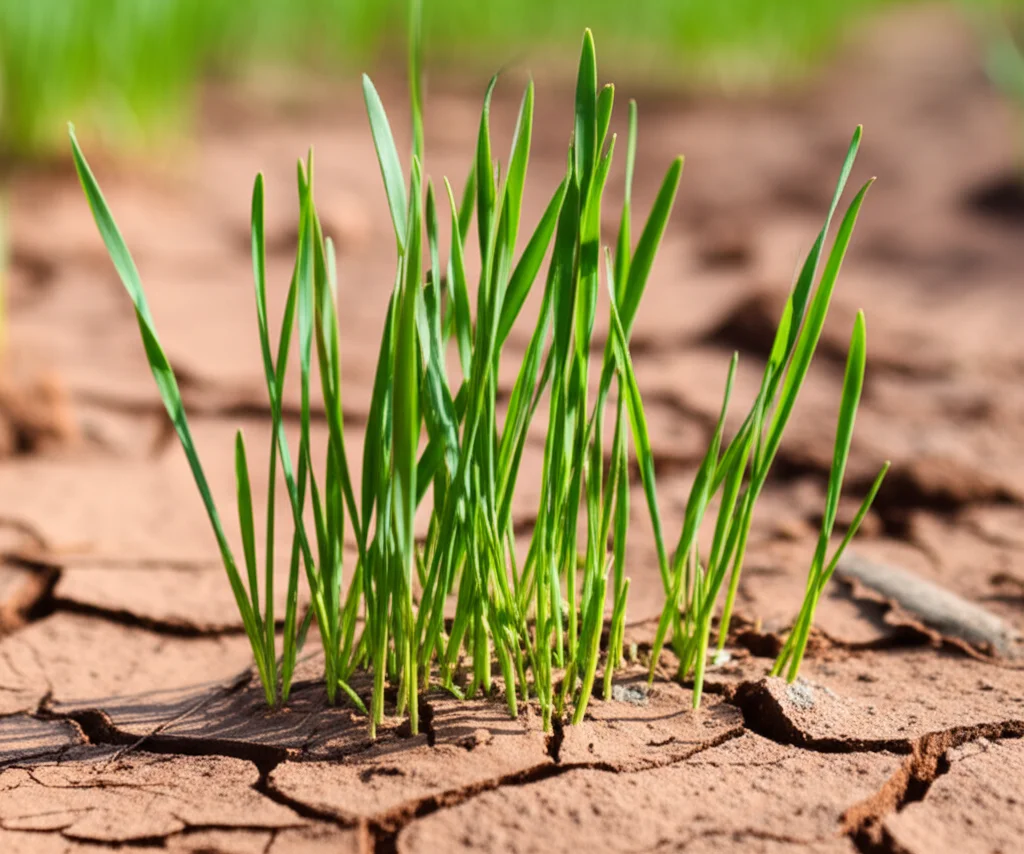
Now, let’s talk about a real hero of these landscapes: perennial ryegrass (Lolium perenne L.). You might know it as a great forage grass – good for feeding livestock. But it’s also a superstar when it comes to fighting rocky desertification. It’s got this awesome fibrous root system that helps hold the soil together, reduce erosion, and even improve water retention. Pretty neat, right? Despite its importance, we haven’t had a really deep dive into how the specific challenges of Karst – the drought, the salt, the weird pH – affect ryegrass right at the beginning of its life: seed germination and seedling growth. That’s a crucial time! If you can’t get started, you can’t do all that good stuff later.
So, that’s where a recent study comes in, and I’m excited to tell you about it. For the first time, researchers decided to really simulate those tricky Karst soil conditions in a controlled setting to see exactly what happens to perennial ryegrass seeds and seedlings when they face drought, salinity (specifically from calcium salts, which are common in Karst rocks), and different pH levels.
Setting the Scene
Think of it like this: they set up experiments to mimic different stress levels. For drought, they used a substance called PEG 6000 to create solutions with varying “water potentials” – basically, how hard it is for the seed to suck up water. They tested everything from no stress (like distilled water) down to pretty severe drought conditions. For salt, they used calcium chloride (CaCl₂) at different concentrations, from zero up to quite high levels. And for pH, they used buffer solutions to keep the water at specific acidity or alkalinity levels, ranging from very acidic (pH 3) to quite alkaline (pH 9).
They carefully monitored the seeds every day, noting when they germinated. After a couple of weeks, they measured everything: how many seeds sprouted (germination rate), how quickly they got going (germination potential, index, vigor), how long the roots and shoots grew, and even how much the little seedlings weighed (biomass). They wanted to see not just *if* the seeds germinated, but how *well* the seedlings developed under these stresses.
Facing the Thirst: Drought’s Impact
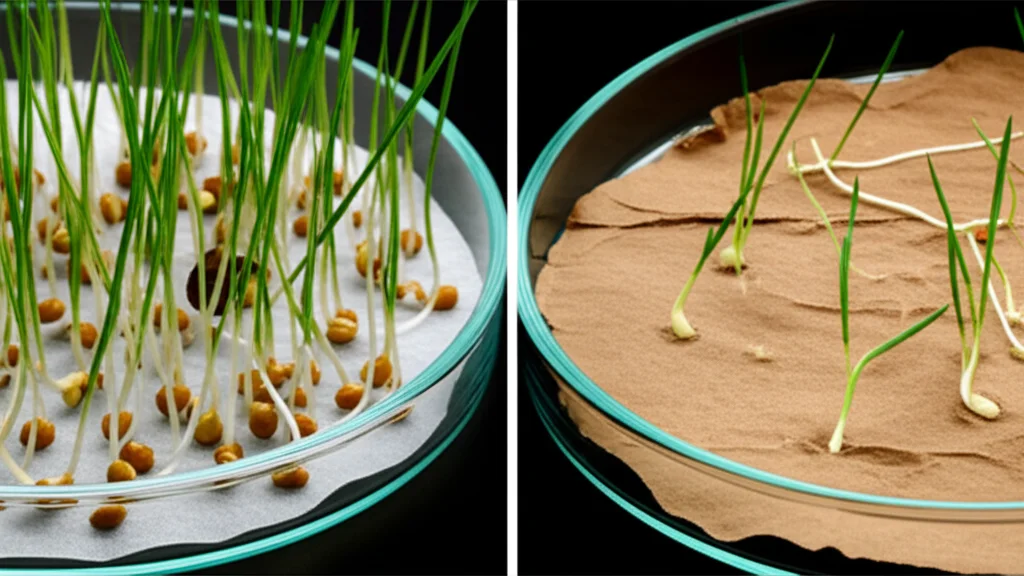
Okay, so what did they find about drought? Turns out, perennial ryegrass is pretty resilient up to a point. Under mild to moderate drought stress (water potentials from -0.06 to -0.17 MPa), the germination rate wasn’t significantly different from the control group. That’s good news! But here’s the really interesting part: those moderate drought levels actually seemed to *promote* root and shoot growth, and even increased the seedling’s overall weight (biomass). It’s like a little bit of stress early on encourages them to build a stronger foundation.
However, push it too far, and things change. Under more severe drought (-0.32 MPa and below), germination potential and rate started to drop significantly. At the most extreme level tested (-0.53 MPa), both germination and seedling growth were seriously inhibited. It makes sense, right? If there’s not enough water, the seed struggles to hydrate, enzyme activity slows down, and it’s just plain hard to get the metabolic engine running. The study also showed that under increasing drought, ryegrass seedlings prioritized sending resources to their roots – a classic survival strategy to find water when it’s scarce. This finding aligns with what we see in other plants like alfalfa and sorghum under mild drought. It really highlights the importance of timing planting with the rainy season or managing irrigation carefully in dry Karst areas.
The Salt Challenge: Calcium’s Double Edge
Next up: salt. Karst soils, being rich in carbonate rocks, often have high levels of calcium. Calcium is actually essential for plant growth, playing roles in development and even germination. But too much of a good thing can be bad. High salt concentrations can mess with water uptake and even be toxic.
The study used calcium chloride (CaCl₂) to test salt stress. And guess what? They found a pattern similar to drought: a little bit of salt was actually *good*! At low concentrations (5-10 mM CaCl₂), seed germination was favored, especially at 5 mM, where the germination rate hit a fantastic 96.5% – even better than the control! Root and shoot lengths were also promoted in this low range. This “low promotion, high inhibition” effect is seen in some other plants too, like melon. It might be that low salt levels trigger beneficial enzyme activity or metabolic processes in the seed.
But as the salt concentration increased (≥ 50 mM), the story changed. Germination rates and seedling growth were inhibited. At high concentrations, CaCl₂ can cause ion toxicity, damaging roots and potentially killing seedlings. The researchers noted that salt stress seemed to inhibit root growth more significantly than shoot growth, confirming that the roots are the first line of defense (and attack!) when it comes to soil salinity. Knowing that low calcium salt levels can be beneficial in Karst soils, which are naturally calcium-rich, is pretty useful for pasture management. It suggests that if salinity is within a certain range, it might actually help ryegrass get established.
pH Play: Acidity, Alkalinity, and Ryegrass Resilience
Finally, pH – how acidic or alkaline the soil is. This is another factor that can really vary in Karst areas. pH affects everything from nutrient availability to the solubility of potentially harmful elements. It can also directly impact seed germination and enzyme activity.
The good news here is that perennial ryegrass seems to be quite adaptable when it comes to pH. The study found that germination rates remained high (above 92%) across a wide range, from pH 3 all the way up to pH 9. That’s a really broad tolerance! However, while germination wasn’t heavily affected, seedling growth was. Extreme acidity (pH 3) significantly inhibited both root and shoot elongation, and reduced biomass. It seems the tiny seedlings are more sensitive to very low pH than the seeds themselves.
Optimal growth for the seedlings was observed in a slightly acidic to slightly alkaline environment, roughly pH 4 to 9, with pH 6-9 being particularly favorable. This wide pH tolerance is a big advantage for perennial ryegrass, making it suitable for use in ecological restoration across various soil types found in Karst regions, where pH can fluctuate.

What It All Means
Putting it all together, the study showed that drought, salinity, and pH all impact perennial ryegrass, but in different ways and with varying intensity. Both drought and salt stress generally had negative effects on germination and growth, especially at higher concentrations, though they showed that interesting *promotion* effect at low to moderate levels. pH had less impact on germination but significantly affected seedling growth at the extreme acidic end.
Interestingly, the study found strong correlations between how well the seeds germinated and how well the seedlings grew under these stresses. This suggests that you can get a good idea of a plant’s overall stress tolerance by looking at its early life stages. Among the three stresses tested, drought seemed to have the most significant negative impact overall. This makes sense given the “Karst drought” phenomenon where water is often the primary limiting factor.
Putting Science into Practice
So, what does this mean for managing Karst regions? These findings provide a solid scientific basis for improving the success of perennial ryegrass. We now know the “sweet spots” for these factors during the critical germination and seedling phases:
- Drought: Optimal conditions are from no stress down to moderate levels (-0.17 MPa). This means careful water management, perhaps focusing planting efforts during or just before rainy seasons, or implementing targeted irrigation where possible, is crucial.
- Salinity (Calcium Salt): The optimal range is from no salt up to about 25 mM CaCl₂. Low levels (5-10 mM) can even be beneficial. This suggests that while high calcium in Karst soils can be a challenge, if the overall salt concentration is kept within this range, it’s manageable or even helpful. Monitoring soil salinity levels could be important in some areas.
- pH: Perennial ryegrass is happy across a wide range, pH 4 to 9. Extreme acidity (pH 3) is the main concern for seedling growth. This wide tolerance means pH is less likely to be a major limiting factor compared to drought or high salinity in most Karst areas.
Understanding these optimal conditions is a big deal for anyone involved in seed cultivation, managing pastures, or working on ecological restoration projects in Karst areas. It helps us make better decisions about *when* to plant, *where* to plant, and *how* to manage the environment to give perennial ryegrass the best chance to establish and do its job of stabilizing these fragile landscapes.
Looking Ahead
Of course, these experiments were done in a controlled lab setting. Real-world Karst environments are much more complex, with multiple stresses happening at once – drought and salt often go hand-in-hand, for example. Plus, there are other factors like temperature fluctuations, nutrient deficiencies, and competition from other plants. The researchers rightly point out that the next step is to take this knowledge into the field and conduct long-term studies looking at these multiple factors interacting. That will give us an even more accurate picture of how perennial ryegrass handles the full complexity of Karst life.
But for now, this study gives us invaluable insights into the early life resilience of this important grass. It confirms that perennial ryegrass has some impressive adaptability, especially its wide pH tolerance and its ability to even benefit from mild drought and low salinity. By respecting its needs during those first few weeks, we can significantly improve our efforts to restore and manage the unique and vital ecosystems of Karst regions.
Source: Springer