

Unlocking the Secret: How Plants Sense Heat and Build Their Cellular Shelters
Hey there! Ever wondered how plants deal with scorching heat? They can’t exactly grab a cold drink or find some shade like we can, right? With our climate warming up, understanding how these silent green friends cope with rising temperatures is becoming super important, especially if we want our crops to survive and thrive.
Turns out, plants have some pretty sophisticated ways of sensing and responding to heat stress, often happening right inside their cells. One fascinating mechanism involves something called biomolecular condensation. Imagine tiny molecules inside the cell deciding to clump together temporarily, forming these dense, liquid-like droplets. These aren’t random blobs; they’re often functional structures, like cellular emergency shelters.
Meet FUST1: The Plant’s Internal Thermometer
Scientists have been digging into this, and they’ve recently found a key player in Arabidopsis thaliana (that small plant often used in labs) that acts like a direct heat sensor. They’ve given it a rather charming name: FUST1, after a mythical tree where, legend has it, ten suns rested. Pretty cool name for a protein that deals with heat, don’t you think?
So, what does FUST1 do? Well, this study shows it’s like the plant’s internal thermometer. When the temperature goes up, FUST1 senses it directly, and this triggers it to undergo that biomolecular condensation we talked about. We saw these FUST1 molecules quickly forming droplets inside the plant cells when things got hot. And these droplets aren’t static; they’re dynamic and liquid-like, merging with each other and exchanging molecules with their surroundings, just like little drops of oil in water.
The Secret Switch: FUST1’s Prion-like Domain
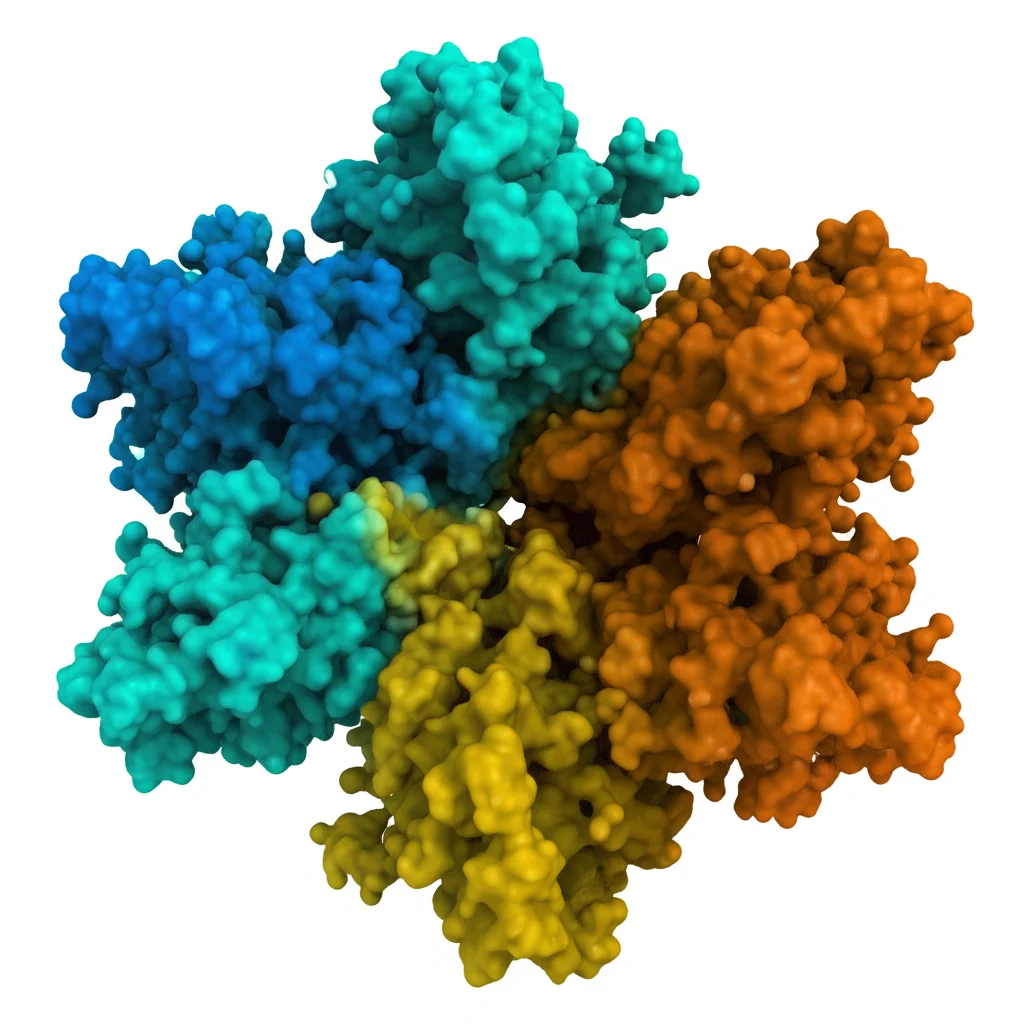
But how does FUST1 actually *sense* the heat? The really clever part seems to lie in a specific region of the protein called the Prion-like Domain (PrLD). Using fancy computer simulations (think of them as watching tiny, detailed protein movies!) and experiments, the researchers discovered that this PrLD has a built-in ‘thermo-switch’.
At lower temperatures, the PrLD seems to be in a ‘locked’ conformation, kind of folded up in a way that prevents it from sticking to other FUST1 molecules. But when the heat increases, this switch flips! The PrLD undergoes a ‘lock-to-open’ conformational change. This ‘unlocking’ allows FUST1 molecules to interact more strongly with each other, driving that condensation process we observed. Certain amino acids, particularly tyrosine residues within the PrLD, seem crucial for this heat-dependent sticking and shape change.
FUST1: The Prime Organizer of Stress Granules
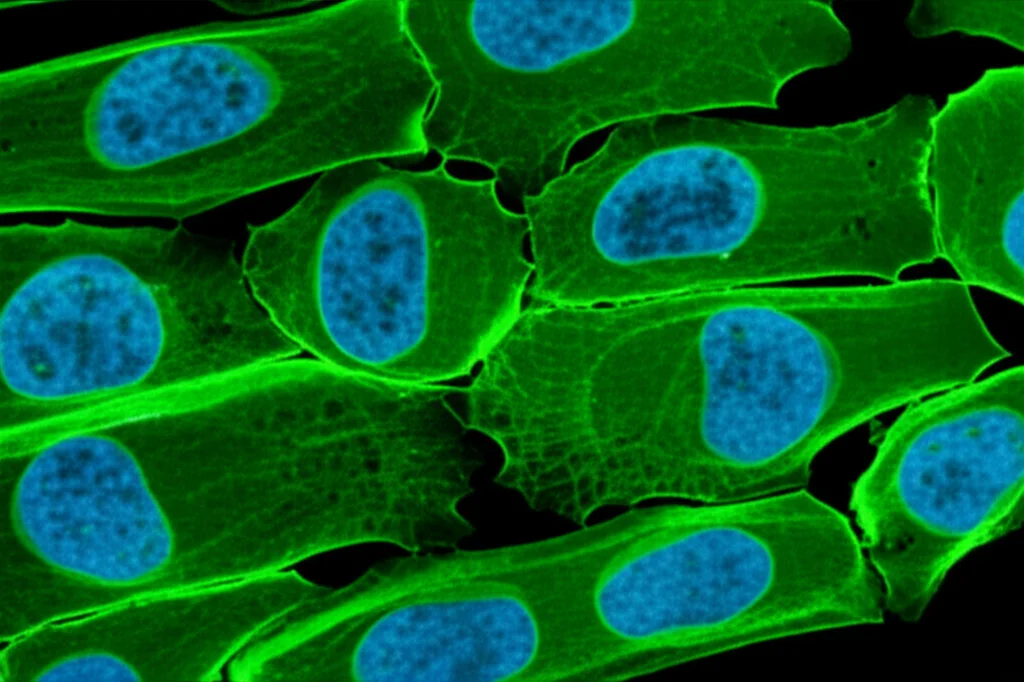
Now, these FUST1 condensates aren’t just solo artists. They’re deeply connected to something called Stress Granules (SGs). SGs are another type of biomolecular condensate that forms in the cytoplasm of cells under stress, including heat. They act as temporary storage sites, gathering up mRNAs and proteins to protect them from damage and help the cell survive the tough times.
The scientists found that FUST1 interacts with many known components of these Stress Granules. Using techniques that label proteins that are close to FUST1 or that stick to it, they saw that FUST1 hangs out with key SG players like G3BP5 and PAB2. They even saw FUST1 condensates colocalizing perfectly with mRNAs, which are core components of SGs.
But here’s the really groundbreaking part: FUST1 condensation happens *first*. It’s like FUST1 is the early bird, forming its condensates rapidly upon heat stress, even before other SG markers start clumping together. Time-lapse imaging showed FUST1 condensates appearing, and then other SG proteins being recruited into these existing FUST1 structures. This suggests that FUST1 condensation acts as a ‘primer’, setting the stage and driving the assembly of the full Stress Granule.
Why This Matters: Heat Tolerance is FUST1-Dependent
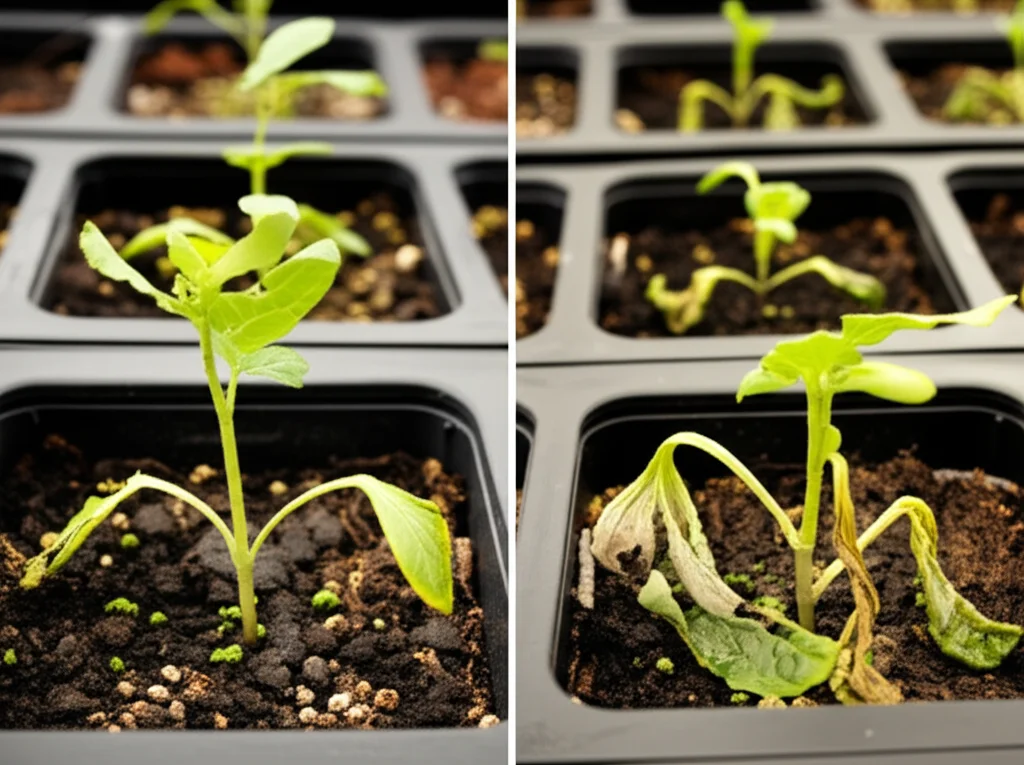
Okay, so FUST1 senses heat and primes SG assembly. Why should we care? Because this process is absolutely essential for plants to survive heat stress! The researchers created mutant Arabidopsis plants that were missing a functional FUST1 protein. What happened? These mutant plants were significantly more sensitive to heat.
When exposed to high temperatures, the FUST1 mutants showed much more cell death compared to normal plants. Their seeds had a harder time germinating after heat treatment, and the seedlings struggled to grow and had more damaged leaves. This wasn’t just for sudden, intense heat (basal tolerance); it was also true for their ability to ‘learn’ from milder heat exposure to better handle later, more severe heat (acquired tolerance).
Crucially, bringing back a functional FUST1 (but not a version missing the PrLD) rescued these heat sensitivity issues. This strongly confirms that FUST1, and specifically its heat-sensing PrLD, is indispensable for the plant’s ability to tolerate heat stress by priming SG formation.
A Conserved Mechanism Across Plants
And it gets better! The scientists looked for FUST1 in other plants like maize, soybean, and Chinese cabbage. They found similar proteins, and the key heat-sensing PrLD region, including those important tyrosine residues and the ‘lock’ sequence, is highly conserved. When they tested these FUST1 versions from other plants, they also showed heat-dependent condensation. This suggests that FUST1 acting as a heat sensor and SG primer is likely a widespread and important mechanism across the plant kingdom.
Wrapping It Up
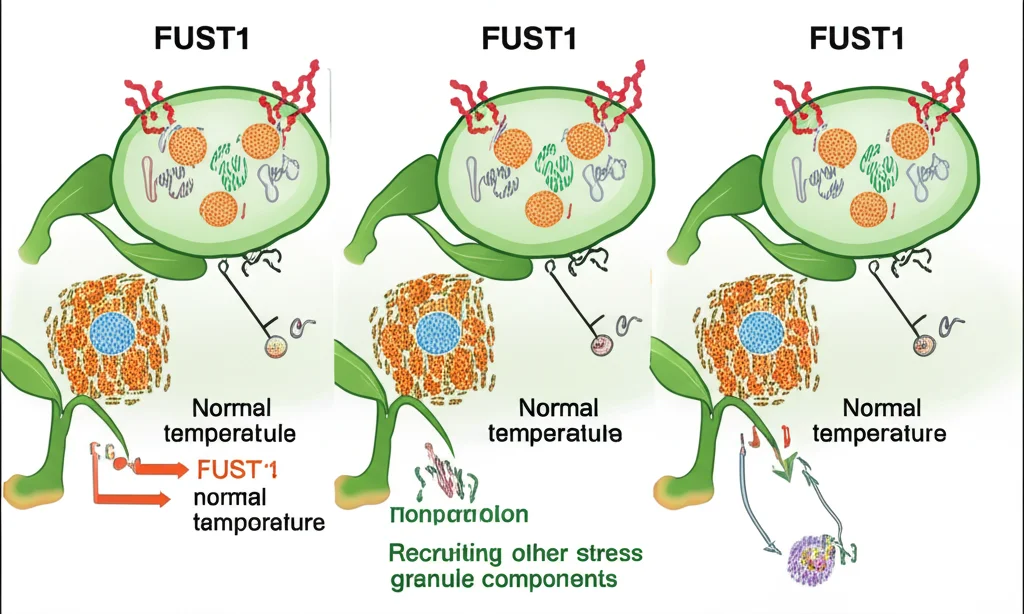
So, in a nutshell, this study reveals that FUST1 is a direct heat sensor in plants. It uses a clever ‘lock-to-open’ switch in its PrLD to trigger its own condensation when temperatures rise. These FUST1 condensates then act as crucial starting points, or primers, for the assembly of protective Stress Granules. This whole process is vital for the plant’s ability to survive heat stress.
It’s a fantastic piece of the puzzle showing us how plants are built to handle environmental challenges. Understanding this molecular basis for heat sensing and stress granule assembly could be a game-changer. It might help us develop new strategies for breeding or engineering crops that are more resilient to the increasing heat waves brought by climate change. Pretty inspiring stuff, right? It just goes to show how much we can learn from the incredible adaptability of plants!
Source: Springer