Tiny Tech That Sees Inside You: A Photonic Crystal Biosensor for Blood Tests
Hey there! Let’s talk about some seriously cool tech that could change how we get blood tests done. You know how everything is getting smaller and faster? Well, that’s happening in the world of medical diagnostics too, thanks to things like *optical configurations*. Think tiny devices that use light instead of just electricity to do amazing stuff.
Why Go Optical?
So, why the big fuss about using light? Honestly, it’s pretty straightforward:
- Compact Size: You can cram a lot more onto a tiny chip.
- Lower Cost: Making these in bulk can be way cheaper than traditional methods.
- High Speed e Capacity: Light moves fast, and you can do a lot with it simultaneously.
It’s like switching from old copper wires to fiber optics for your internet – way better performance! And just like electronic gadgets rely on electrons, these optical wonders rely on *photons*, tiny particles of light. This means every single part of the device, from filters to sensors, needs to work with light.
Enter Photonic Crystals
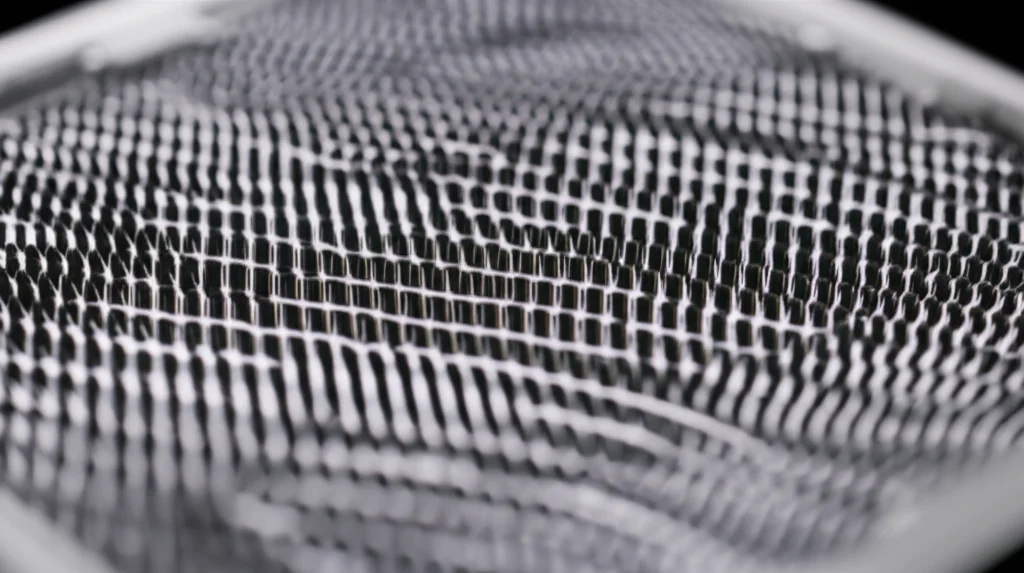
Among the many ways to build optical devices, *photonic crystals* (PhCs) are super interesting. Why? Because they’re relatively simple to make and use, they’re cost-effective, and they work really well. If you’ve ever seen the shimmering colors on a butterfly’s wings or the sparkle of an opal, you’ve seen natural PhCs in action! They’re basically materials with a structure that repeats over and over, kind of like a tiny, intricate pattern. This pattern is made of different materials (often silicon rods in air, like in the tech we’re discussing) that mess with light in a very specific way.
The magic happens because of something called the *photonic bandgap* (PBG). Think of it like a filter for light. Certain wavelengths (colors) of light can pass through the crystal, while others are completely blocked or reflected. This blocking is similar to how total internal reflection (TIR) keeps light bouncing along a fiber optic cable, meaning you lose very little signal.
PhCs as Biosensors? Brilliant!
Okay, so PhCs can control light. How does that help with blood tests? Well, *optical biosensors* are key components in these light-based integrated circuits. They’re perfect because they’re compatible, tiny, and fast. PhC structures are fantastic for detecting tiny amounts of biological stuff, like molecules in your blood.
We’re talking about things like cholesterol, creatinine, glucose, and hemoglobin. Detecting unusual levels of these early on is *huge*. High cholesterol can lead to heart problems and strokes, and high creatinine can signal kidney issues. Catching these early means doctors can help you prevent or manage serious diseases more effectively and, potentially, with lower costs than some current methods.
Researchers have been working on PhC sensors for these things. We’ve seen sensors using hyperbolic PhCs, octagonal PhC fibers, and even nanocomposites. They’ve achieved decent results, but the goal is always to get better sensitivity, detection limits, and overall performance.
The Star of the Show: A 2:1 MUX Biosensor
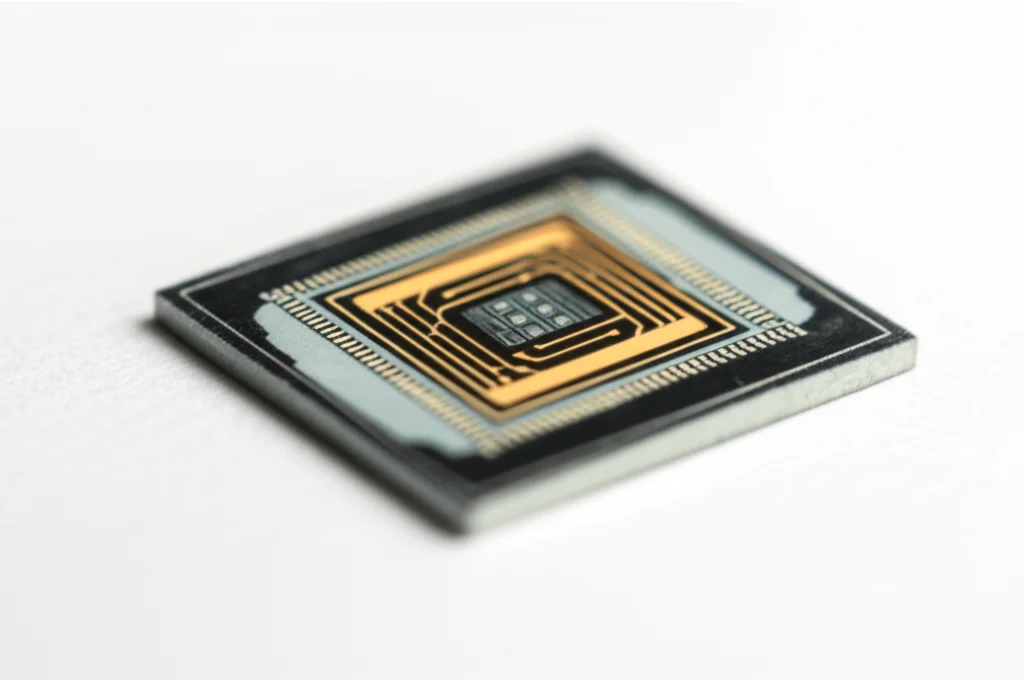
This particular research proposes a really neat device: a 2:1 multiplexer (MUX) based on a 2D PhC, which *also* works as a biosensor. A multiplexer is basically a data selector – it takes multiple inputs and, based on a ‘select’ signal, routes one of them to a single output. In this case, it’s built from 28×25 silicon rods sitting in air. The cool part? They used simple linear rods, which makes it easier to design and, importantly, easier to *fabricate*.
Fabrication is how you actually build these tiny things. Methods like nano-replica molding are becoming more economical and flexible, making it possible to turn these designs into real-world devices.
How It Works (The Clever Bit)
The device has two inputs (Input0, Input1) and a select port (Select). By sending light signals with specific wavelengths into these ports, you can control where the light goes. The magic wavelengths are those that fall within the PhC’s TE (Transverse Electric) PBG region – where light is guided efficiently due to TIR.
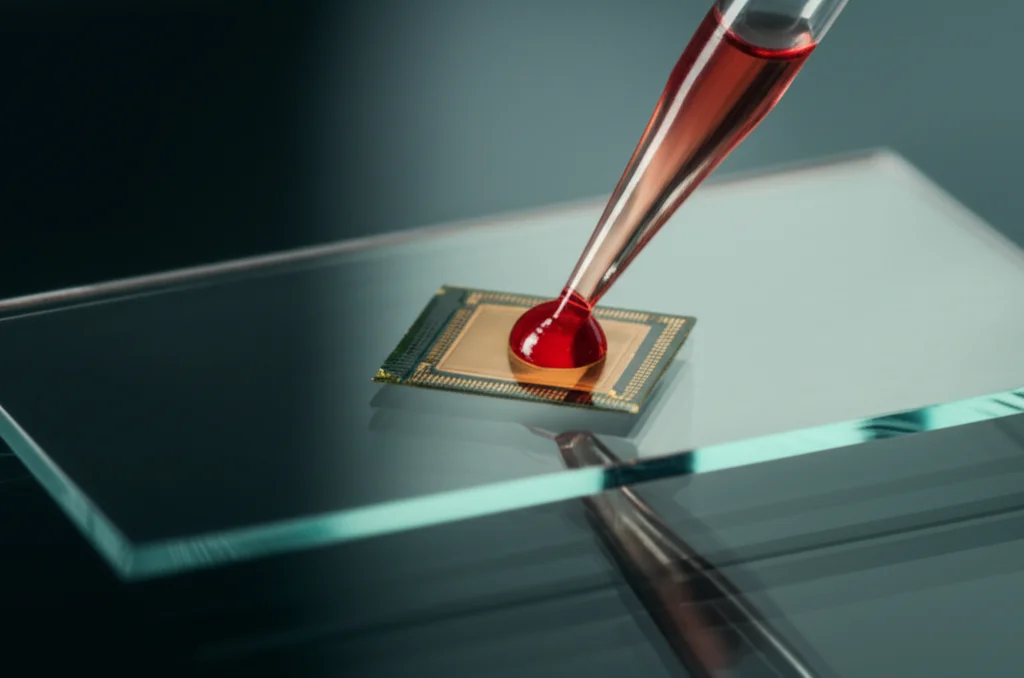
Here’s the really clever part for sensing: the device is designed so that when you apply a blood sample (the *analyte*) to a specific area, it changes the *refractive index* in that spot. The refractive index is just a number that describes how light behaves when it passes through a material. Different concentrations of cholesterol or creatinine in blood have slightly different refractive indices.
When the refractive index changes because of the blood sample, it causes a *shift* in the resonant wavelength of the light that gets transmitted through the sensor. This shift is like a fingerprint for the concentration of the substance you’re looking for. The bigger the shift, the higher the concentration!
Detecting Cholesterol
The researchers figured out that if you set the MUX to a specific state (Input0=1, Input1=0, Select=0), you can use it to detect cholesterol. They tested different concentrations of cholesterol, which correspond to different refractive indices. As expected, increasing the cholesterol concentration (and thus the refractive index) caused the peak transmission wavelength to shift towards longer wavelengths (a ‘red-shift’).
They calculated key biosensing factors for cholesterol detection:
- Q-factor (Quality Factor): (45.4–52.88) – Indicates how sharp the resonance peak is.
- Sensitivity (S): 2673.4 nm/RIU – How much the wavelength shifts for a given change in refractive index. A higher number is better!
- Detection Limit (DL): (0.00125–0.00143) RIU – The smallest change in refractive index it can reliably detect. A lower number is better!
- FOM (Figure of Merit): (80.91–82.06) RIU−1 – A combined measure of performance (Sensitivity divided by the width of the resonance peak). A higher number is better!
These numbers suggest this device could be a really effective way to help doctors spot high cholesterol levels early.

Diagnosing Creatinine Levels
Similarly, they found another MUX state (Input0=0, Input1=1, Select=1) that works perfectly for detecting creatinine. Again, by applying blood samples with different creatinine concentrations (and thus different refractive indices), they observed the same kind of wavelength shift.
For creatinine detection, the biosensing parameters were even more impressive:
- Q-factor: (101.1–109.4)
- Sensitivity (S): 3582.7 nm/RIU
- Detection Limit (DL): (4.98e−4–5.26e−4) RIU
- FOM: (199.01–201.3) RIU−1
That sensitivity and FOM are particularly high, indicating this device is excellent at picking up even small changes in creatinine concentration, which is crucial for diagnosing acute kidney injuries early on.
Putting It All Together
The researchers used simulation tools (RSoft Photonic Device Tools, specifically the PWE and FDTD methods) to design and test this structure virtually. They confirmed that the device works as a 2:1 MUX according to its truth table, and crucially, that two specific states of the MUX can be used as highly effective biosensors for cholesterol and creatinine.
The beauty of this is that you get a multi-functional device. It can route signals *and* perform sensitive biochemical analysis on a tiny scale. The high sensitivity, low detection limits, and good FOM values they achieved are really promising compared to previous work.
So, what does this mean? It means we’re getting closer to having tiny, efficient, and potentially low-cost devices that can quickly and accurately test for important health markers like cholesterol and creatinine using just a tiny blood sample. This could make early diagnosis of conditions like hypercholesterolemia and acute kidney injuries much easier and more accessible, helping doctors provide better care sooner.
Pretty neat, right? This little photonic crystal MUX is a big step towards the future of integrated bio-optical diagnostics.
Source: Springer