Hey Wheat Fans, We’ve Hit the Jackpot! Finding More of the Super-Rare TauL3 Wild Wheat Ancestor
Alright, gather ‘round, folks, because we’ve got some seriously exciting news from the world of wheat genetics! You know common wheat, right? The stuff that gives us our daily bread, pasta, and all those lovely baked goods. Well, its history is a fascinating tale of ancient hook-ups between different wild grasses. One of its key ancestors is a feisty little wild grass called Aegilops tauschii. Think of it as the cool, rugged grandparent that passed down some really important genes – specifically, the “D genome” that makes bread wheat what it is.
Now, this Aegilops tauschii isn’t just one monolithic entity. Oh no, it’s got its own family tree, with different genetic branches, or “lineages” as we scientists like to call them. We’ve known about three main ones: TauL1, TauL2, and the rather elusive TauL3. And it’s this TauL3 that’s been the subject of much head-scratching and excitement, because it seems to have played a pretty special role in shaping that D genome of our beloved common wheat. The catch? Until recently, we thought TauL3 was a bit of a homebody, pretty much only found in Georgia. This made it super precious, but also super tricky to study properly.
So, What’s the Big Deal About This TauL3 Anyway?
Imagine you’re trying to bake the perfect cake, and you know one of the secret ingredients came from a very specific, rare type of vanilla bean. That’s kind of like TauL3 for wheat. It’s genetically quite close to the D genome in common wheat, even more so than the more widespread TauL1 lineage. In fact, recent studies are showing that the D genome of common wheat isn’t just from one source; it’s more like a genetic patchwork quilt, with bits from TauL2 sublineages, and interwoven components from TauL1 and, crucially, TauL3.
What’s super intriguing is how this TauL3 component is spread. Some wheat varieties across Eurasia and North Africa have just a tiny sprinkle of it. But then, BAM! You get to the Transcaucasus and nearby areas, and suddenly you find wheat with a hefty dose of TauL3. It even looks like some Aegilops tauschii plants from the TauL1 and TauL2 lineages in the Transcaucasus and northern Iran have been borrowing bits of TauL3’s genetic code! All this points to TauL3 being a major player in the evolution of both common wheat and Aegilops tauschii itself. So, you can see why finding more of it, and understanding where it lives, is a pretty big deal for us plant scientists and wheat breeders.
The Great TauL3 Hunt: Expanding the Map!
For a long time, if you wanted to study TauL3, your map pretty much had one pin in it: Georgia. But we had a hunch. Nature rarely keeps all its treasures in one tiny box. So, we embarked on a mission, sifting through a massive collection of over 570 Aegilops tauschii samples (we call them “accessions”) from all over its natural range. And guess what? We struck gold! Or, well, green gold, in this case.
We’ve now identified honest-to-goodness TauL3 accessions from places they’d never been officially documented before: Armenia, Azerbaijan, and Iran! Specifically, we found one in Armenia (IG 126999), two in Azerbaijan (tentatively named TN10 and TN11, which were cool because they came from the same spot but had different spike colors!), and two in Iran (IG 48883 and IG 49140). This is fantastic news because it tells us that TauL3 isn’t quite as geographically restricted as we first thought. Its stomping grounds are broader, likely covering more of the Transcaucasus and the regions next door. There were even earlier hints from a researcher named Dudnikov who found a population in Dagestan that was genetically chummy with a Georgian TauL3 type, so this all starts to paint a much richer picture.
How Did We Know It Was Really TauL3? A Bit of Genetic Detective Work
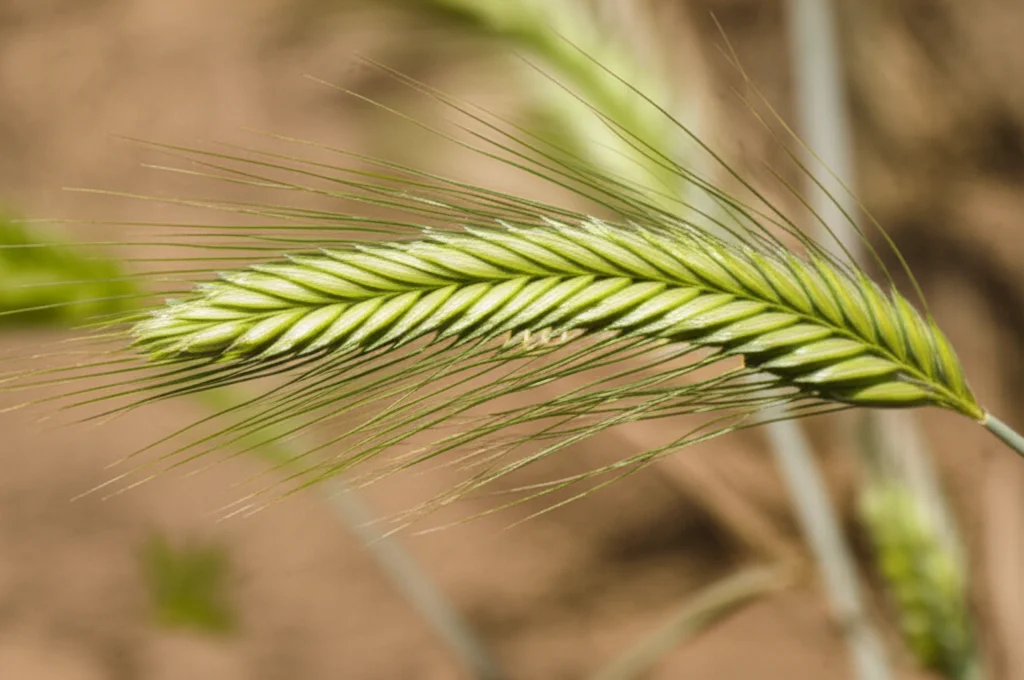
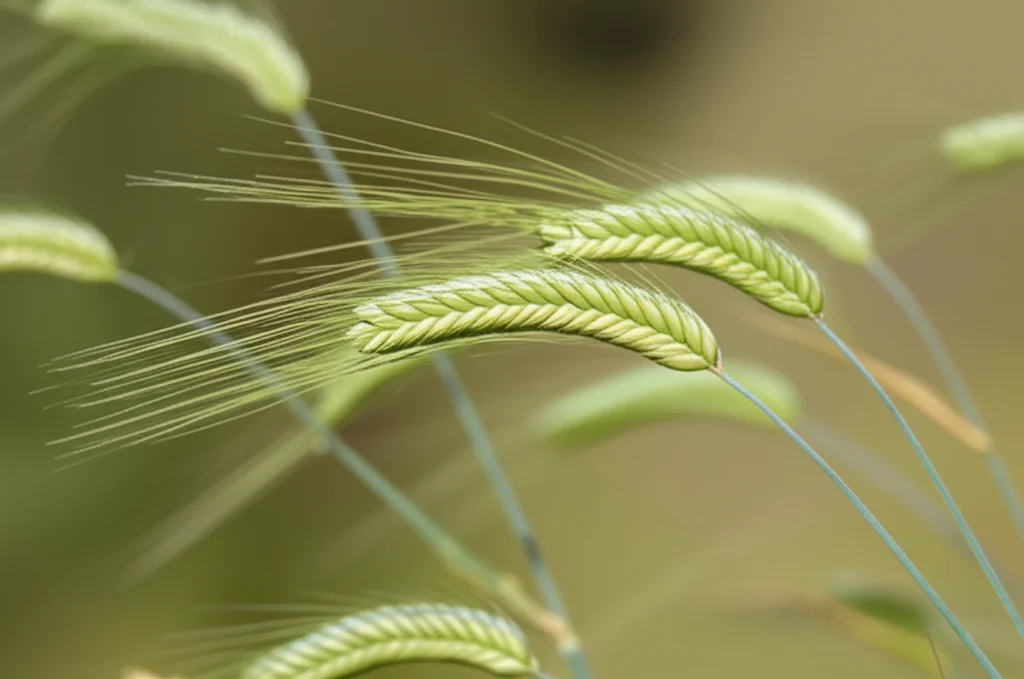
You might be wondering, “How can you be so sure these new plants are TauL3?” Great question! We didn’t just eyeball them (though their spikes do have a certain look, a bit “mildly moniliform,” similar to the Georgian TauL3 ones). We got down to the nitty-gritty: their DNA.
We used a nifty technique called GRAS-Di (Genotyping-by-Random-Amplicon-Sequencing-direct – try saying that five times fast!) to get a detailed look at their genetic makeup. This gave us millions of DNA sequence reads for each sample. We then compared these sequences to a reference Aegilops tauschii genome, looking for tiny differences called SNPs (Single Nucleotide Polymorphisms). Think of SNPs as unique spellings in the genetic code that help us tell different individuals and lineages apart.
After a whole lot of data crunching, aligning sequences, and filtering, we ended up with a robust set of nearly 18,000 SNPs. We then threw these SNP genotypes into a statistical blender called Principal Component Analysis (PCA). PCA is a way to take complex, high-dimensional data and visualize the main patterns. And lo and behold, when we plotted our new accessions from Armenia, Azerbaijan, and Iran alongside known TauL1, TauL2, and Georgian TauL3 accessions, they clustered right up close and personal with the Georgian TauL3 gang! They were clearly distinct from the TauL1 and TauL2 groups.
To double-check, we also calculated something called FST values. This is a measure of genetic differentiation between populations. The FST between our five new finds and the known Georgian TauL3 accessions was super low (0.04), meaning they’re very closely related. In contrast, they were much more different from TauL1a (FST=0.21), TauL1b (FST=0.21), TauL2a (FST=0.28), and TauL2b (FST=0.26). So, all the genetic evidence screamed: “We’ve found more TauL3!”
Why This Discovery Rocks Our World (and Future Wheat)
Okay, so we found more TauL3 in new places. Cool. But why is this more than just a botanical curiosity?
- Understanding Wheat’s Past: These new accessions are like missing puzzle pieces. They’ll help us unravel the complex story of how common wheat came to be, and the precise role TauL3 played in its D genome evolution.
- Boosting Wheat’s Future: Aegilops tauschii is a treasure trove of genes for things like disease resistance, drought tolerance, and improved yield. Having more TauL3 diversity means more genetic tools for breeders to develop hardier, more productive wheat varieties for a changing world.
- A Wider Map, But Still Rare: While it’s awesome that TauL3 has a broader distribution than we knew, let’s not get carried away. It’s still an exceptionally rare lineage. Out of over 570 accessions in our collection, we’ve only found 11 TauL3 types so far (including these new ones and the previously known Georgian ones). This rarity makes every single find incredibly precious.
The Urgent Call: We Need to Protect These Wild Treasures!
This is the really important bit. Finding these new populations is thrilling, but it also underscores a critical point: we urgently need to conserve the natural habitats where TauL3 lives. This lineage is rare, and its home turf in the Transcaucasus and adjacent regions is under pressure like so many wild places around the globe.
Further studies are absolutely essential. We need to get out there, explore more, and understand the full extent of TauL3’s range and the ecological conditions it needs to thrive. Every new TauL3 accession we can find and safeguard, whether it’s from Armenia, Azerbaijan, Iran, Georgia, or potentially other spots like the North Caucasus, is invaluable. These plants aren’t just wild grass; they’re living libraries of genetic information that hold keys to the past and future of one of the world’s most important food crops.
So, while we’re celebrating this discovery, we’re also rolling up our sleeves. There’s more work to do, more to explore, and definitely more to protect. The story of TauL3 is far from over, and we’re excited to see what secrets it still holds for us and for the future of wheat!
Source: Springer