

Mom’s Past, Kid’s Present: The Surprising Link to Screen Time
Hey there! Let’s chat about something that’s probably on every parent’s mind these days: screens. TVs, tablets, phones – they’re everywhere, right? And while they can be handy tools, there’s a growing worry about kids getting hooked too early or spending way too much time glued to them. Especially during those super important preschool years when little brains are just exploding with growth and learning how to navigate the world.
You see, getting exposed to screens too soon or for too long when you’re tiny can really mess with development. Studies have shown links to behavioral issues, poorer health, and even slower cognitive growth. It makes total sense – that time is crucial for interacting with the real world, not just a glowing rectangle. So, figuring out *why* some kids end up with these habits is a big deal.
Connecting the Dots: Moms and Screens
Now, we all know moms play a huge role in shaping a child’s early life. Their well-being, their mental state, how they interact – it all matters immensely. Lately, researchers have been looking at something called Adverse Childhood Experiences (ACEs). These are tough things that happen to kids before they turn 18, like abuse, neglect, or household problems (think substance abuse, mental illness in the home, parental separation). These experiences can stick with you, leading to things like anxiety and depression later in life.
So, here’s the interesting part: what happens when someone who went through ACEs becomes a mom? Well, those past experiences and the emotional toll they take can make it harder to always provide that calm, supportive environment a child needs. And some researchers wondered if this might somehow connect to how kids use screens.
Maybe moms dealing with the aftermath of ACEs are more stressed, or perhaps they use screens themselves to cope, and their kids pick up on that. Or maybe socioeconomic challenges linked to ACEs mean fewer options for other activities, making screens the go-to entertainment. It’s a complex picture, and honestly, we haven’t had a ton of direct research looking specifically at maternal ACEs and kids’ screen habits. Until now.
What a New Study Found
A recent study, digging into this very question, looked at over 3,000 pairs of mothers and their preschool-aged children in China. They asked moms about their own childhood ACEs and also about their kids’ screen use – specifically, how old their child was when they first saw a screen and how much time they spent on screens daily.
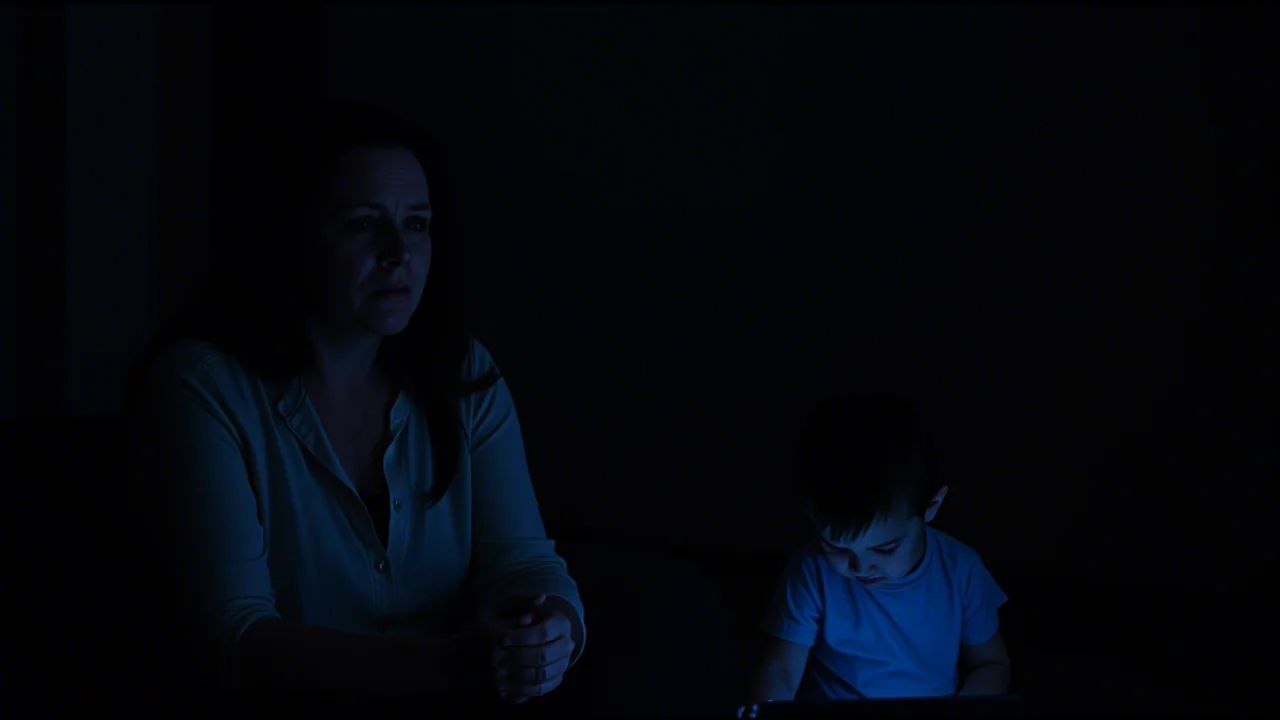
What they found was pretty striking. It wasn’t just a simple link; it was a dose-response pattern. Basically, the more ACEs a mother had experienced in her own childhood, the higher the chances were that her preschooler started using screens before age 2 and spent prolonged periods on them each day.
Think about it: kids whose moms had four or more ACEs were nearly four times more likely to be exposed to screens before their second birthday compared to kids whose moms had no ACEs. And they were twice as likely to exceed the recommended daily screen time limits.

What’s more, this connection seemed to hold true regardless of the child’s age or gender, or even the mother’s age. It suggests this isn’t just a random coincidence; there’s a real association happening here.
Why Might This Be Happening?
The study doesn’t say ACEs *cause* kids’ screen habits directly, but it points to a strong association. And the researchers suggest a few reasons why this link might exist, building on what we already know:
- Emotional Well-being: ACEs can impact a mother’s mental health, leading to stress, anxiety, or depression. When a mom is struggling emotionally, it can be harder to be fully present and responsive to her child’s needs. Screens might become a way to manage the child’s behavior or provide a moment of quiet for the stressed parent.
- Parenting Styles: Mothers with ACE histories might experience more parental stress or adopt less consistent parenting approaches. These factors have been linked in other studies to kids spending more time on screens.
- Socioeconomic Factors: ACEs are sometimes associated with fewer financial or social resources. This might mean fewer opportunities for kids to engage in other activities like sports, classes, or even just playing outside in safe spaces. Screens are often a readily available and inexpensive form of entertainment.
- Modeling Behavior: If a mother uses screens frequently to cope with her own stress or for entertainment, her child might simply be imitating that behavior.
It’s likely a combination of these things, creating a pathway where the challenges a mother faced in her past can ripple forward and influence her child’s environment and habits today.
Important Caveats
Like any good study, this one has its limitations. For one, it’s a cross-sectional study, meaning it took a snapshot in time. It shows an association, but it can’t definitively prove that maternal ACEs *cause* the screen habits. We need longitudinal studies (following families over time) to understand the direction of this relationship better.
Also, the information about screen use came from the mothers’ reports, which might not always be perfectly accurate, especially if kids use screens when mom isn’t around. The study also didn’t look at *what* kids were watching – educational content might have different effects than passive entertainment.
Finally, the study was done in one large city in China during the COVID-19 pandemic, which might mean the findings aren’t exactly the same everywhere or in non-pandemic times. But even with these points, the results are compelling and align with other research showing the long-term impact of ACEs across generations.
So, What Does This Mean?
This research really highlights that a mother’s past experiences can have a tangible impact on her child’s present-day habits, including something as common as screen time. It’s not about blame; it’s about understanding the complex factors at play.
The big takeaway? We need to support mothers who have experienced ACEs. Addressing their emotional well-being and providing resources for positive parenting could be key. And for the children of these mothers, creating supportive environments with plenty of opportunities for healthy development and activities might help buffer against the intergenerational effects of adversity.
Ultimately, it’s a call to action for more targeted support and maybe even interventions designed to help both moms and kids navigate these challenges and encourage healthier screen habits from the start.
Source: Springer


