
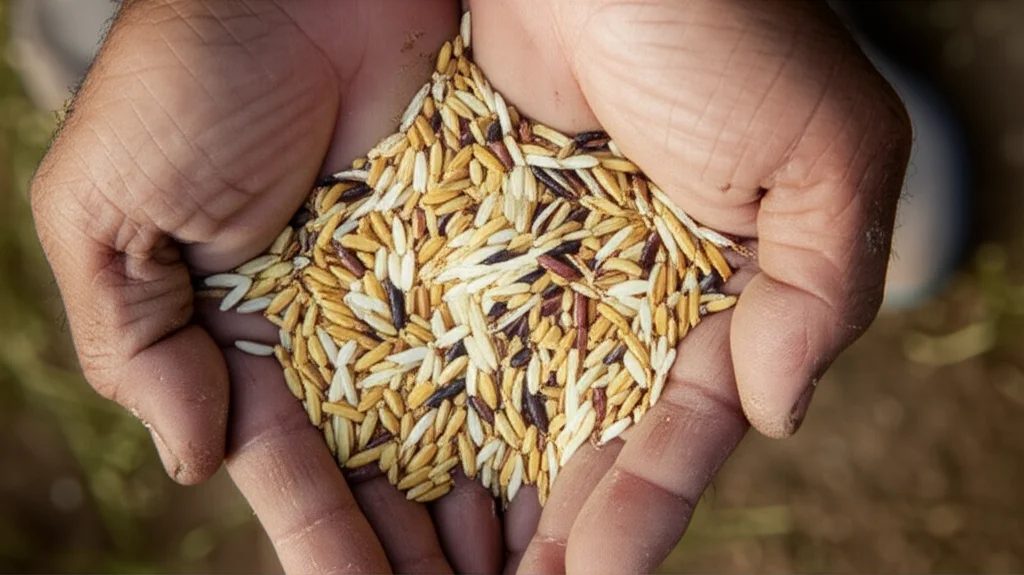
Seeds of Power: How Filipino Farmers Fight for Their Future, One Grain at a Time
Hey there! Let’s talk about something super important, something that touches the very roots of our food and our lives: seeds. You know, those tiny little things that hold the promise of tomorrow’s meal? Well, in the Philippines, there’s this amazing group called MASIPAG, and they’re in a real struggle for those seeds. It’s not just a farming thing; it’s a fight for independence, diversity, and keeping power in the hands of the folks who actually grow our food.
Think about it: for centuries, farmers saved their best seeds, adapted them, shared them. It was a natural cycle. But modern agriculture, with its big corporations and fancy labs, has been trying to break that cycle. They want farmers to buy seeds every season, often varieties that only work well with specific chemicals you also have to buy. This article dives into how MASIPAG is pushing back on four main fronts, challenging the ways capitalism tries to snatch those seeds away from the farmers.
The Four Fronts of the Seed Struggle
Based on what folks are saying in the research world and what MASIPAG is actually doing on the ground, we can see four distinct ways that farmers are getting separated from their seeds. And guess what? MASIPAG is tackling every single one of them head-on. It’s like a four-pronged attack against the forces trying to commodify and control this fundamental resource.
Front 1: The Genetic Grab – Modern Varieties and Lost Diversity
Okay, first up, we’ve got the seeds themselves – specifically, the modern varieties pushed by the commercial sector. Now, these aren’t necessarily ‘bad’ in themselves, but the way they’re developed and promoted can really mess things up for farmers. They’re often bred for uniformity, which means less genetic diversity out in the fields. Why does that matter? Well, diverse seeds are like a diverse portfolio; they’re more resilient to pests, diseases, and changing climates. When you rely on just a few uniform types, you’re putting all your eggs in one basket, you know?
The text points out how these modern varieties, especially hybrids (though rice hybrids are still catching up), can make it harder for farmers to save and replant their own seed. Even non-hybrids sometimes seem to lose vigor, pushing farmers to buy ‘fresh’ seed constantly. This pressure, combined with the aggressive promotion of modern types, leads to genetic erosion – traditional varieties, honed over generations by farmers, start disappearing. It’s a real loss of biocultural heritage and practical resilience.
MASIPAG saw this happening way back in the 80s, right after the Green Revolution swept through. Farmers were getting locked into chemical-heavy farming, their traditional seeds were gone, and nobody was developing varieties for low-input, organic systems. So, what did MASIPAG do? They started collecting and conserving traditional varieties. But they didn’t stop there. They realized farmers needed new options, varieties suited to organic farming and local conditions. So, they developed a unique farmer-led breeding program. It’s grounded in science, yes, but it’s done *by* farmers, *for* farmers.
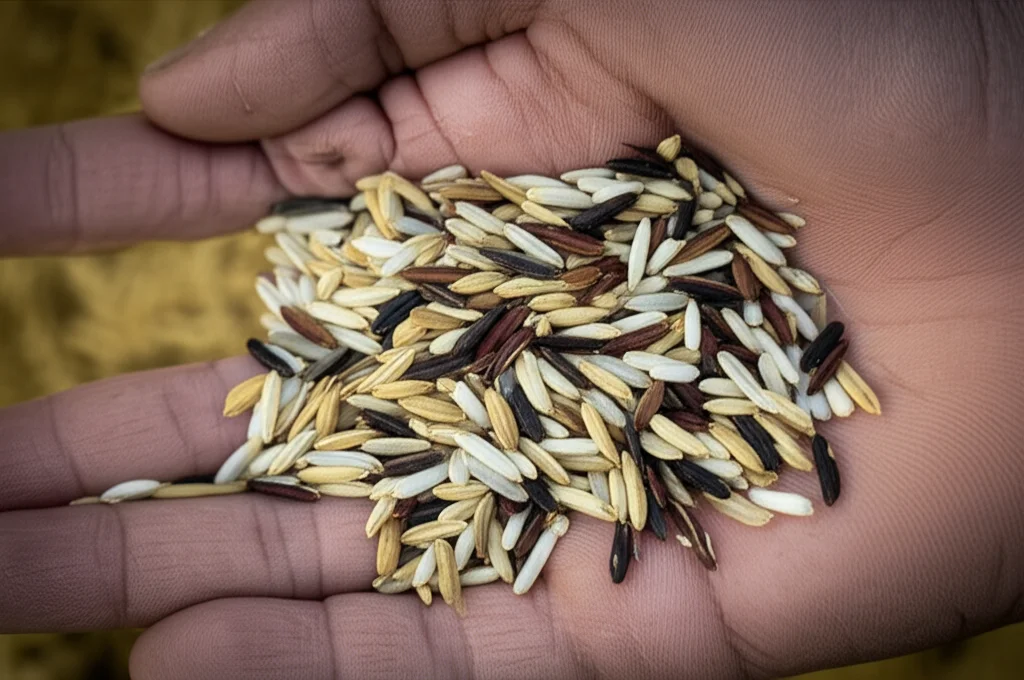
Their breeding approach, a modified bulk selection method, actively maintains genetic diversity. It’s the opposite of breeding for uniformity. This means the seeds are more stable and useful over time. They’ve developed over a thousand new varieties this way, alongside conserving hundreds of traditional ones. This isn’t just about having more types of rice; it’s about putting the power of seed development and conservation back into farmer hands, directly countering the genetic erosion and dependence fostered by the commercial system.
Front 2: The Commodification Squeeze – Farming as a Business, Not a Way of Life
Next up, we’ve got the whole system of modern farming itself. It’s become increasingly commodified, meaning everything – inputs, labor, even the ability to feed yourself – is pushed into market relations. Modern varieties came as part of a package deal: buy the seed, buy the fertilizer, buy the pesticide. This makes farmers dependent on external inputs and cash income to buy them. It makes it tough to switch to organic farming, which relies on building healthy soil and ecological processes, not buying bags of chemicals.
The text highlights a few ways this commodification hits farmers. First, it degrades the agro-ecosystem. Years of chemical use damage the soil and wipe out beneficial insects and organisms. To go organic, you have to rebuild all that, which takes time and effort, often leading to lower yields initially. For farmers living on the edge, that temporary dip in harvest is a massive risk. They need cash now, and the government subsidies for modern seed and chemicals are a powerful pull, even for farmers who want to go organic.
Second, land access is a huge issue. Most Filipino farmers don’t own the land they farm. Landlords might not allow organic methods, or farmers might not have enough land to experiment, set aside space for seed multiplication, or develop diversified farming systems that support organic practices. Limited land means pressure to maximize yield using the quickest (often chemical) route, even if they know it’s not sustainable long-term.
Third, labor has been commodified. Traditional systems often relied on `bayanihan` – a beautiful cultural practice of community labor sharing. Modern farming, with its strict schedules dictated by chemical applications, broke this down. Work became something you paid for, not something you shared. This also ties into the commodification of subsistence; farmers need cash for everything now – electricity, school fees, food if their farm doesn’t produce enough. This pressure for cash income makes it harder to dedicate time to labor-intensive organic practices or community seed work.
MASIPAG knows you can’t just give farmers organic seeds and expect magic. They have comprehensive programs that address these challenges. They provide training on organic farming techniques, helping farmers rebuild their soil and ecosystems. They encourage the revival of `bayanihan` through collective activities like the trial farms. They also help farmers develop alternative income streams through processing and marketing, reducing the pressure to rely solely on conventional rice sales. While they can’t fix landlessness or end poverty overnight, their practical work helps farmers navigate these difficult economic realities and build a pathway towards more independent, organic livelihoods, which in turn supports their alternative seed system.

Front 3: The Legal Lock-Up – Laws That Favor Corporations
Okay, so we’ve talked about the seeds themselves and the farming system. Now, let’s look at the rules of the game – the laws and regulations around seeds and varieties. This is where things get really tricky, and frankly, a bit unfair. The current legal framework, influenced by international agreements like UPOV and TRIPS, is built to protect the interests of private companies, not small farmers.
The main issue is privatization and the criteria for registering new varieties. Laws allow companies to own genetic material, essentially patenting life. This stops farmers from freely saving, exchanging, or reproducing seeds that might contain patented traits. It can even criminalize traditional practices. The text points out that this ignores the fact that much of the genetic material used by companies came from traditional varieties developed over centuries by farmers – a collective heritage!
Then there are the registration criteria, the famous DUS: Distinctness, Uniformity, and Stability. To get legal protection, a variety has to be clearly different from others, genetically uniform, and stable over generations. Guess what? Traditional varieties and those developed by farmers using methods that *value* diversity often don’t meet these criteria. They’re not uniform! So, they can’t be officially registered or protected by these laws. This leaves farmer seeds vulnerable and privileges the uniform products of modern breeding.
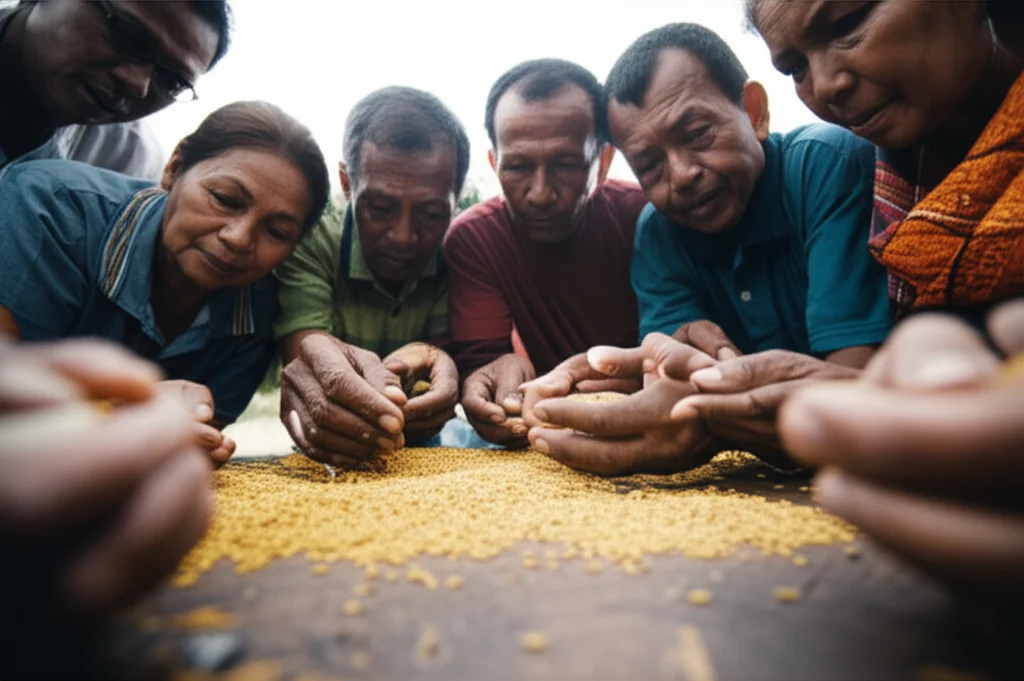
MASIPAG tackles this not just by lobbying (though they do that too!), but through practical action that builds an alternative system outside of this legal framework. They implement collective ownership principles. Their trial farm system, where farmers collectively evaluate and share seeds, is a practical way of organizing access and use as a common resource, not private property. They have rules against selling seeds and encourage sharing within the network, reinforcing the idea of seeds as a collective good.
They also challenge the very definition of a ‘variety’. MASIPAG’s selections are intentionally genetically diverse, not uniform like commercial varieties. They are maintained through farmer selection based on performance, not genetic purity tests in a lab. By developing and using these seeds, MASIPAG is saying, “Hey, *this* is a valid variety too, even if it doesn’t fit your narrow, commercially-driven definition.” They don’t officially register their varieties, partly to protect them from appropriation, but also as a statement that their system operates on different principles – principles of community, diversity, and farmer control, not corporate ownership and uniformity.
Front 4: The Science Sideline – Farmers Excluded from Breeding
Finally, let’s look at how modern plant breeding itself has become a way to separate farmers from seeds. Historically, farmers were the breeders! They selected seeds season after season, adapting crops to their local conditions. But modern breeding moved into labs and research centers, becoming a specialized, science-based field. Farmers and their incredible, generations-deep knowledge were largely excluded, seen as mere ‘end-users’ of the seeds developed by scientists.
The text points out that this isn’t necessarily a critique of science itself, but of how science has been organized and appropriated by capital. Varietal development became a business model. Public research, while not profit-driven, often develops varieties and techniques that end up benefiting private corporations or locking farmers into commercial systems (like the example of Golden Rice mentioned in the text, developed publicly but patented privately). This creates a narrative that agricultural progress *must* come from labs and technology, sidelining farmer innovation.
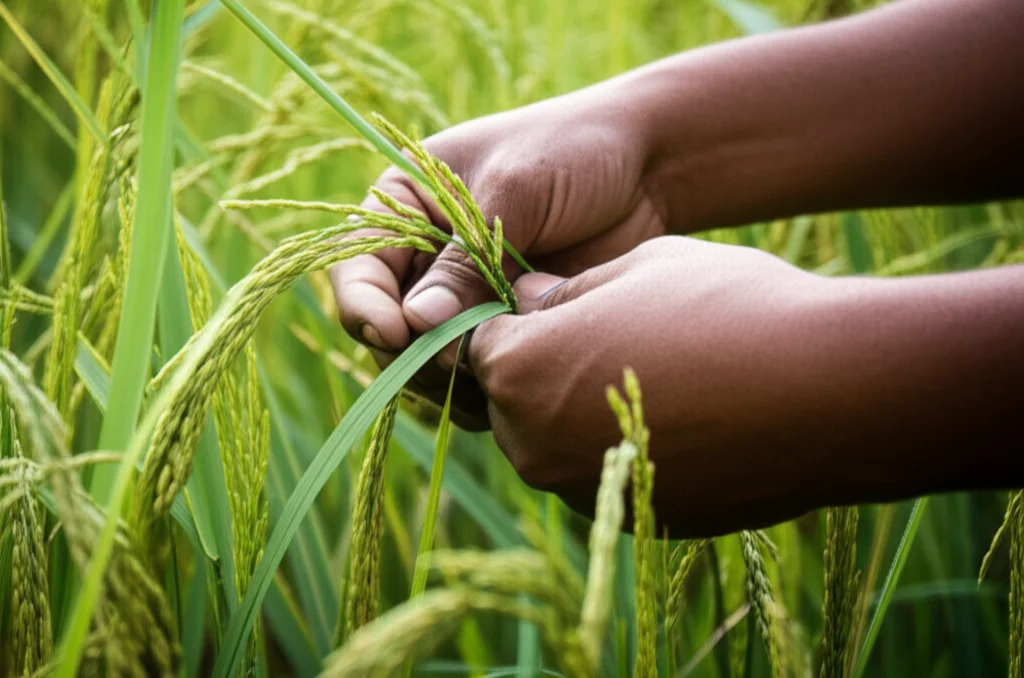
MASIPAG directly challenges this by putting farmers back at the center of breeding. Their farmer-led breeding program isn’t anti-science; it integrates scientific principles like systematic observation and documentation, but it’s done by farmers, in their fields, using their knowledge and priorities. They use techniques like hybrid crossing, but apply them within a system that values genetic diversity and local adaptation, not just high yield under optimal (often chemical) conditions.
This isn’t about every farmer becoming a full-time breeder. MASIPAG recognizes the complexity and labor involved. But it creates a system where farmers *can* be breeders, where their knowledge is valued, and where the breeding process is accountable to farmer needs, not corporate bottom lines or abstract DUS criteria. It’s a practical example of how science and a division of labor can be organized differently, not to exclude farmers, but to empower them. It re-politicizes the question of who develops seeds and for whom.
Putting It All Together: Resilience, Labour, and Real-World Change
So, what does all this tell us? MASIPAG’s work shows that the fight for seeds is happening on multiple, interconnected fronts. It’s about genetics, economics, law, and knowledge. The text makes a really important point: farmer seed networks in the Philippines haven’t just disappeared despite all these pressures. They’ve persisted, but they’ve also changed. Farmers are mixing strategies, using both commercial and MASIPAG seeds, navigating a complex reality.
But simply saying farmer networks are ‘resilient’ isn’t enough. We need to look at *how* they are resilient and what that means politically. If resilience means farmers are just barely getting by, relying on subsidies while wanting something better, that’s not a victory. MASIPAG’s work is about shaping that resilience, ensuring it’s based on diversity, collective control, and organic practices, not just scraping by with whatever the commercial system allows.
Another key takeaway is the role of labour. The text argues that seed activism, especially the practical kind, is fundamentally about labour. Saving seeds, participating in trial farms, breeding new varieties – these all require time, effort, and skill. The commodification of labour and the pressure for cash income make it harder for farmers to invest this labour in alternative seed systems. MASIPAG’s programs try to address this by helping farmers improve livelihoods, making it more feasible to dedicate time to seed work and organic farming. It’s a reminder that seed sovereignty isn’t just a right; it’s something you have to work for, collectively.
Finally, MASIPAG’s approach isn’t about completely withdrawing from the modern world or rejecting science and organization. It’s a critical engagement *within* the system. They use scientific principles, they have organizational rules, they interact with the market realities farmers face. They’re not building a perfect, isolated alternative; they’re showing how the boundaries of seed systems can be redrawn, how things like collective ownership and farmer-led breeding can work in the real world, challenging the dominant model by offering a living, breathing alternative. It’s a powerful lesson in how to fight for change not just by protesting from the outside, but by building something better from the inside out.
Source: Springer