
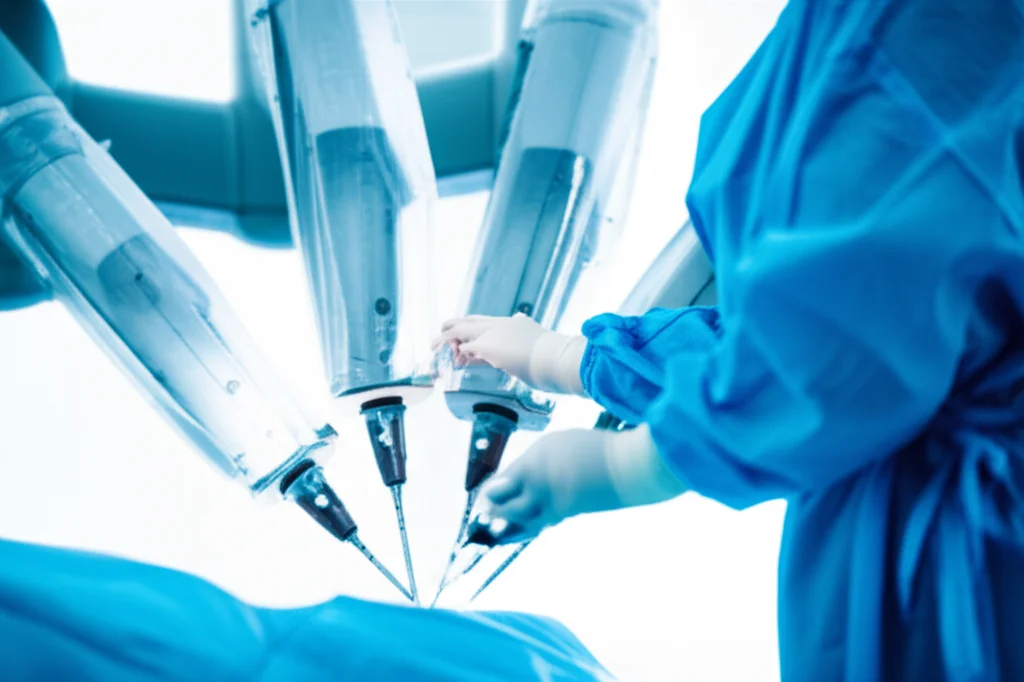
AI and ML: Revolutionizing Musculoskeletal Care
Hey there! Let’s chat about something pretty cool that’s shaking things up in medicine, especially when it comes to our bones, joints, and muscles – the world of Artificial Intelligence (AI) and Machine Learning (ML). Now, I know for some of us, these terms might sound a bit like science fiction, or maybe just a confusing ‘black box.’ But trust me, they’re becoming incredibly powerful tools, and they’re making their way into musculoskeletal medicine in a big way.
Think about it: healthcare is generating *massive* amounts of data. Patient records, scans, registry data… it’s a goldmine! And frankly, trying to make sense of all that with traditional methods can be overwhelming. That’s where AI and ML step in. They’re like super-powered pattern recognition engines, capable of sifting through mountains of information to find insights we might miss.
Over the last few years, the buzz around ML, particularly in fields outside of computer science, has exploded. Why? Well, computers got way faster and smarter, and thankfully, brilliant folks developed easy-to-use software tools (shoutout to R and Python!). This means even if you’re not a coding wizard, you can start exploring these techniques. We’ve seen error rates in things like object recognition drop dramatically, making ML much more appealing for medical applications.
Honestly, ML techniques were barely a whisper in orthopaedics and traumatology before 2015. But since then? Boom! The number of publications has shot up exponentially, and it’s still climbing. It feels like we’re just scratching the surface of what’s possible.
So, what could this mean for us and our patients? Potential benefits are huge:
- Better patient care
- Aiding surgeons in decision-making
- Improved clinical management and resource allocation
Large databases and registries, like the orthopaedic ones out there, are perfect playgrounds for ML. But here’s a snag: a lot of this data is unstructured. To use it effectively, it often needs to be ‘labelled,’ which, for now, usually means good old human effort. Still, the potential is undeniable.
For many of us working in musculoskeletal medicine, understanding exactly what ML and its super-powered cousin, deep learning, are, and what they can *really* do, might not be totally clear. So, let’s break it down a bit.
What’s the Big Deal with AI and ML?
Okay, so Artificial Intelligence (AI) is the big umbrella concept. The initial idea was simply making machines behave intelligently, like a human would. It’s contrasted with ‘natural’ intelligence (ours!). AI is broad, covering stuff like robotics, natural language processing (computers understanding language), expert systems, and yes, Machine Learning (ML) and its subset, Deep Learning.
AI was built to understand, model, and create intelligence. At its core, it uses mathematical calculations to handle uncertainty and make predictions or decisions based on data. This is incredibly useful when you have way too much data for traditional methods. Predictive models can help us link things like patient characteristics to outcomes (say, surgical success), which is gold for planning and treatment.
Most AI can handle not just perfectly neat data, but also messy, unstructured stuff. It’s about replacing human intelligence with algorithms driven by data. While these systems aren’t exactly ‘thinking’ like us yet, the goal is for them to eventually learn, reason, and perform cognitive functions we associate with humans.
Right now, many AI applications are task-specific. Think detecting landmarks on X-rays for planning joint replacements – that’s already happening! A challenge? Medical data is often a bit of a mixed bag. To train a reliable model, you need *lots* of data, including long-term follow-up, patient feedback, and objective measurements.
AI’s progress is often tied to other tech advancements. Take computer vision – the ability for computers to ‘see’ and interpret images. Huge strides have been made here. This means AI can now interpret radiographs directly. In musculoskeletal medicine, X-rays are crucial for diagnosing fractures, especially in busy ERs. But misdiagnoses happen. Properly trained AI could help reduce errors, improve accuracy, and ultimately, patient outcomes. Reviews are showing AI models performing as well as, or even better than, human experts in detecting things like scaphoid or distal radius fractures.
In non-emergency settings, ML is helping predict disease progression in osteoarthritis or treatment outcomes. It can screen for implant loosening on X-rays, measure knee alignment, and evaluate surgical results after a total knee replacement.
Computer vision also ties into augmented reality (AR), which adds digital info to our real world view. In medicine, AR can potentially lower a user’s mental load. Studies in labs show AR can reduce operative time and radiation exposure while boosting surgical precision.
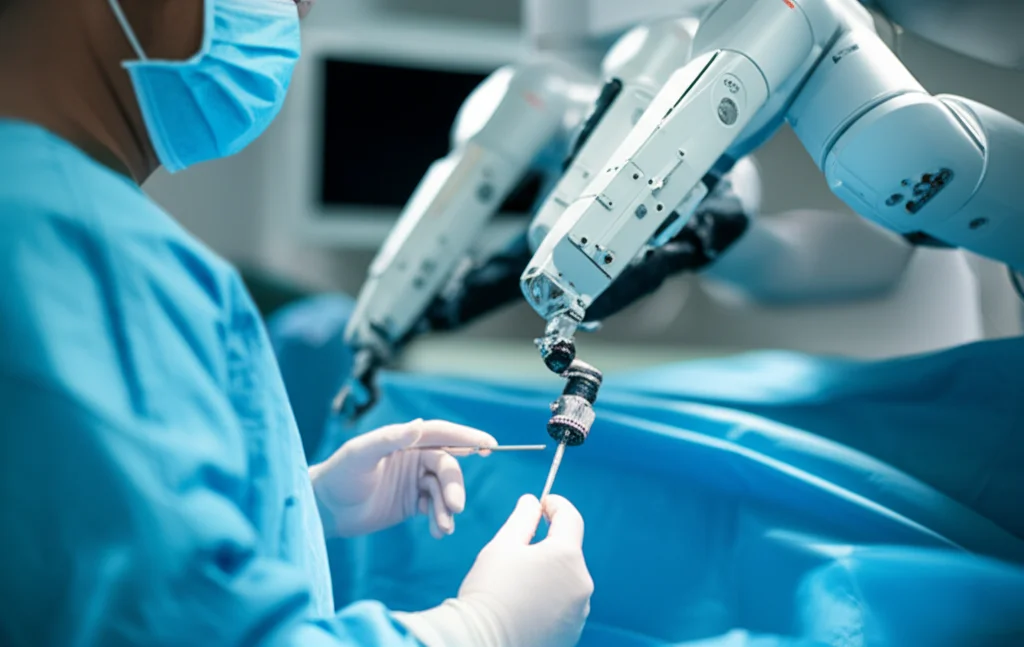
A great orthopaedic example is Total Knee Arthroplasty (TKA). AI, fed with X-ray data, can help plan the implant pre-op. Add info on things like flexion gaps or patella tracking during surgery, and AI can optimize decisions, resource use, implant choice, and positioning. This is where TKA navigation and robotics come in. These systems collect data on bone shape and movement, and algorithms calculate alignment and soft tissue balance.
Another interface between AI and the environment is Natural Language Processing (NLP). This is about computers understanding human language, written or spoken. Basic NLP breaks down sentences; more complex tasks involve understanding context (like ‘surgical instrument’ vs. ‘musical instrument’). In orthopaedics, NLP has been used for automating doctor’s reports, analyzing patient feedback, studying radiological reports (like looking for fractures around implants), or identifying common issues after surgery.
Then there are Expert Systems. These mimic human experts’ decision-making. They gather knowledge (from literature, experts) and use a ‘reasoning engine’ to offer diagnostic or therapeutic recommendations. Think of it like a super-smart medical consultant you can ‘talk’ to. They’re already used for things like classifying medical errors. Setting them up involves building a knowledge base and a system that can emulate an expert’s diagnosis.
While AI is popping up everywhere in orthopaedics, integrating it into daily practice has challenges. Understanding the concepts helps us grasp the limitations and potential.
Diving into Machine Learning Methods
Remember how ML is a subdiscipline of AI? While AI is about imitating general intelligence, ML is task-specific. It focuses purely on learning to improve results for *one* job. It sits at the crossroads of statistics, computer science, and AI. Unlike general AI, standard ML (not deep learning) usually needs structured or semi-structured data.
ML is about creating models that automatically get better with training and understanding the rules governing learning systems. A learning system simply aims to improve its performance on a task. Imagine showing an ML model X-rays of healthy and pathological knees. It learns to identify features (like edges, shapes) and compare them to what it knows about healthy knees, marking aberrant areas as pathological. It does this repeatedly, adjusting its internal workings to get better at diagnosing.
The three most common ML techniques we see are:
- Supervised Learning
- Unsupervised Learning
- Reinforcement Learning
There are hybrids too, but let’s focus on these main ones.
Supervised Learning: Learning by Example
This is perhaps the most intuitive. In supervised learning, we train the model using labelled data. This means we give the machine examples where we *know* the answer. For instance, here’s an image of a femur (label: bone), here’s an image of an Achilles tendon (label: tendon). The model learns the relationship between the input (the image) and the output (the label). It then tries to make accurate predictions on new, unseen data with similar characteristics.
Think of it like teaching a child with flashcards. You show the card (input) and say the word (label). Eventually, they learn to identify new cards themselves. The model adjusts its internal ‘weights’ (like the strength of connections in its ‘brain’) to minimize errors between its prediction and the correct label.
Supervised learning is great for problems where you want to predict a specific outcome. These fall into two main types:
- Classification: Predicting a discrete outcome (e.g., Is this tumour malignant or benign? Is this fracture present or absent?)
- Regression: Predicting a continuous outcome (e.g., What will be the patient’s length of stay? What dose of medication is tolerable?)
Common algorithms include decision trees, neural networks, and logistic regression. Orthopaedic registries, with their classified data, are ideal for supervised learning. For example, linking images of hip/knee periprosthetic infections with their diagnosis could train a network to spot them.
Already published applications in orthopaedics using supervised learning include:
- Predicting revision surgery after hip arthroscopy
- Predicting outcomes after surgery for bone tumours or metastases
- Estimating length of stay before TKA or hip fracture surgery
- Identifying patients at risk for long-term opioid use after knee arthroscopy
Imaging applications include detecting hip fractures on DXA scans, lumbar osteoporosis on CT, or rheumatoid arthritis relapse using ultrasound data.
Unsupervised Learning: Finding Hidden Patterns
Now, what if you have a ton of data, but you *don’t* have labels? This is where unsupervised learning shines. Instead of predicting a known outcome, these algorithms look for natural patterns, structures, or groupings within the data all by themselves. It’s like giving the machine a pile of photos and asking it to sort them into groups that look similar, without telling it what the groups should be (e.g., cats, dogs, landscapes).

Unsupervised methods are often used for:
- Clustering: Grouping similar data points together (e.g., identifying subgroups of patients)
- Dimension Reduction: Simplifying complex data sets by reducing the number of features while keeping important information (e.g., making high-dimensional data easier to visualize or process)
Clustering is only useful if the groups it finds actually mean something in the real world (like biologically relevant patient groups). You need external info to check if the clusters are valid.
Recent unsupervised learning applications in orthopaedics include:
- Classifying scoliosis using non-invasive surface measurements without needing X-rays
- Identifying patient subgroups with high, average, or low fracture risks
- Spotting movement patterns that differentiate low back pain patients from healthy individuals
- Identifying vulnerable patient subpopulations before TKA or total hip arthroplasty based on blood tests
- Clustering patients to predict quality of life after TKA
Reinforcement Learning: Learning by Doing
This one is a bit different. Reinforcement learning is all about learning through trial and error, by interacting with an environment to achieve a goal. The system (called an ‘agent’) takes an action, and based on the environment’s response, it gets a ‘reward’ (if the action was good) or a ‘punishment’ (if it was bad). The goal is to learn a strategy (a ‘policy’) that maximizes the total rewards over time.
Think of training a dog: give a treat (reward) for sitting, no treat (punishment) for jumping. The dog learns which actions lead to rewards. A classic example in AI is training a computer to play a game – it gets points for good moves, loses points for bad ones, and learns the best strategy.
In a clinical setting, reinforcement learning could potentially optimize sequences of decisions for long-term outcomes. The text mentions managing sepsis in intensive care – deciding when to give antibiotics, fluids, etc. Each choice affects the patient’s outcome. Reinforcement learning could, in theory, help optimize these complex, sequential decisions, adapting to individual patient changes. While this example isn’t musculoskeletal, it illustrates the *type* of problem reinforcement learning is designed for: dynamic decision-making in a changing environment.
Deep Learning: The Powerhouse
Now, let’s talk about Deep Learning. This is a subset of ML, but it’s the one that’s really captured the public imagination (and achieved some incredible feats). It’s based on artificial neural networks, inspired loosely by the structure of the human brain.
Like other ML, it has input and output layers. But what makes it ‘deep’? It has *multiple* hidden layers in between, stacked on top of each other. Each layer takes the output from the previous one and transforms it into a slightly more abstract representation. This stacking allows the network to learn incredibly complex patterns and features automatically, through iterative adjustments. Think of it like building understanding layer by layer – first identifying edges, then shapes, then objects, and finally, complex concepts like ‘a sarcoma on a knee X-ray’.

Deep learning is powerful because:
- It can learn very complex, non-linear relationships.
- It gets better the more data you feed it.
- Crucially, it can process unstructured data (like raw images or text) without needing extensive pre-processing.
This is why deep learning is behind breakthroughs like beating human Go champions or enabling autonomous driving through image recognition.
In musculoskeletal medicine, deep learning is already being used successfully in image analysis to:
- Classify fractures
- Assess osteoarthritis severity
- Determine bone age
- Identify tendon tears
- Analyze spine or lower extremity alignment
- Even automatically recognize bone metastases on scans
It’s not just clinical; deep learning can even impact things like healthcare facility management. It truly has the potential to transform orthopaedic surgery, but it requires clinicians and tech experts to work together.
The Upside: Why We’re Excited
So, why are we so optimistic about ML and deep learning in musculoskeletal medicine? The potential benefits are compelling:
- Enhanced Knowledge: Learning from big data can reveal relationships impossible to find with traditional methods. ML allows for both inference (understanding relationships) and prediction.
- Automation: Automating tasks can reduce workload, which is crucial in healthcare systems facing staffing challenges.
- Speed: ML can perform tasks and reach decisions incredibly fast (milliseconds to seconds), which is a huge advantage in time-critical situations like trauma.
- Improved Performance: For specific tasks, ML can match or even outperform humans in precision, reliability, and error rate, and it keeps improving with more data.
While initial setup costs can be high, the long-term potential for reducing workload and costs globally is significant. And once validated, these models could theoretically be implemented worldwide.
Facing the Hurdles: What’s Holding Us Back
Okay, let’s be real. It’s not all smooth sailing. ML, while powerful, has limitations:
- Data Challenges: Many studies are retrospective (outcome already known), which can introduce biases. We need more prospective studies. Also, getting large, suitable datasets, especially in new areas, takes time (think years for registries).
- The ‘Black Box’ Problem: Deep learning models can be complex, making it hard to understand *why* they reached a specific decision. Clinicians need transparent, explainable results to trust and use AI recommendations.
- Error Detection: Faulty diagnoses from ML can be tough to spot and correct, often requiring a deep dive into the entire process.
- Context Sensitivity: Some models perform poorly without non-imaging patient factors, raising questions about relying solely on AI for diagnosis based just on an image.
- Lack of Ground Truth: For subjective conditions (like mild rheumatoid arthritis), where diagnosis relies on human judgment and criteria rather than objective measures, an ML tool can only be as good as the human observer. Validating its superiority becomes a major challenge.
- Task Specificity: ML tools are generally built for one specific task, lacking flexibility.
- Regulatory and Ethical Issues: Patient privacy, informed consent, and the need for rigorous validation standards add complexity to integrating AI into healthcare.
ML can only handle situations it’s been trained for and addresses statistical, not literal, truths. We need to be mindful of these limitations.

Clearing the Path Forward
So, how do we overcome these challenges? It’s a multi-pronged effort:
- Improve Data Quality: We need large, diverse, representative, and well-annotated datasets. Standardizing data collection is key.
- Develop Interpretable Models: Making AI predictions more transparent will build trust with clinicians.
- Foster Collaboration: AI developers, clinicians, and regulators need to work together to create validation standards and ensure tools are reliable and safe.
- User-Friendly Design: Involving clinicians in development ensures AI tools fit into real-world workflows.
- Human Oversight: For now, a human ‘gatekeeper’ is necessary to supervise algorithm improvements and minimize biases. Whether this will always be needed is a fascinating question!
Peering into the Future
Where is all this heading? We can expect more commercially available ML-based tools. Think more robotics in surgery (arthroplasty, spine), augmented reality in complex procedures, smarter image analysis, and better voice interfaces through NLP. Personalized AI-supported musculoskeletal medicine could track conditions over time, enabling early intervention.
Integrating patient-specific anatomy into virtual models will improve planning. AI-driven or robotics-assisted rehabilitation could lead to more personalized recovery plans. For the next decade, these changes will likely be steady and predictable.
But the real wild card? Quantum Machine Learning. Quantum computers aren’t mainstream yet, but they offer exponentially more power. The potential applications in life sciences, including orthopaedics and traumatology, are enormous, though hard to fully grasp right now.

Wrapping It Up
ML and deep learning have made incredible strides in the last decade. They offer powerful tools for musculoskeletal medicine, capable of improving patient care, aiding decisions, and boosting efficiency. Yes, there are initial costs and significant challenges – data quality, validation, transparency, and ethical considerations are real hurdles.
Getting good results requires patience, training, and suitable data. Collaboration between tech experts and clinicians is vital to standardize methods and ensure tools are reliable and user-friendly. For the foreseeable future, I see ML and AI working *with* us, acting as a complementary function to human expertise. Think of it like the initial AI analysis of an ECG, which is then double-checked by a human – freeing us up to focus on more critical tasks.
Knowing the strengths and weaknesses of ML is key to using this technology wisely. Where this journey ultimately takes us is still a bit of a mystery. Maybe a good ML tool could even help us predict that!
Source: Springer