Legumes to the Rescue: Finding the Best Silage for Thirsty Lands
Hey there! Let’s chat about something super important, especially in places where water is scarce and keeping livestock happy and fed is a real challenge. We’re talking about finding good grub for our animal pals, and how some clever plants might just be the answer.
You see, in many parts of the world, particularly those dry, arid spots, feeding livestock year-round can be tough. The grass isn’t always greener, or even *there*, especially during the dry season. That’s where smart feed storage comes in. One classic method is making hay, drying the plants out. But another fantastic way is making silage – basically pickling the plants through fermentation. This keeps the nutrients locked in and makes the feed last way longer.
Now, enter the heroes of our story: leguminous plants. Think beans, peas, clover, alfalfa – these guys are nutritional powerhouses. They’re not just good for animals; they’re often tough cookies, able to grow in less-than-ideal conditions, and they even help improve the soil. Pretty neat, right?
But with so many legumes out there, which ones make the *best* silage, especially for those dry regions? That’s exactly what some smart folks set out to discover. They took a look at a few different leguminous species available in a specific arid area (Alar, Xinjiang, China) to see how they stacked up when turned into silage. The plants on their list were peanut vines (often a leftover!), Sophora alopecuroides (sounds fancy, but it’s a tough, protein-rich plant), liquorice (yep, the root stuff, but they used the leafy tops!), and the old reliable, Alfalfa.
Their mission? To check out everything – how well the plants fermented into silage, how long the silage stayed good once exposed to air (aerobic stability), and how well it would break down in an animal’s stomach (in vitro rumen fermentation). All this to figure out which ones could really help solve the feed shortage problem in arid lands.
Getting Down to Business: Making and Testing the Silage
So, how did they do it? They harvested these four plants – peanut vines, Sophora, liquorice tops, and Alfalfa – when they were at their peak for nutrients. They chopped them up, packed them into bales using a special machine, and let them ferment for 60 days in controlled conditions. Think of it like making giant, nutritious pickles for livestock!
After the fermentation period, the real work began. They opened the bales and started testing. They looked at the basic stuff like dry matter (how much ‘stuff’ is there once the water is gone), crude protein (super important for animal growth), fiber content (NDF and ADF – affects digestibility), fats (ether extract), and sugars (water-soluble carbohydrates, WSC). They also checked for alkaloids, which can sometimes be an issue in certain plants.
Fermentation Quality: What Happened Inside the Bale?
The first big test was the fermentation quality. You want silage to get acidic quickly (low pH) because that stops bad bacteria from growing and preserves the nutrients. Lactic acid is the good stuff produced by helpful bacteria during fermentation. Ammonia nitrogen (NH₃-N) is a sign of protein breaking down too much, which isn’t ideal.
What we found was pretty interesting. Sophora alopecuroides silage seemed to have the best fermentation quality. It had significantly higher lactic acid and lower ammonia nitrogen compared to the others. Peanut vines silage had a lower pH initially, which is good, but the other fermentation indicators varied.
Aerobic Stability: How Long Does it Last After Opening?
This is crucial! Once you open a silo or a bale, air gets in, and different microbes wake up. Yeasts, molds, and aerobic bacteria can start munching on the good stuff, heating up the silage, and spoiling it. Aerobic stability is basically how long the silage stays cool and fresh after being exposed to air.
The researchers monitored temperature, pH, dry matter, sugars, and ammonia nitrogen over 12 days of air exposure. They also counted the different types of microbes. All the silages eventually started to spoil, with temperatures rising and pH increasing (which is bad). Liquorice silage was the least stable, spoiling pretty quickly. Peanut vines lasted a bit longer. But Alfalfa and Sophora silages were the champions here, showing significantly delayed spoilage and maintaining better quality for longer. They also kept higher numbers of the good lactic acid bacteria.

In Vitro Rumen Fermentation: What Happens in the ‘Stomach’?
Okay, so the silage looks good and lasts well, but does it actually provide energy and nutrients to the animal? This is where the in vitro (meaning ‘in glass’, or in this case, in a lab setup mimicking a rumen) fermentation test comes in. They mixed the silage with fluid from sheep rumens and measured how much gas was produced over time (gas production indicates energy release from fermentation) and how much of the dry matter was degraded (digestibility).
Gas production increased over time for all silages. Alfalfa silage showed the highest overall gas production after 72 hours, meaning it provided a lot of fermentable energy. Sophora alopecuroides also performed well in terms of potential gas production and dry matter degradation rate. Liquorice silage had significantly lower ammonia nitrogen content in this test, which is interesting, but its overall gas production was lower.
The dry matter degradation rate showed how digestible the silage was. Alfalfa silage consistently had a higher degradation rate over time, especially in the later stages of fermentation. This suggests animals could get more out of it.

Putting It All Together: Who Are the Winners?
Based on all these tests – the initial nutritional value, how well they fermented, how long they stayed stable in air, and how they performed in the simulated rumen – two plants really stood out as making high-quality silage:
- Alfalfa (Medicago sativa): The classic for a reason! High nutritional value, good fermentation (though pH was a bit higher than ideal), excellent aerobic stability, and superior digestibility and gas production in the rumen.
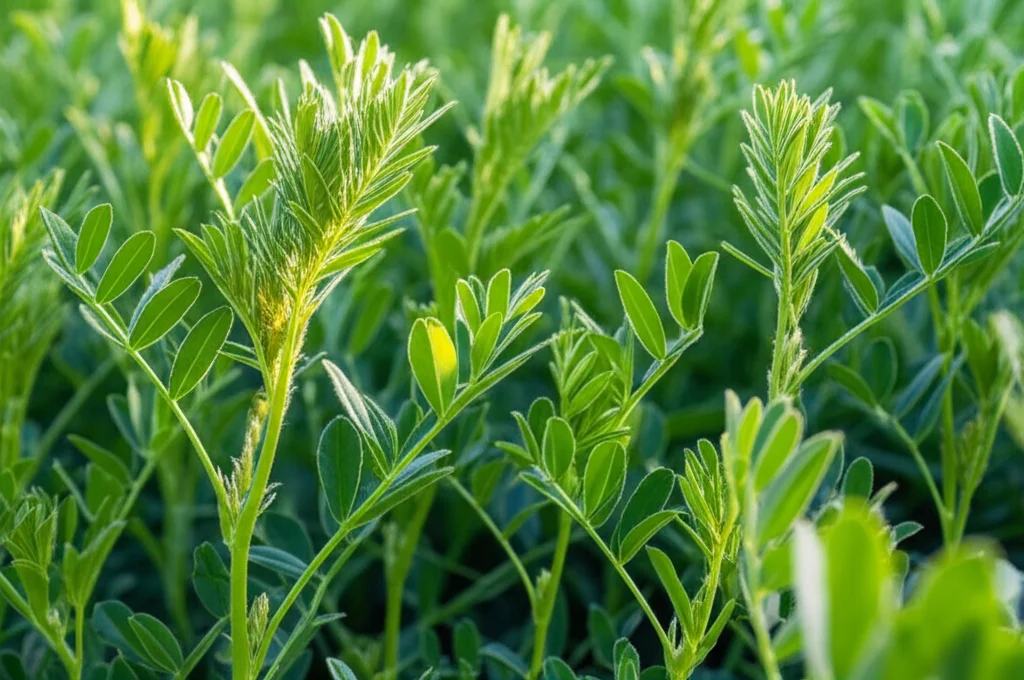
- Sophora alopecuroides: A strong contender! Showed optimal fermentation quality with high lactic acid and low ammonia nitrogen. Also demonstrated good aerobic stability and strong performance in the in vitro rumen test, comparable to Alfalfa in potential gas production and degradation rate.
Peanut vines silage had some good points, like initial low pH and decent aerobic stability, but its crude protein content was lower than the others. Liquorice silage, while drought-tolerant, didn’t ferment as well and had poor aerobic stability, likely due to its higher sugar content feeding spoilage microbes.
So, for arid regions desperately needing reliable feed sources, Alfalfa and Sophora alopecuroides look like fantastic options for making high-quality silage. They offer good nutrition, ferment well, and stay stable longer once opened.
What’s Next?
This study gives us a great roadmap, pointing towards Alfalfa and Sophora as top choices. But the researchers rightly point out that the next step is to see how animals actually perform when eating this silage. Do they grow better? Produce more milk? That’s the real-world test that’s still needed.
Still, it’s exciting to see how science is helping us identify and utilize resilient plants like these legumes to tackle challenges like feed shortages in tough environments. It’s all about making the most of what we have and finding sustainable ways to feed our livestock and support rural communities.
Source: Springer