
Lassa Virus: The Subtle Genetic Shifts That Help It Adapt to New Hosts
Hey there, let’s chat about something pretty fascinating and, honestly, a little bit concerning: how viruses like Lassa manage to get better at infecting different creatures, including us! You know, Lassa fever is one of those illnesses that pops up regularly in parts of West Africa, causing a whole lot of trouble. It’s caused by the Lassa virus, and while its natural home is a specific kind of rat (the *Mastomys* rat, if you want to get technical), we humans sometimes accidentally catch it.
The Lassa Lowdown
So, Lassa fever? It’s a bit of a nasty one. We’re talking potentially severe hemorrhagic fever, though thankfully, about 80% of people who get it only have mild or no symptoms. But for the unlucky 20%, it can be really serious, leading to bleeding, organ failure, and sadly, death in a significant number of cases – estimates range from 100,000 to 300,000 infections and around 5,000 deaths annually, though some experts think the true numbers might be even higher.
How do people catch it? Mostly from those rats – direct contact with their droppings, breathing in contaminated dust, or even eating infected meat. And yes, it can spread person-to-person too, through contact with body fluids. This makes it a big worry for healthcare workers, just like Ebola. The thought of this virus spreading to new places or getting *better* at infecting new hosts, well, that’s something scientists are really keen to understand. It’s classified as a hazard group 4 (HG4) pathogen, putting it in the same scary category as some other serious viruses.
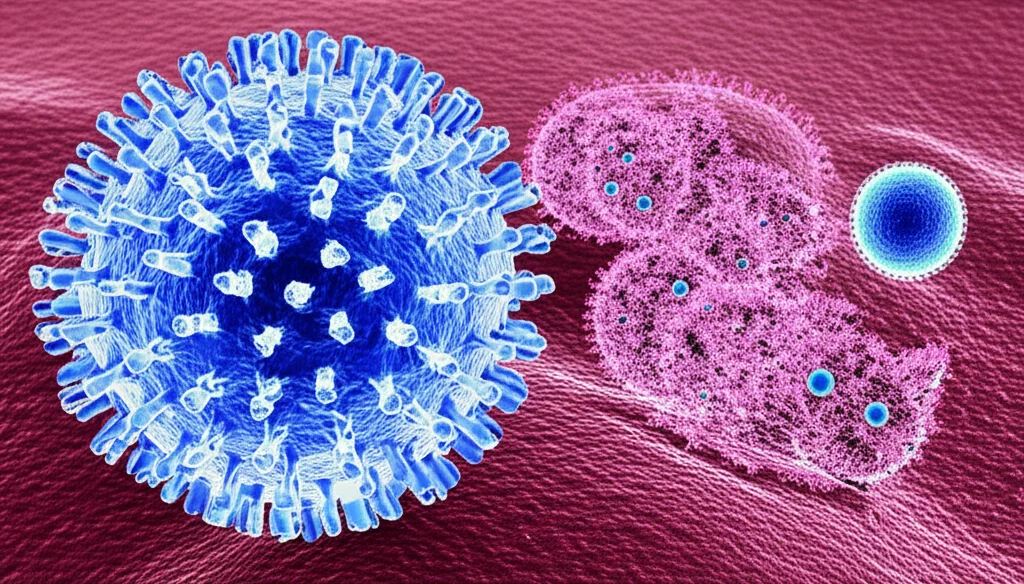
The Lassa virus itself is a tiny thing with a relatively simple genetic makeup – two pieces of RNA, called the L and S segments. These segments carry the instructions for just four proteins: the L protein (involved in copying the virus), the Z protein (helps the virus assemble and fight off our immune system), the GP precursor (helps the virus get into cells), and the NP (wraps up the genetic material).
Building a Model to Watch Adaptation Happen
To figure out how this virus might change when it moves into a new host, scientists often use animal models. Guinea pigs have been used before for Lassa studies, but they aren’t always easy to infect severely right off the bat. Sometimes, you have to sort of ‘train’ the virus to get better at infecting them.
That’s exactly what happened in the study I’m looking at. They started by infecting guinea pigs with a Lassa virus stock that had been grown in cell culture. Initially, the guinea pigs didn’t get very sick – just mild or no symptoms. To make the virus more potent, they did something called ‘serial passaging.’ Think of it like a viral boot camp: they took the virus from the infected guinea pigs and used it to infect a new group, then took the virus from *that* group to infect another, and so on. They did this five times.
And guess what? It worked. With each passage, the guinea pigs started showing more severe signs of illness. By the third passage, they saw ruffled fur, lethargy, unsteady gait, rapid breathing, and that characteristic temperature spike followed by a drop before death. The lethality rate jumped from 0% in the early passages to 40% by passage three, and eventually, they saw an 80% mortality rate by passage five (the study was actually stopped early for animal welfare reasons once most animals reached a humane endpoint, but the signs were clear). This showed the virus was definitely adapting and becoming more virulent in its new guinea pig home.
What the Genes Revealed: A Subtle Shift
Now, for the really interesting part – the genetics. The researchers sequenced the virus from the guinea pigs at each step of this passaging process. You might expect that as the virus got better at infecting guinea pigs, it would develop a bunch of new, significant mutations, right? Like it was inventing new tools to break into guinea pig cells or fight their immune system.
But here’s the twist, and it’s a pretty neat one: they found *no significant new mutations* appearing during this adaptation process in the guinea pigs.
Instead, what they saw was a *selection pressure*. Imagine the initial virus population wasn’t just one identical type, but a mix with slight variations already present at low levels – like different ‘flavors’ of the virus. The guinea pig environment didn’t force the virus to create *new* flavors. It simply favored two specific flavors that were already there, particularly variations in two genes on the L segment. These specific versions of the genes were better suited for replicating or surviving in the guinea pig host, so they became more common in the viral population over time.
They identified seven nucleotide changes across the whole genome during the passaging, but only three of these actually resulted in a change to the amino acid sequence of the proteins the virus makes. Two of these amino acid changes were in the L protein (the one involved in copying the virus’s RNA), and one was in the GP2 glycoprotein (part of the protein that helps the virus enter cells). Crucially, these specific amino acid changes were *already present* as minor variations in the initial virus stock used to infect the first guinea pigs. The adaptation wasn’t about *creating* these changes, but about the guinea pig host *selecting* for the virus particles that already had them.
Host Response Clues
The study also looked at how the guinea pigs’ own genes responded to the infection as the virus became more adapted. They compared gene expression in guinea pigs infected with the less adapted virus (passage two) versus the more adapted virus (passage five).
They saw some interesting patterns. Genes related to the nervous system were primarily *downregulated* in the more severely infected animals. This is interesting because neurological symptoms, including hearing loss, are known to occur in Lassa fever patients and in animal models. This downregulation might offer clues about how the virus interacts with the central nervous system.
On the flip side, genes associated with protein synthesis and assembly were *upregulated*. This makes sense – if the virus is replicating more efficiently in the later passages, the host cell machinery would be working harder to build viral components. This upregulation aligns perfectly with the observed increase in clinical disease severity and mortality.

Why This Matters for Us
So, why should we care about Lassa virus adapting in guinea pigs? Well, it gives us crucial insights into how this virus might behave if it were to spread more widely or jump into other mammalian hosts, potentially including humans more efficiently, or even other animal species that could become new reservoirs.
This study shows that Lassa virus doesn’t necessarily need a huge genetic overhaul to become more dangerous in a new host. It can simply leverage the small variations already present in its population, selecting the ones that give it an edge. This ability to adapt through selection of pre-existing variants is a powerful tool for a virus.
The specific model developed in this study, using the GA391 strain (which is a different genetic lineage, Lineage III, than the more commonly studied ones like Josiah, Lineage IV), is also really valuable. It complements existing models and allows researchers to test if potential vaccines can protect against different versions of the virus. This is super important because future outbreaks could be caused by any of the different Lassa lineages circulating in West Africa.
Understanding these subtle genetic shifts and how they translate to increased disease severity is a vital piece of the puzzle in preparing for and responding to Lassa fever outbreaks. It tells us that even seemingly minor genetic differences in the virus population can have significant consequences when the virus encounters a new environment.

This research, by carefully watching the virus evolve in a controlled setting and peering into its genetic code, gives us a clearer picture of the sneaky ways viruses can adapt. It reinforces the need for ongoing surveillance and research to stay ahead of these public health threats.
Source: Springer