
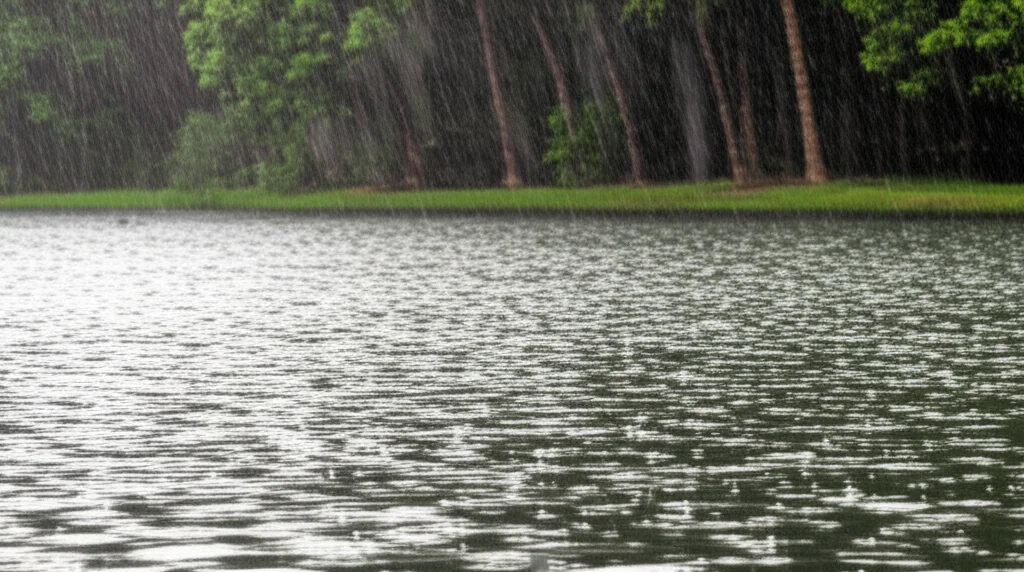
When the Sky Opens Up: How Rain Reshapes Life in a Subtropical Lake
Hey there, let’s talk about lakes!
You know how climate change is doing its thing, making weather patterns go a bit wild? More storms, floods, droughts – the whole unpredictable mess. Well, these changes aren’t just messing with our gardens or travel plans; they’re putting some serious pressure on our freshwater pals, the lakes and rivers. And who’s living right there on the front lines, showing us how things are really going? Tiny, microscopic plants called phytoplankton. They’re like the lake’s canary in the coal mine, super sensitive to environmental shifts.
We know phytoplankton are crucial. They’re the base of the food web, make oxygen, and help cycle carbon. In temperate lakes, their yearly cycle is pretty well-understood, following a predictable pattern. But in warmer, subtropical spots, especially with these crazy weather events becoming more common, things get a lot less predictable. Extreme rain, for instance, can totally flip the script, changing everything from nutrients and temperature to how murky the water is. This got us thinking: how exactly do these little guys handle the punches thrown by changing rainfall?
Diving into Changhu Lake
So, we decided to take a deep dive – metaphorically speaking, mostly! – into Changhu Lake in China. It’s a big, shallow, subtropical lake that gets hit with monsoon rains. We spent two years, from May 2020 to April 2022, keeping a close eye on the phytoplankton there. We weren’t just counting individual species; we were looking at them in “functional groups.” Think of it like classifying bands by genre – rock, jazz, pop – rather than listing every single musician. This functional approach is super helpful because it tells us more about how these tiny communities are actually *working* and responding to their environment.
We collected samples, measured things like water temperature, dissolved oxygen, and nutrients (nitrogen and phosphorus stuff), and kept track of the rainfall and water level. We wanted to see if rainfall patterns were really calling the shots for these phytoplankton groups and how other environmental factors played into it.
The Lake’s Mood Swings
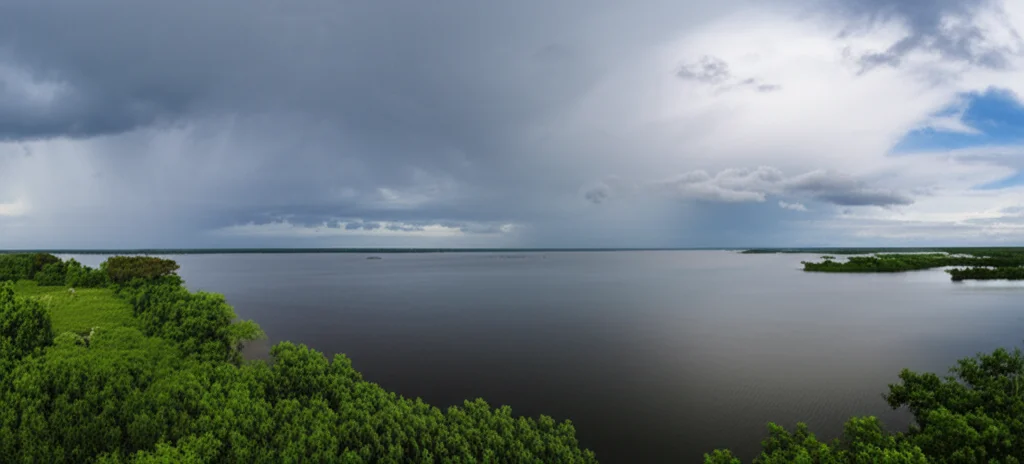
Over our two-year study, Changhu Lake definitely had its moments. Water temperature did its usual seasonal dance, warm in summer, cold in winter. Water levels bounced around, hitting peaks during the rainy season. Nutrients were a bit all over the place too, with nitrogen often higher in winter and phosphorus popping up more in spring and summer. And the rain? Oh boy, the rain! It varied wildly, from barely a drop to massive downpours, especially that whopper in July 2020.
We looked at the rainfall data, comparing it to the historical average, and basically split our study period into “rainy season” (when precipitation was high, sometimes *really* high) and “dry season” (when it was below average). This distinction turned out to be key.
Phytoplankton’s Shifting Cast
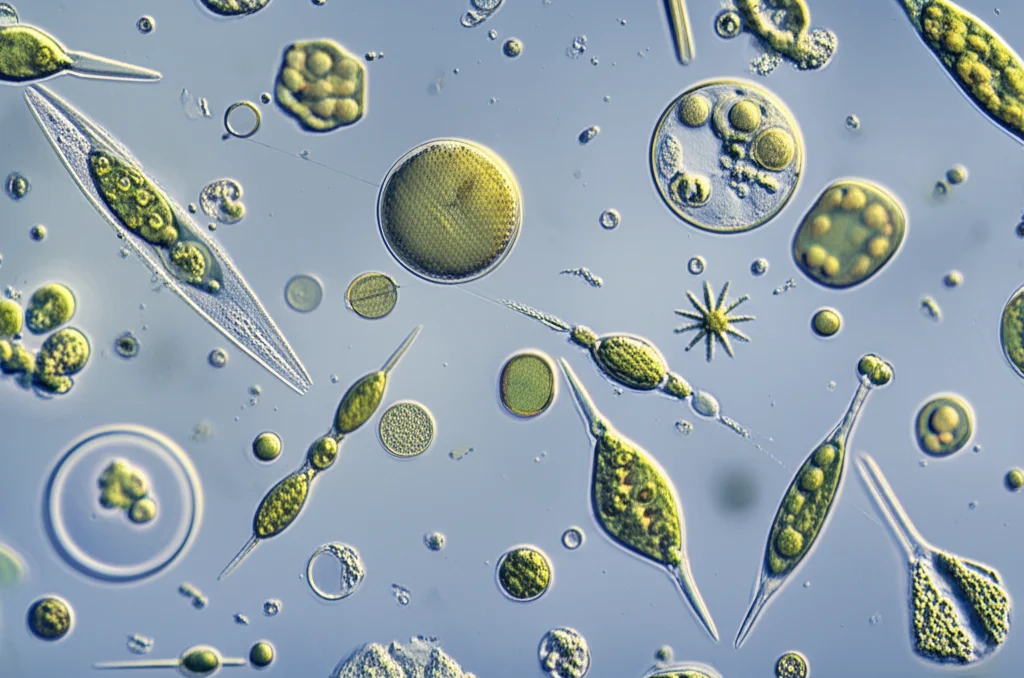
We found a ton of different phytoplankton – 119 types, classified into 20 functional groups. But like any good show, only a few were the main stars, the “dominant” groups that made up most of the biomass. We identified 15 of these dominant groups, and their presence really shifted depending on the season and, crucially, the rainfall.
Overall phytoplankton biomass went up and down, often peaking in autumn or spring. But the *mix* of who was dominant changed dramatically. For example, groups like B, D, H1, LO, MP, X2, and Y were often important players. Others, like N, P, and X1, also showed up significantly at times.
Rainfall’s Direct Impact: The Big Washout
One of the most striking things we saw was the effect of heavy rainfall. Remember that massive rain event in July 2020? It caused a huge drop in the total amount of phytoplankton biomass – a whopping 69.5% reduction! It was like a big reset button for the lake.
But it wasn’t just a simple washout. Certain groups actually *increased* their dominance after this deluge. Groups like D, H1, J, MP, and Y became more prominent. Why? Well, these guys are tough. They’re often tolerant of murky water (caused by all the sediment stirred up by the rain) and maybe less tasty to the tiny animals that eat phytoplankton (zooplankton), whose numbers might also drop after a flood event. This really challenged the old idea that lake succession is always a smooth, predictable process. Extreme rain can just come in and shake everything up!
Seasonal Successions: Wet vs. Dry
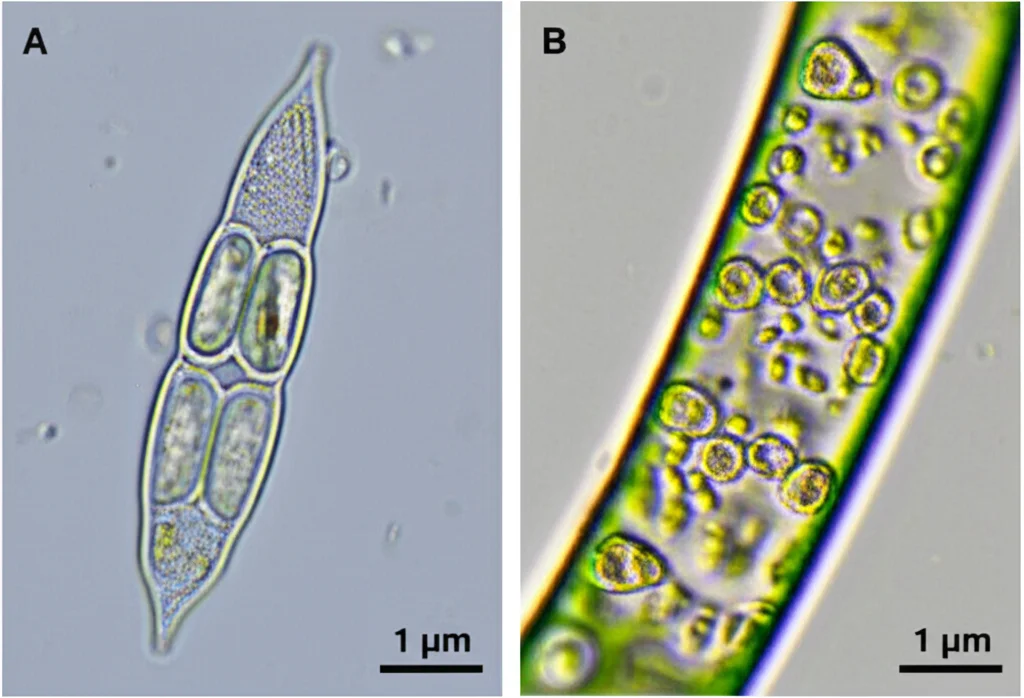
Beyond the extreme events, we saw clear shifts linked to the general rainy and dry seasons. During the rainy season, when water levels were high and fluctuating, and the water column was more mixed up, groups that like these conditions took over. These were guys like H1 (*Anabaena sp.*), J (*Crucigenia apiculata*), and S1 (*Oscillatoria sp.*). Our analysis showed these groups were happy with mixing and didn’t need super high nitrogen levels.
When the dry season rolled around, the lake became more stable (less mixing) and total nitrogen levels tended to increase. This is when a different crowd came to the forefront: groups like X2 (*Chroomonas sp.*), C, N (*Cosmarium sp.*), and W1 (*Euglena caudata*, *Lepocinclis sp.*). These are the types that thrive when the water is calmer and nutrients are plentiful – classic signs of a eutrophic (nutrient-rich) and stratified (layered) lake environment.
Environmental Drivers: Who’s Pulling the Strings?
Our statistical deep dive confirmed what we were seeing. Water temperature, water level, nutrient levels (both nitrogen and phosphorus forms), and precipitation were the main environmental factors influencing which phytoplankton groups were dominant.
During the rainy season, temperature, phosphorus, and precipitation seemed to be the big players, favoring those mixing-tolerant groups. But in the dry season, total nitrogen really stepped up as the main factor, giving the advantage to groups like X2 and W1, which love those stable, nutrient-rich conditions.
It was interesting to see how different groups responded. For example:
- Groups H1, J, and S1 were buddies with precipitation, temperature, water level, and phosphorus, but not so much with dissolved oxygen or nitrogen.
- Groups N and X2 were negatively correlated with precipitation and phosphorus, but positively with nitrogen. They like it calmer and nitrogen-rich.
- Groups C and W1 also liked nitrogen and disliked phosphorus.
- Groups D and MP seemed to prefer warmer water and lower nitrogen.
- Some groups, like B, LO, and X1, didn’t show strong simple correlations with these specific environmental factors, suggesting they might be influenced by a more complex mix or other things we didn’t measure.
Beyond Changhu: A Global Pattern?
We also compared our findings to other types of lakes. It turns out, how rainfall affects phytoplankton can vary depending on the lake’s specific characteristics. Shallow lakes might see mixing-tolerant groups in the rain and stagnant-water fans when it’s dry. Floodplain systems have their own unique shifts driven by water flow and nutrients. Tropical reservoirs, with their stable temperature layers, might have more consistent communities. But subtropical systems like Changhu Lake really show pronounced seasonal shifts driven by that monsoon rainfall pattern.
Why This Matters
So, what’s the takeaway from all this? Well, it’s clear that rainfall patterns, especially those extreme events, are a major force shaping the tiny, but mighty, phytoplankton communities in subtropical lakes. They don’t just cause minor tweaks; they can trigger significant shifts in who’s dominant, changing the whole structure of the community.
Understanding these shifts is crucial because phytoplankton are the base of the food web. Changes here can ripple up and affect everything else in the lake. Plus, they’re great indicators of the lake’s health. By looking at these functional groups, we get a clearer picture of the environmental conditions – are they mixed and low-nutrient, or stable and nutrient-rich?
In a world facing increasing climate variability, knowing how these ecosystems respond is key for managing and conserving them. It tells us that we need to pay close attention to how changing rainfall might impact our water resources. This study gives us a valuable tool – using phytoplankton functional groups – to monitor and understand these changes better. Of course, lakes are complex, and extreme weather is unpredictable, so keeping up the research with longer studies and more detailed data is essential to really get a handle on what the future holds for these vital aquatic homes.
Source: Springer


