
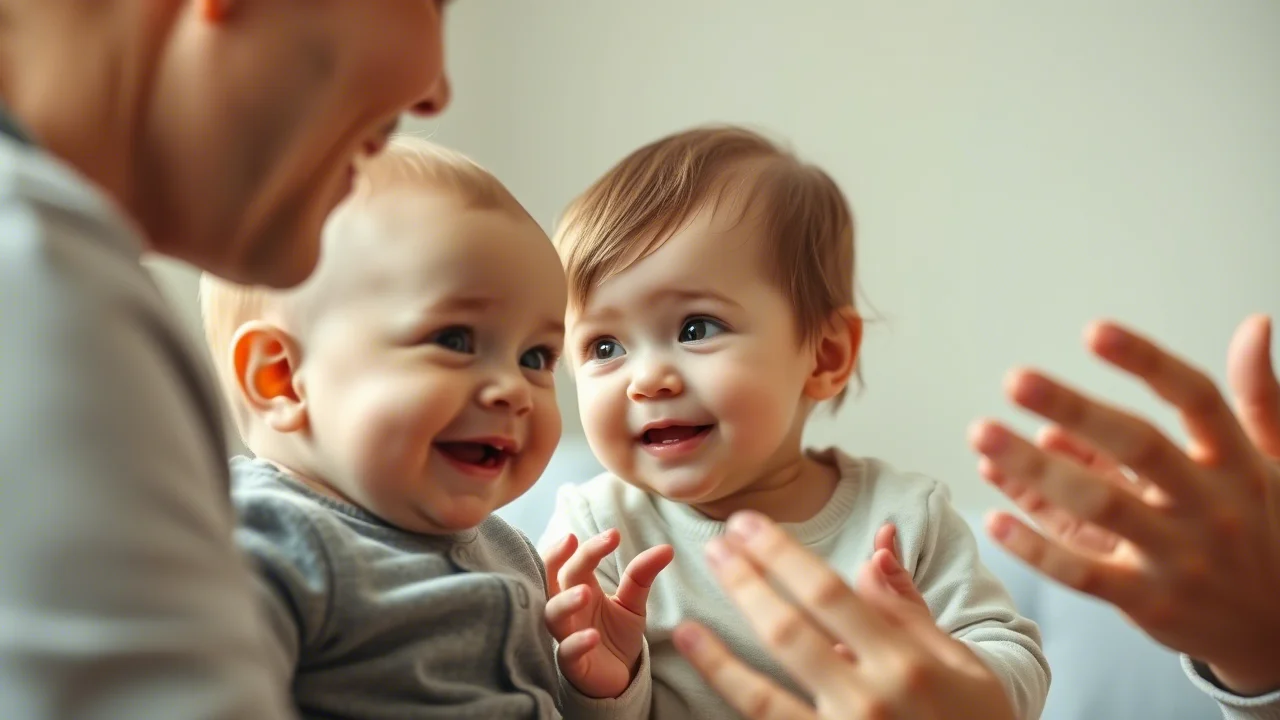
Where Little Humans Learn the Social Dance
Okay, let’s talk about babies. Those tiny humans who seem to be figuring out the world one slobbery toy at a time. We watch them, amazed, as they go from just reacting to actually *communicating*. But how do they really learn to ‘talk’ to us, to understand what we mean, and to make themselves understood?
For the longest time, the thinking went something like this: these little guys needed to become mini-psychologists. We thought they had to figure out what was going on inside *our* heads – our intentions, our beliefs, our complex thoughts – before they could truly communicate. It was like they needed a tiny brain capable of serious mind-reading just to ask for a biscuit or tell you ‘no’. This idea, focusing on the individual’s internal reasoning, has been super influential in how we study child development.
But what if that picture is a bit… well, backwards? What if learning to communicate isn’t primarily about being a mind-reader first, but about learning to play *together*, following unspoken rules and sharing expectations? What if it’s less about figuring out complex mental states and more about learning the steps to a social dance?
That’s the exciting idea I’ve been digging into. It suggests that becoming a competent communicator, even before they use words, is all about becoming a participant in what we can call ‘normatively regulated joint activities’. Sounds fancy, I know, but stick with me. It just means doing things together where there are expected ways of behaving – norms – and where you learn to accept or reject what’s happening or what’s being proposed.
Think of it this way: communication, like making a promise or a request, is really about sharing commitments. If I promise you something, I’m committing myself to an action, and you accepting that promise means you’re also committed in a way (like not hindering me). This view sees communication as fundamentally *social*, not just something happening inside one person’s head.
So, what does this mean for our little adventurers? To be minimally competent at this ‘commitment sharing’ game, they need two key things:
- They need to be able to behave according to some basic norms within these joint activities, and even be ready to step in if someone else isn’t playing by the rules.
- They need to know how to signal ‘yes’ (acceptance) and ‘no’ (rejection) to potential commitments or actions.
And here’s the cool part: contrary to what many folks thought, it looks like by around 18 months of age, children are already starting to meet these preconditions! They’re not reasoning about intentions or beliefs in a complex way yet, but they’re learning the social ropes. How do they get there? Well, it seems two fascinating behaviours play a big role: teasing and those classic headshakes and nods.
The Art of the Tease
Now, this is where it gets really charming. Ever seen a baby deliberately *almost* touch something forbidden, look at you with a mischievous grin, and then pull their hand away just to get a reaction? Or offer you a toy, and then snatch it back right as you reach for it?
That, my friends, is infant teasing. And it’s not just random cuteness. It’s a joint activity – it only works if the other person (usually a familiar adult) participates, even if they’re just reacting. And it seems to be a crucial way for infants to explore and test the boundaries of those ‘norms’ we talked about. They’re figuring out what’s allowed, what gets a reaction, and how far they can push things, all in a relatively safe, playful way.
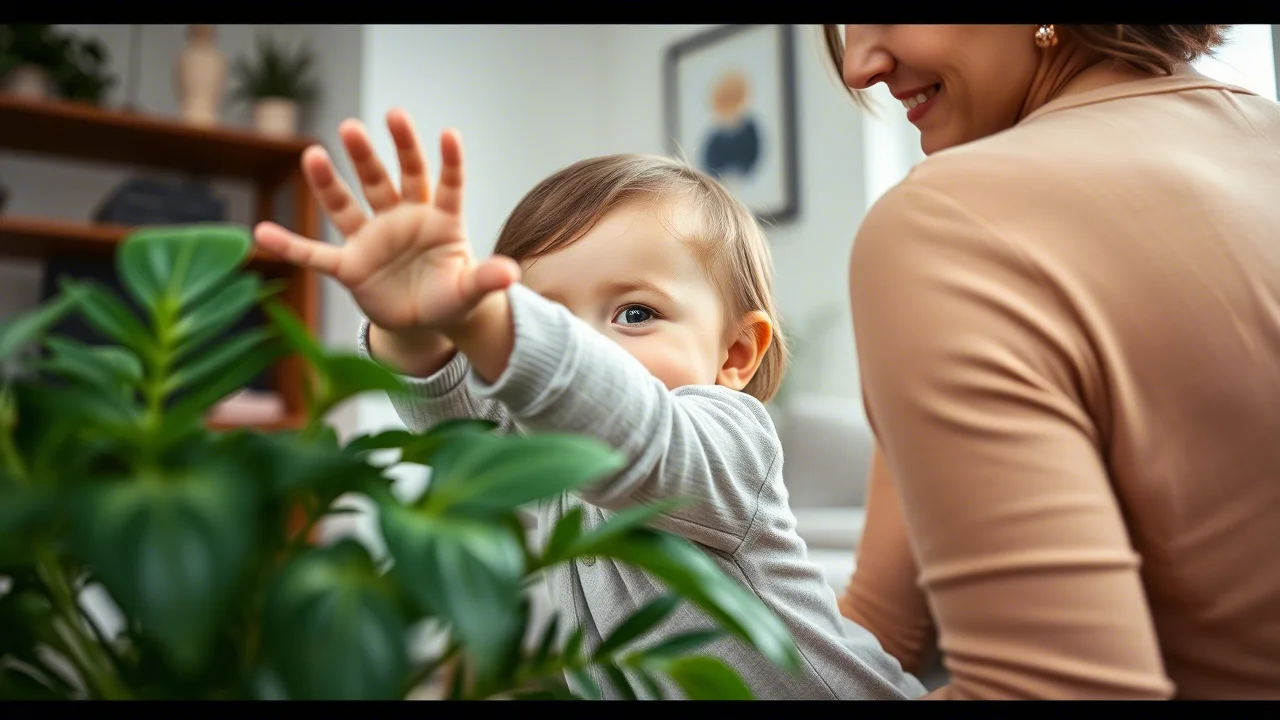
Take the example from the text: an 11-month-old reaching for a plant, but stopping just short, looking at her mother and laughing when the mother says ‘no’. She’s not necessarily understanding the *concept* of ‘prohibition’ yet in an abstract way. She’s learning through the *interaction*: “If I do this (almost touch), I get this reaction (Mom says ‘no’). What happens if I do it again? And again?”
Or the biscuit game: the baby offers the biscuit, the parent reaches, and the baby pulls it back, smiling. They’re playing with the expectation. In adult interactions, accepting an offer *commits* you to giving the thing. By playfully breaking this expectation, the infant highlights the norm and learns about the sequence of offering, accepting, and giving. The parent often plays along, maybe pretending to be annoyed, which reinforces the playful nature and avoids actual punishment.
These teasing moments, especially around prohibitions and giving, help infants get a practical feel for how norms work in real-time interactions. They’re learning about compliance and non-compliance, not by reading a rulebook, but by experimenting in a social context. And importantly, they don’t need to understand the adult’s complex intentions or beliefs to do this. The learning comes from the predictable (or sometimes unpredictable!) *responses* they get.
This idea flips the script. Instead of needing to understand intentions *before* they can communicate, it seems that participating in these normatively regulated interactions, like teasing, actually *helps* them develop their understanding of intentions later on. They learn what certain behaviours ‘mean’ in a social context by experiencing the reactions they elicit.
The Mighty Headshake and the Nod
Okay, moving onto another classic: the ‘no’ headshake and the ‘yes’ nod. These seem so fundamental, right? But how do babies learn to use them conventionally?
It starts with much more basic stuff. Think about a baby turning their head away from a spoon when they’re full, or averting their gaze from an overly intense face. These are natural, aversive reactions. Similarly, reaching for a desired object or smiling at a caregiver are early forms of acceptance or positive engagement.
The argument here is that some of these natural, early behaviours – like turning the head to the side to avoid something – get gradually shaped and refined through interaction into conventional signals. It’s not just the baby doing it; it’s how the adult *responds* that gives the behaviour its communicative power.
Mothers, for instance, report that around 13-15 months, infants start using ‘no’ or headshakes. A bit later, around 16-18 months, ‘yes’ or nodding appears. They start using these reliably in response to simple questions like “Is this what you want?” or “Is this a cow?” (while pointing at a ball – classic test!).
But the path isn’t straight. Early headshakes might also be linked to excitement or play, not just aversion. And babies have *lots* of ways to show rejection or acceptance besides just head movements (crying, pushing away, smiling, reaching, echoing sounds). The key is that through repeated interactions, adults treat specific behaviours, like the repeated lateral head movement, as signifying rejection of a *proposed action or idea*, not just rejection of something happening right now.
Think about the process: a baby turns their head away from food (natural aversion). The parent stops offering. The baby learns this connection. Maybe the parent starts saying ‘no’ or shaking their head while the baby does this. The baby starts associating the headshake with the stopping of the unwanted action. They might even start imitating the headshake. Over time, this headshake becomes a signal they can use *proactively* to reject a *candidate* commitment, like “Do you want more peas?”
This interactive shaping is crucial. It’s not just the baby deciding “this movement means no.” It’s the baby using a natural behaviour, the adult interpreting and responding to it in a conventional way (‘no’, stopping the action), and the baby learning that this specific behaviour *works* to achieve a certain social outcome (rejecting the offer). The adult’s consistent response is key to conventionalizing the signal.
This perspective helps make sense of things like Darwin’s old idea that headshaking/nodding comes from natural feeding responses. He was partly right about the origins, but the crucial step is the *social interaction* that turns a natural reaction into a conventional communicative signal. It also explains why, even in rare cases of congenitally deaf and blind children, some might develop headshaking for rejection – not through imitation, but because it’s a natural aversive movement that their caregivers might interpret and respond to as a rejection signal, thereby shaping its communicative role.
Putting It Together: The Social Foundation
So, by 18 months, these little humans aren’t just making noise; they’re becoming active, albeit minimal, participants in the social game of communication. They’re learning to signal acceptance and rejection of potential actions and ideas, and they’re starting to understand and even enforce simple norms within joint activities. They do this through playful exploration like teasing and through the interactive shaping of natural responses like head movements.
The big takeaway here is that this early communicative competence doesn’t seem to require a prior, sophisticated ability to reason about complex intentions or beliefs. Instead, it’s the other way around! Learning to participate in these normatively regulated social practices – learning the dance steps of commitment sharing – provides the foundation upon which a deeper understanding of intentions and beliefs can later be built.
It’s a fascinating shift in perspective, isn’t it? Communication isn’t just something that happens *inside* our heads; it’s a messy, beautiful, *social* dance we learn together, starting way earlier than we thought, in the simple back-and-forth of everyday interactions, in the playful tease, and in the determined headshake.
There’s still tons to learn about this process, of course. But seeing early communication through the lens of social interaction and commitment sharing opens up exciting new ways to understand how our littlest humans become the chatty, rule-following people they’re destined to be.
Source: Springer


