
Half a Face, Full Story: AI Cracks Multi-Label Emotions
Hey there! So, let’s talk about something pretty cool that’s happening in the world of AI and how we understand each other. You know how much emotions drive everything we do, right? They’re the secret sauce behind our decisions, how we chat, and basically, how we navigate the whole human experience. And guess what? A huge chunk of that communication happens right on our faces!
Facial Emotion Recognition, or FER as the cool kids call it, is this hot area in tech where we teach computers to read those facial cues. Think about it – getting a machine to understand if you’re happy, sad, or maybe a bit surprised just by looking at you. That’s the goal!
But here’s the tricky bit: sometimes, our faces show more than one emotion at once. We’re complicated beings! And let’s be real, you don’t always get a perfect, full-frontal view of someone’s face. Masks, side glances, weird camera angles – they happen. So, how do you teach a computer to spot *multiple* emotions from just *half* a face? That sounds like a tough nut to crack, right?
Well, that’s exactly what some smart folks have been digging into, and they’ve come up with a pretty neat approach using something called **staged transfer learning**.
Why Just Half a Face?
Okay, so focusing on just half a face might sound a bit wild at first. Why would you do that when you could use the whole thing? Turns out, there are some solid reasons.
First off, our faces aren’t perfectly symmetrical, but they’re close enough that one side often gives you a lot of the information you need. Plus, there’s this whole fascinating idea about how our brain hemispheres process emotions differently – the right side (which controls the left side of your face) is often more tied to expressing emotions, especially the negative ones. This suggests that maybe, just maybe, you don’t need the *entire* face to get the gist.
Then there are the practical, real-world reasons.
- Occlusions: Masks, scarves, hands – they block parts of the face all the time.
- Angles: Surveillance cameras, dash cams, video calls – you often get side views.
Training a system on half-faces makes it way more robust to these everyday challenges. It’s like teaching the AI to be a detective who can still solve the case with only half the clues.
And here’s a big one for the tech side: **computational efficiency**. Processing half an image means less data to crunch. That translates to:
- Faster processing times (inference speed).
- Less memory usage.
- Smaller storage needs.
- Better energy efficiency.
This is *huge* for putting AI on smaller devices like phones, robots, or even in cars. It’s like going from a supercomputer to something that can run on your laptop, while still doing a great job.

The Two-Stage Learning Game
So, how do you teach an AI to do this multi-label, half-face magic? The paper talks about a clever strategy called **staged transfer learning**. Think of it like learning to ride a bike: you start with training wheels (Stage 1) before you go full speed (Stage 2).
In this case, Stage 1 is all about getting the AI familiar with basic emotions on *full* faces. They used a well-known dataset called FER2013, which has images labeled with seven core emotions like happiness, sadness, anger, etc. The AI models (they used a custom one and some famous ones like VGG, DenseNet, etc.) learn to classify these simple, single emotions from full faces. This gives them a foundational understanding of what different emotional expressions generally look like.
Once the models have graduated from Stage 1, they move to Stage 2. This is where the real challenge comes in: multi-label emotions on *half* faces. For this, they used a new, cool dataset called EMOFACE. What’s special about EMOFACE?
- It has 4000 high-quality images.
- It’s annotated with a whopping 25 different emotion labels (basic and complex!).
- Crucially, it’s designed for *multi-label* classification, meaning an image can have several emotions tagged.
The EMOFACE dataset was then prepped by splitting the full faces into halves. The models trained in Stage 1 are then fine-tuned on this half-face, multi-label EMOFACE dataset. The idea is that the basic emotion knowledge from Stage 1 helps them tackle the more complex task in Stage 2. It’s like transferring the “riding a bike” skill (basic emotions) to “riding a unicycle while juggling” (multi-label, half-face emotions).
They even did some cool computational proof to show that half-faces retain enough information by comparing the symmetry between the left and right sides using edge detection. Pretty smart way to validate the idea!
Putting the Models to Work
The researchers tested several deep learning models with this staged transfer learning approach. They looked at things like:
- Binary Accuracy: How often the model correctly identifies if an emotion is present or not (for each of the 25 labels).
- Binary Cross-Entropy Loss: A measure of how “wrong” the model’s predictions are. Lower is better.
- Computational Efficiency: How fast they are and how much memory they use.
They compared the performance of using full faces versus half faces. As you might expect, using the full face gave slightly higher accuracy, but the half-face approach wasn’t far behind! And the trade-off in accuracy was totally worth the massive gains in speed and efficiency.
Among the models tested, **DenseNet** really stood out. It showed the best balance of high accuracy and low loss, proving to be super effective for this tricky task. Other models like VGG16 and VGG19 also did well, showing the approach is pretty solid across different architectures. Some models showed a bit of “overfitting” (meaning they got *too* good at the training data but weren’t as great on new, unseen data), but that’s something you can often fix with more data or tweaks.
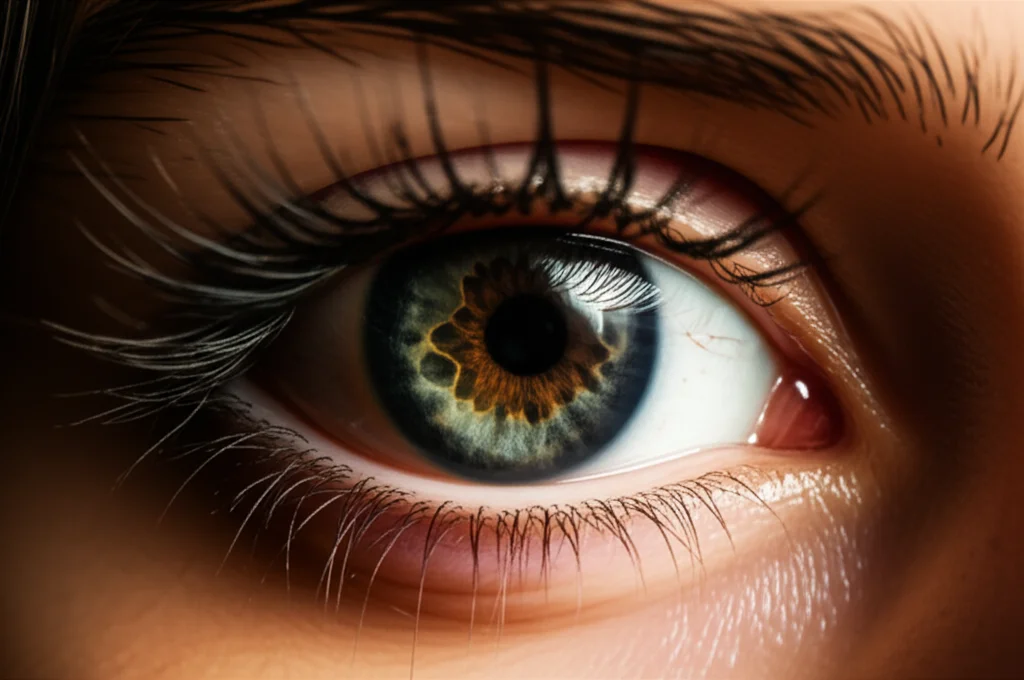
The big win here is that even with just half the face, the models achieved impressive accuracy numbers – think around 91-92%. That’s actually *better* than the reported human baseline for emotion recognition (which is typically 85-90%). How cool is that? AI is starting to read faces better than we do, at least in this specific setup!
The Payoff: Faster, Lighter, Smarter AI
The results really hammer home the advantages of the half-face, staged transfer learning approach. We’re talking significant reductions in computational load.
- Processing Time: Models were way faster with half faces, some showing over a 50% reduction in the time it takes to analyze an image.
- Storage/Memory: Less data means less space needed on your hard drive or in memory. We’re talking around a 55% reduction in pixel count and storage needs.
This isn’t just about making computers faster; it’s about enabling AI to run in places it couldn’t before. It’s about making AI more accessible and, frankly, more *green* by using fewer resources.
Plus, there are those other benefits we touched on:
- Privacy: Half a face might offer a bit more anonymity than a full face.
- Robustness: It handles real-world messiness like masks and angles much better.
It’s a win-win-win situation!
Real-World Impact and the Future
So, where can we actually use this? The possibilities are pretty exciting:
- Healthcare: Imagine AI helping monitor a patient’s emotional state, maybe flagging signs of distress or depression.
- Robotics: Robots that can pick up on subtle emotional cues could be much better companions or assistants.
- Human–Computer Interaction (HCI): Systems that understand your emotions could adapt how they interact with you, making tech feel more intuitive and empathetic.
- Self-Driving Cars: Monitoring the driver’s emotional state could be a safety feature.
One particularly heartwarming application mentioned is supporting children with autism through interactive AI systems that help them understand and express emotions. That’s the kind of impact that really matters.
Of course, putting this into practice outside the lab has its own challenges – varying light, busy backgrounds, privacy concerns. But the initial tests in less-controlled environments sound promising.
The researchers plan to keep pushing this forward, getting more data from messy, real-world settings and working with folks in industry to refine the tech.
Wrapping It Up
What this research shows us is that we don’t always need the whole picture to understand complex things like human emotions. By cleverly combining existing knowledge (from full-face, basic emotions) with a focused approach (on half-face, multi-label expressions), AI can become incredibly efficient and effective.
Staged transfer learning on half-face images for multi-label emotion recognition isn’t just a technical achievement; it’s a step towards more intuitive, accessible, and empathetic AI systems that can better understand the nuanced way we express ourselves, even when we’re only showing half the story. Pretty cool stuff, right?
Source: Springer