Unlocking the Secrets of the ‘Green Rose’: How Genes Build a Bizarre Bloom
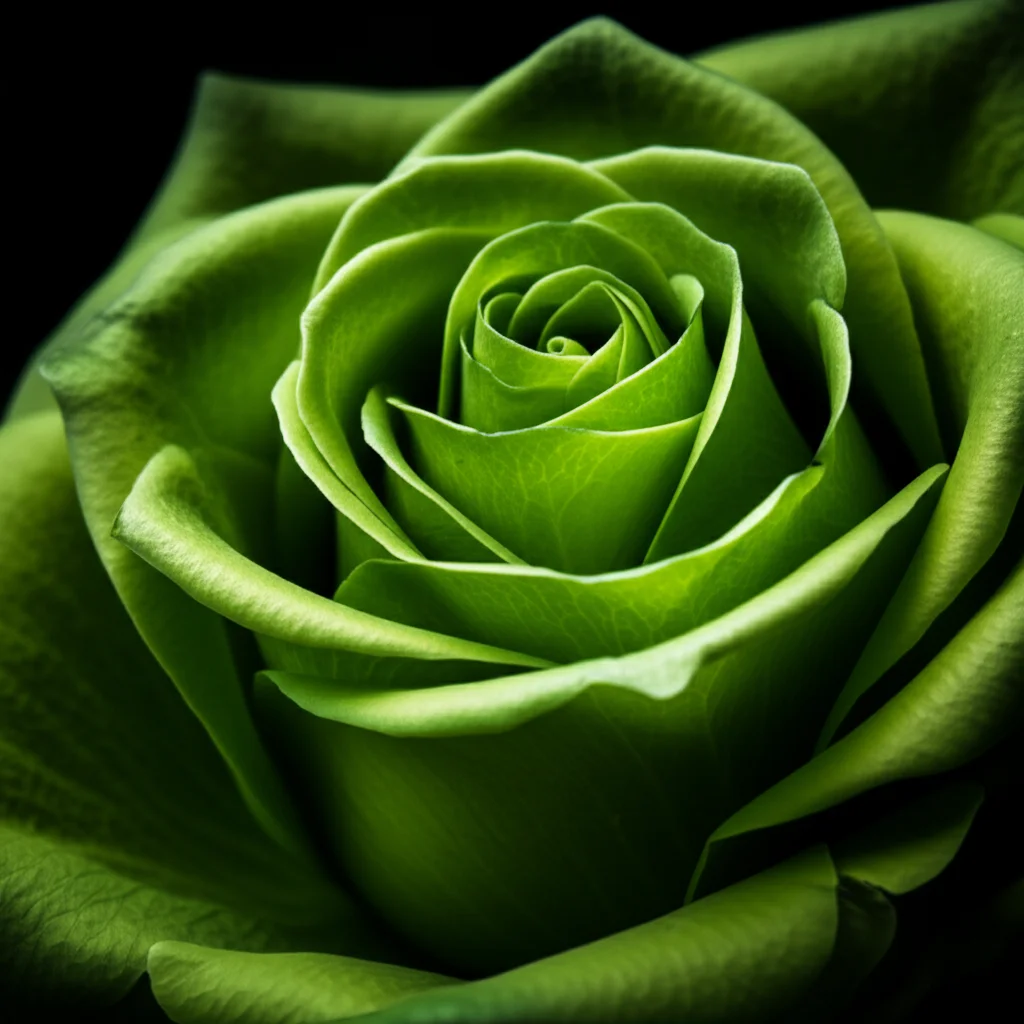
Hey there! Let me tell you about something pretty fascinating I stumbled upon – a deep dive into a truly unique flower, the *Rosa chinensis* cv. Viridiflora. You might know it as the “Green Rose.” It’s not your typical velvety red or soft pink bloom; nope, this one’s famous (or maybe infamous?) for its weird, leafy, green floral organs. It looks less like a rose and more like… well, a bunch of green leaves stacked together where petals should be.
It’s a bit of a botanical head-scratcher, right? How does a rose end up looking like that? For ages, breeders and plant enthusiasts have been curious. While it’s popular for its novelty, there hasn’t been a really systematic look at *why* it does this. So, this study I’m checking out decided to get to the bottom of it, using some seriously cool genetic detective work. The goal? To figure out the blueprint behind this bizarre bloom and maybe, just maybe, give us some new ideas for creating even more amazing roses in the future.
The Mystery of the Green Rose
Roses are a big deal in the garden world, with thousands of varieties, many tracing back to ancient Chinese roses like this one. *Rosa chinensis* cv. Viridiflora stands out because its floral organs are “heteromorphic,” meaning they have an unusual shape – specifically, they look like leaves. This isn’t just a quirky look; understanding this kind of mutation can teach us a lot about how plants develop in general.
Floral development is super complex. It starts with certain “floral meristem identity genes” that tell a plant, “Okay, stop growing leaves, it’s time to make a flower!” Genes like LEAFY (LFY), SOC1, SVP, and FLC are the initial signal-callers. They basically flip the switch from vegetative growth to reproductive growth. For instance, LFY is a big player in getting the floral meristem going and keeping it on track. SOC1 is another key integrator, working with other genes to control how floral organs form. SVP and FLC are often flowering suppressors, hanging out in vegetative parts and usually less active in the actual flower bits.
This study looked at how these initial signal genes were expressed in the Green Rose’s weird floral parts compared to its normal leaves. Unsurprisingly, there were differences! Genes like RcSOC1 and RcSVP (the rose versions) were higher in leaves, while RcFLC and RcLFY were higher in the floral organs. This confirms that even though the floral organs *look* leaf-like, genetically, they are indeed trying to be floral organs, not just regular leaves.
Unpacking the Flower Layer by Layer
To really understand what was going on, the researchers got meticulous. They took fully bloomed Green Rose flowers and carefully dissected them, layer by layer, from the outside in. Imagine peeling an onion, but it’s a rose, and you’re keeping track of every single layer! They labeled these layers I (outermost) through VI, and then split the very center into an upper part (VII) and a lower part (VIII).
They measured things like length, width, and a part called the “claw” (the narrow base of a petal or similar structure) for layers II through VI. They found that as they moved inwards, the layers generally got shorter and narrower, and the claw part got proportionally bigger. Layers IV and V were pretty similar phenotypically, suggesting they might be the same *type* of organ, just at slightly different developmental stages or positions.
But looks can be deceiving, especially with this weird rose! To truly classify these layers, they needed to look deeper – at the genes.
Genes: The Master Architects
This is where the famous “ABCDE model” of floral development comes in. Think of it like a genetic code that tells different parts of the developing flower bud what to become:
- Class A genes (like AP1 and AP2): Usually involved in making sepals (the outermost, often green, leaf-like parts) and petals. They also keep Class C genes in check in the outer layers.
- Class B genes (like AP3 and PI): Work with Class A genes to make petals, and with Class C genes to make stamens (the male parts).
- Class C genes (like AGAMOUS – AG): Involved in making stamens and pistils (the female part). They also keep Class A genes in check in the inner layers.
- Class D genes (like STK and AGL11): Primarily control ovule development within the pistil.
- Class E genes (like SEPALLATA – SEP1, SEP2, SEP3, SEP4): These are like the essential co-factors. They work with A, B, C, and D genes to make *all* the floral organs. Without them, you just get leaves!
Different combinations of these genes being active in different whorls (layers) of the developing flower bud determine whether that layer becomes a sepal, petal, stamen, or pistil. It’s a beautiful, elegant system that’s pretty conserved across many flowering plants.
The researchers analyzed the expression of the rose versions of these genes (RcAP1, RcAP2, RcAP3, RcAG, RcAGL11) and some *Arabidopsis* versions where rose ones weren’t readily available (AtPI, AtSTK, AtSEP1, AtSEP2, AtSEP3, AtSEP4) in each of the dissected layers (I-VIII) and compared them.
What the Genes Told Us (Floral Meristem Genes)
Let’s quickly revisit those initial signal genes (floral meristem identity genes). The expression patterns confirmed the difference between leaves and the floral organs. RcSOC1 and RcSVP, known for being high in vegetative parts, were indeed highest in the leaves. RcLFY, which promotes flowering, was highest in the centermost upper part (VII), and also higher in floral organs than leaves overall. RcFLC, a flowering repressor often found in actively dividing tissues, was higher in the floral organs than in the leaves. This gene data reinforces that these green structures, despite their appearance, are following a floral developmental program, albeit a modified one.
The ABCDE Code of the Green Rose (Floral Organ Identity Genes)
Now for the core of the mystery – the ABCDE genes. Based on the expression patterns of these genes, the study grouped the dissected layers into four distinct types, which lined up nicely with the initial phenotypic observations and gene cluster analysis:
- Type 1: The First Whorl (I)
Here, the expression of the Class A gene RcAP2 was highest, significantly more than any other gene. Class E genes (AtSEP2, AtSEP3) were also present, and a Class B gene (RcAP3) had some expression but wasn’t dominant. According to the ABCDE model, A + E genes make sepals. So, based on the gene activity, the first whorl is genetically programmed to be a sepal. - Type 2: The Second to Sixth Whorls (II-VI)
These five layers showed similar gene expression patterns. They had high expression of the Class A gene RcAP2, the Class B gene RcAP3, and the Class E gene AtSEP2. A + B + E genes are the recipe for petals in the ABCDE model. So, these layers are genetically identified as petals. Even though they look green and leafy, their genetic identity points to them being petals. - Type 3: The Centermost Material (Upper) (VII)
This part was a genetic party! It showed significant expression of Class A (RcAP1), Class B (RcAP3, AtPI), Class C (RcAG), and Class E (AtSEP2, AtSEP3, AtSEP4) genes. B + C + E genes are the classic combination for making stamens. So, genetically, this part looks like it should be stamens. - Type 4: The Centermost Material (Lower) (VIII)
This innermost, lowest part had high expression of the Class A gene RcAP2, the Class E gene AtSEP2, and most importantly, the Class D gene AtSTK. D + E genes are key for developing ovules, and C + D + E genes for the whole carpel/pistil structure including ovules. The presence of high Class D expression strongly indicates this part contains ovules.
So, the genetic analysis confirms that the Green Rose flower *does* have the genetic instructions for sepals, petals, stamens, and ovules, just like a normal rose. But clearly, something is going wrong with the final appearance!

Decoding the Weirdness
This is where the “ectopic overexpression” comes in – basically, genes being way too active in places they shouldn’t be, or much higher than normal. The study proposes that this is the key to the Green Rose’s bizarre look.
Remember how the centermost upper part (VII) genetically looked like stamens (B+C+E genes active)? Well, it *also* had very high expression of the Class A gene RcAP1. Class A genes are normally active in the outer whorls (sepals and petals) and are supposed to *suppress* Class C genes in those outer regions. When a Class A gene is *overexpressed* in the inner, stamen-forming region, it can mess things up. The study suggests this *ectopic overexpression of RcAP1* is likely *suppressing* the normal stamen development program, causing these parts to lose their stamen characteristics and look green and leaf-like instead. It’s like the sepal/petal instruction is overriding the stamen instruction.
What about the innermost lower part (VIII), which contains ovules and should be part of the pistil? This section showed high expression of Class D and E genes (good for ovules), but also extremely high expression of the Class A gene RcAP2. Just like with the stamens, this *ectopic overexpression of RcAP2* in the inner whorl is thought to be suppressing the Class C genes needed for full pistil development (stigma and style), resulting in an incomplete pistil structure, even though the ovules are present.
Think of it like this: the ABCDE model is the standard recipe book. In the Green Rose, the right ingredients (genes) are mostly there for each part, but the “mix” is off because the Class A genes are being added way too much in the inner layers. This excess Class A seems to be interfering with the instructions for making proper stamens and pistils, causing them to revert to a more leaf-like, green form.
Why This Matters
This study isn’t just about satisfying our curiosity about a weird rose. By dissecting this natural mutant and linking its unusual appearance directly to specific gene expression patterns, the researchers provide a valuable case study for understanding how floral development can go awry. It highlights the delicate balance of gene activity required to form a perfect flower.
For rose breeders, this kind of research is gold. Understanding which genes control which traits, and how their expression can be manipulated (even accidentally, as in this mutation), offers new avenues for breeding novel flower shapes and forms. Maybe we don’t want *more* green, leafy roses, but understanding *how* this happened genetically could help prevent unwanted mutations or even guide efforts to create desirable new flower structures.

Wrapping It Up
So, there you have it. The mystery of the Green Rose’s leafy blooms seems to boil down to a genetic mix-up, specifically the ectopic overexpression of Class A genes (RcAP1 and RcAP2) in the flower’s inner layers. This interferes with the normal genetic programming for stamens and pistils, causing them to look like leaves instead. The study did a fantastic job of systematically taking apart this complex puzzle, layer by layer, gene by gene, to reveal the underlying mechanism. It’s a brilliant example of how studying nature’s oddities can teach us fundamental principles about life itself. Pretty cool, right?
Source: Springer