
Stuck in Bed? Unpacking Geriatric Mobility in Hospitals
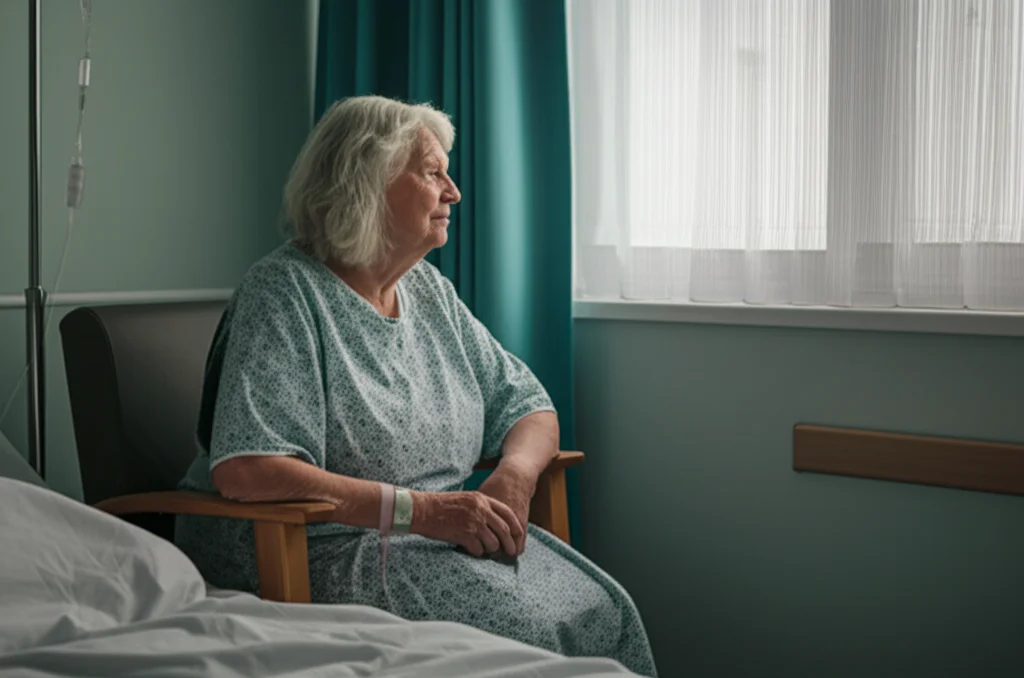
Hey there! Let’s chat about something that really matters, especially as we or our loved ones get older and might need a hospital stay. You know, that feeling of being stuck? It turns out, for many older folks in the hospital, that feeling is a harsh reality when it comes to getting around.
It’s pretty well-known that older patients often don’t move much while they’re in the hospital. And honestly, that lack of movement? It’s a big deal. We’re talking about things like a higher chance of needing to come back to the hospital, worse health outcomes, and even losing the ability to do everyday stuff they could do before they were admitted. This loss of function is sometimes called Hospital-Associated Disability (HAD), and it affects a significant chunk of older patients.
So, we wanted to really dig into this. How much are older patients *actually* moving? And what’s going on in the hospital environment and with the staff that might be affecting this? That’s why we jumped into this mixed-methods study – basically, combining hard numbers with real-world observations to get a full picture.
How We Figured Things Out
For this study, we looked at 44 older patients who were admitted to a geriatric department. We used a couple of different approaches:
- The Tech Side: We used these cool little wearable sensors (SENS motion®) that patients wore on their thigh 24/7 during their hospital stay. These sensors tracked their activity – how much they were sitting, standing, and walking. We collected data for as many days as possible for each patient.
- The Human Side: Alongside the sensors, an ethnographer (someone who studies people and cultures in their natural setting) spent time on the ward. They observed what was happening, chatted informally with staff, patients, and even relatives. They jotted down detailed notes about daily routines, conversations, and how mobility was handled (or not handled!).
We crunched the numbers from the sensors to see things like average steps per day, time spent walking, and time spent just sitting or lying around. The observations from the field study were analyzed to find common themes about how mobility is viewed and practiced.
What the Numbers Told Us (Spoiler: Not Great News)
Okay, let’s get straight to the point. The sensor data painted a pretty clear, and frankly, concerning picture. On average, patients spent a whopping 22.8 hours per day being sedentary (sitting or lying down). That leaves only about 1.2 hours per day being ‘uptime’ (standing or walking).
Breaking that down even further, the average time spent walking was only about 43 minutes per day. And steps? The median was less than 1200 steps daily. Now, there’s no magical number of steps to prevent that hospital-associated disability we talked about, but some studies suggest that even 900 steps might be a critical threshold, and others found that patients who developed HAD walked around 1186 steps per day. So, our patients were hovering right around that concerning level.
It’s worth noting that patients who could walk without an aid did perform a bit better than those who needed one, which makes sense. But even so, the overall picture was one of significant inactivity.
Talking to the Crew: What’s the Practice?
So, why are patients so inactive? The qualitative part of the study gave us some key insights. When we talked to the staff – nurses, therapists, doctors – they generally agreed that mobility is important. They know it’s part of the treatment and recovery process.
However, what they *prioritize* in their busy day often looks a little different. Getting patients out of bed and into a chair, especially for meals, is a big focus. Functional assessments – checking what a patient *can* do – are also high on the list. But promoting actual *walking* or sustained movement throughout the day? That seemed to take a backseat.
It felt like the focus was more on assessing capability and getting patients to a basic level of ‘mobilization’ (like sitting in a chair) rather than actively promoting ‘mobility’ (actual movement and walking). One staff member put it like this: “mobilization is part of the treatment here, so it’s important, but we don’t force anyone.” This highlights the tricky balance staff face between encouraging movement and respecting patient autonomy.
Discussions among the interdisciplinary team often revolved around assessing a patient’s functional level – do they need help? What kind of aid? This is crucial for discharge planning, but less so for developing strategies to get patients moving *today*.
There was also a noticeable focus on patients who had declined or had clear potential for *improvement* through rehabilitation. Patients who were already relatively self-sufficient with mobility seemed to be left more to their own devices. As one field note captured, a physiotherapist might decide a patient isn’t “relevant” if they haven’t shown change with previous plans and “mobilizes herself.” This means mobility often becomes dependent on the patient’s own initiative and motivation.
Staff also discussed patients they saw as “bed-loving” – those who could get up but seemed reluctant. This presented a challenge, a kind of “difficult pedagogical task,” where staff wrestled with how much to push and the ethical lines between encouragement and paternalism.
The Patient, The Place, and The Barriers
The physical environment of the ward played a big role too. Staff felt limited by the lack of space for patients to walk or engage in purposeful activities. Hallways could be congested, and there weren’t many inviting areas to go to. As a physician noted, “There is nothing in these settings that motivate them; there’s nowhere to sit here… We isolate them in the rooms here.”
Patients often stayed in their rooms, sometimes feeling unsure about what they were allowed to do or where they could go. One patient who could walk independently spent most of her time in her room because there was “nothing to do.” This lack of purpose made the idea of just walking the hallway less appealing.
Both staff and patients showed hesitancy. Staff might be reluctant to encourage movement if they weren’t sure they had the time or backup to help. Patients, on the other hand, reported feeling weak, tired, dizzy, and perhaps most significantly, a fear of falling. Many had fallen before, and the hospital environment, even with aids, could feel insecure.
Even simple things like getting a drink could become a missed opportunity for movement. While self-service carts existed, staff often brought drinks to patients, reducing those small chances to get up and walk.
Some patients *did* take the initiative to walk, often in the quieter afternoon or evening hours. They expressed a belief in needing to “keep moving” and would walk the hallways just for exercise. But for many others, sitting in the hallway was more about escaping the room or expressing restlessness than a planned mobility strategy.

Interestingly, the environment also presented social dilemmas. While rooms could feel isolating, hallways and shared spaces sometimes meant being exposed to sensitive conversations about other patients, leading some to retreat back to the perceived privacy of their bed.
Putting It All Together: The Mobility Gap
So, what did we learn when we combined the numbers and the observations? We saw objectively low levels of mobility among older patients, even those who were functionally capable. And the qualitative findings helped explain *why*.
It’s not necessarily that staff don’t care about mobility – they do! But the system prioritizes getting patients to a chair and assessing their function, often leaving the responsibility for daily walking and movement up to the patient’s own initiative. This initiative is then hampered by patient-specific barriers (fear, weakness) and environmental limitations (nowhere to go, congested spaces, lack of purpose).
There also seems to be a bit of a grey area regarding who is specifically responsible for promoting daily mobility. As the famous poem goes, “There was an important job to be done and Everybody was sure that Somebody would do it. Anybody could have done it, but Nobody did it.” This lack of clear ownership for routine mobility promotion seems to be a key factor.
While our study had strengths, like using objective sensors for 24/7 data and including patients with cognitive challenges (often left out of studies!), it also had limitations. We only looked at one hospital, and we focused mainly on lower body movement. Plus, getting sensor data for the *entire* stay for every patient was tricky.
So, What Can We Do About It?
Alright, enough with the analysis! What’s the takeaway? How can we help older patients in the hospital move more?
The study points to a few key areas:
- Fix the Space: We need to think about the physical environment. Can we make hallways less congested? Create inviting spaces for patients to walk to or gather in? Add purposeful activities outside the room?
- Teamwork Makes the Dream Work: We need stronger collaboration among all staff members (nurses, therapists, doctors, etc.) with clear, shared responsibilities for promoting daily mobility, not just assessment or chair transfers.
- Make it Routine: Mobility needs to be integrated into daily care, not seen as an optional extra. This requires targeted strategies and support for staff to handle those tricky situations where patients are reluctant or fearful.
- Get Families Involved: Family members can be a huge resource, but their role in supporting mobility needs to be systematically included.
Ultimately, enhancing in-hospital mobility for older adults requires a multi-faceted approach that tackles environmental barriers, clarifies staff roles, and empowers both patients and staff to make movement a priority every single day. It’s about shifting the culture from just getting patients *up* to getting patients *moving*.

Source: Springer