Expired Meds: Trash or Treasure? Our Saudi Arabian Study Spills the Beans!
Hey everyone! Ever looked at that expiration date on a medicine bottle and wondered, “Is this stuff really bad now?” Well, you’re not alone! It’s a question that has huge implications, especially for hospitals and healthcare systems that deal with mountains of medications. Here in Saudi Arabia, we decided to roll up our sleeves and take a closer look at some critical emergency drugs that had passed their “best before” dates. What we found was pretty fascinating, and honestly, it could change a lot about how we manage these vital resources.
The Big Problem: Expiration Dates, Waste, and Shortages
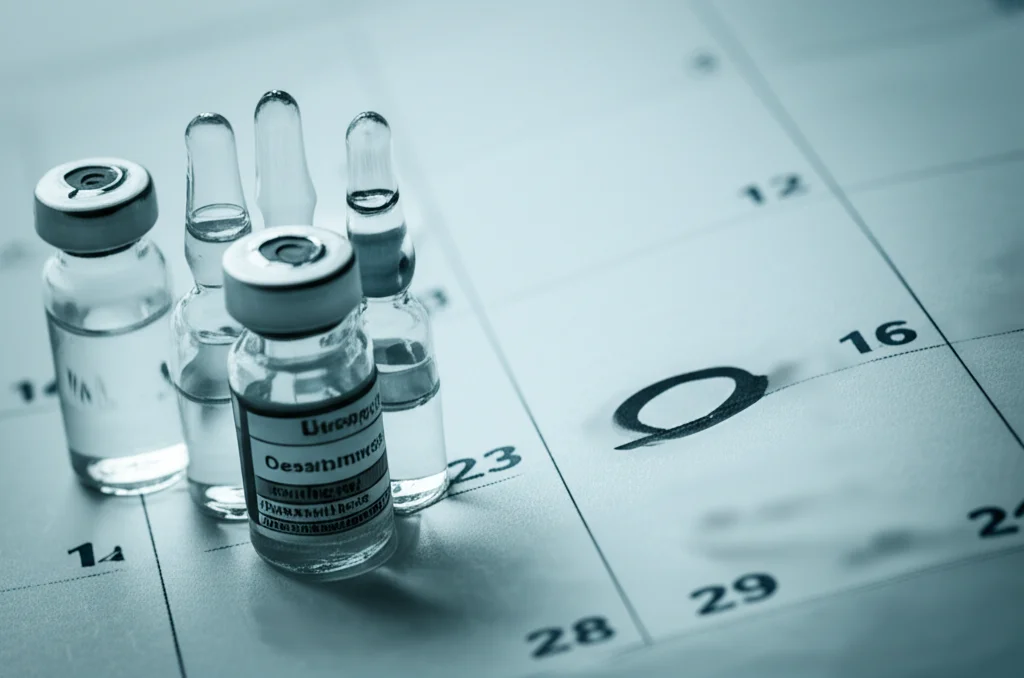
So, here’s the deal: drug expiration dates are often super conservative. Pharmaceutical companies do their stability tests, sure, but they’re not always looking to see just how long a drug could last. This means many drugs, if stored properly in their original unopened containers, can still pack a punch – like, 90% of their potency – for at least 5 years past their labeled date, sometimes even longer! In Saudi Arabia, the average shelf life for meds is around 30-31 months. That’s not very long, is it? This leads to a couple of massive headaches:
- Medication Waste: We’re talking billions spent on treatments, and then a huge chunk of that ends up as financial loss because perfectly good medicine gets tossed.
- Drug Shortages: It’s a real issue when the supply just can’t meet the demand in health facilities. This can happen for various reasons, like poor supply chain management or over-reliance on imports.
Think about it – if we could safely use some of these “expired” drugs, we could save money, reduce waste, and make sure critical medications are available when people desperately need them. It’s a win-win-win!
Learning from Others: Shelf-Life Extension Programs (SLEP)
This isn’t a brand-new idea, by the way. The U.S. Food and Drug Administration (FDA) has had a Shelf-Life Extension Program (SLEP) since 1986. They test stockpiled medical supplies, and guess what? A study looking at their data found that 88% of over 3000 drug lots were extended past their original expiration date for an average of 66 months! That’s over five and a half years extra! The German military does something similar, even testing 25-year-old morphine autoinjectors that were still good to go. Even for specific drugs like Tamiflu® and Relenza®, the FDA extended their expiry dates in response to flu concerns. It’s clear that with proper testing, many drugs have a longer life than we think.
The World Health Organization (WHO) has a core list of essential medicines, and wouldn’t you know it, some of the emergency medications on that list, like Naloxone, epinephrine, Dopamine, Dexamethasone, and dobutamine, are sometimes in short supply right here in Saudi Arabia. This really hit home for us and underscored why a study like ours was so needed, especially given our diverse climate.

Our Mission: Testing Expired Emergency Meds in Saudi Arabia
So, we set out to investigate the stability of five key expired emergency medications: dopamine, dexamethasone, naloxone, epinephrine, and dobutamine. These guys are crucial in emergencies, often in short supply, and we figured they were prime candidates for seeing if their shelf life could be stretched a bit. Our main goal was to see if the active pharmaceutical ingredient (API) – the actual medicine part – was still present in acceptable amounts after the expiration date.
Now, I’ve got to tell you, getting our hands on expired samples wasn’t a walk in the park! We had to rely on the kindness of some hospitals who donated them. We made sure these samples had been stored properly – protected from light and kept at a consistent temperature (between 15°C and 30°C). It was super important to make sure the storage conditions hadn’t messed with the results before we even started.
The Nitty-Gritty: How We Did It
Once we had our samples, it was lab time! We used validated High-Performance Liquid Chromatography (HPLC) methods, which is a fancy way of saying we used a really precise technique to separate, identify, and quantify each component in the drug solutions. We followed the rulebooks – the United States Pharmacopeia (USP) and British Pharmacopoeia (BP) guidelines – to a T.
For each drug, we performed:
- Physical Checks: We looked at things like appearance, clarity, color – you know, does it still look like it should?
- pH Measurement: The acidity or alkalinity can affect a drug’s stability.
- Chemical Analysis (HPLC): This was the main event, measuring the exact amount of the API left.
We ran all our tests between February and June 2024 to keep things consistent. We even had a cool Shimadzu HPLC machine with a diode array detector to help us out. It sounds complicated, and it is, but it’s all about ensuring accuracy!
Drumroll Please… The Results!
Okay, so what did we find out after all that careful testing? It was a bit of a mixed bag, which is pretty common in science, but with some really promising highlights!
Naloxone: Looking Good!
Naloxone is a lifesaver, an opioid antagonist. We tested three expired samples of Naloxone hydrochloride injections.
The good news: All three samples passed! Their API content was well within the USP’s acceptable range (90.0%–110.0%), scoring 105.19%, 102.54%, and 103.15%. We also checked for a common degradation product, 2,2′-binaloxone, and it wasn’t there. Physically, the solutions were clear, and their pH was spot on.
Our take: Naloxone looks like a strong candidate for shelf-life extension! This lines up with what the SLEP reports have suggested. Of course, we’d love to test more brands to be super sure.
Dopamine: A Bit More Complicated
Dopamine hydrochloride is another critical drug. We tested an expired batch of Domine® injections.
The mixed news: The API content was actually okay, at 101.28%, which is within the USP limits (95.0%–105.0%). Physically, it looked fine – clear, colorless – and the pH was good. However, we did spot a minor degradation peak. When we quantified it, this unknown impurity was at 4.05%, which is way above the USP’s limit of 0.1% for unspecified impurities.
Our take: So, while the main ingredient was there, the impurity level is a concern. Dopamine wasn’t in the SLEP program, so our findings suggest we need to be more cautious here. More batches, more stringent testing is definitely needed before we can give dopamine the green light for extension.

Dexamethasone: Thumbs Up!
Dexamethasone Sodium Phosphate (DSP) is an anti-inflammatory often used in emergencies. We tested an expired batch and an unexpired batch for comparison.
The great news: The expired batch still had 98.48% of its API, well within the British Pharmacopoeia’s limits (97.0%–103.0%). The unexpired batch was at 100.26%, as you’d expect. We did see peaks for methyl paraben and propyl paraben, but those are just preservatives and totally expected. Physically, all good – clear solutions, correct pH.
Our take: Dexamethasone is another winner! This also backs up SLEP findings. Again, more brands would give us a fuller picture, but it’s looking very promising for extending its use.
Epinephrine: Handle with Care!
Epinephrine (adrenaline) is a big one in emergencies, but it’s known to be a bit sensitive. It can degrade with exposure to oxygen, light, heat, and the wrong pH. We tested four expired samples in different types of packaging – prefilled syringes and glass ampoules from different manufacturers.
The not-so-good news: This is where things got tricky. The API content was pretty low across the board:
- Prefilled syringe: 63.28%
- Aronep ampoules (Saudi made): 79.97%
- Martindale ampoules batch 1 (UK made): 83.07%
- Martindale ampoules batch 2 (UK made): 72.71%
These are all below the acceptable limits. We saw extra peaks in the chromatograms, indicating degradation. Physically, they looked okay (clear, not pinkish, which is a sign of degradation), and the pH was fine.
Our take: Epinephrine is a critical one where stability is a real issue. It doesn’t look like a good candidate for simple expiry date extension based on these results. Packaging is HUGE here. Light-resistant packaging, removing oxygen (like using nitrogen in ampoules), strict pH control, and cool storage are all super important for epinephrine. Our findings really highlight this.
Dobutamine: Another Potential Star!
Dobutamine is a synthetic catecholamine, also sensitive to light and basic conditions. We tested one expired sample of Dobutamine injections in amber ampoules.
The good news: It passed with flying colors! The API content was 102.25%, comfortably within the USP range (90%—110%). The solution was clear, and the pH was acceptable.
Our take: Dobutamine, especially when protected in amber ampoules, seems to be another good candidate for shelf-life extension. This aligns with SLEP reports that found dobutamine lots stable for about 47 months post-expiry. As always, testing more brands would be ideal.

So, What’s the Big Takeaway?
This little adventure into the world of “expired” meds was pretty eye-opening! Our study here in Saudi Arabia showed that naloxone, dexamethasone, and dobutamine are strong contenders for shelf-life extension programs. If we can confirm this with more research, imagine the savings and the improved availability of these critical drugs!
On the flip side, drugs like epinephrine and dopamine showed us that it’s not a one-size-fits-all situation. Stability can be a real challenge, and things like packaging and even tiny impurities can make a huge difference. For epinephrine, especially, it’s clear that how it’s stored and packaged is absolutely paramount.
The bottom line is that many pharmaceuticals can remain effective much longer than their labels suggest. This isn’t just about saving money; it’s about smarter resource management, reducing waste, and ultimately, ensuring that patients get the medicines they need, when they need them. This is particularly important for us in Saudi Arabia, with our unique climate challenges.
What’s Next on the Horizon?
This is just the beginning, folks! We’ve scratched the surface, but there’s so much more to do. We really need:
- More Samples, More Brands: To get a truly comprehensive picture.
- Long-Term Stability Tests: Seeing how these drugs hold up over even longer periods.
- Varied Climatic Conditions: Testing under different temperature and humidity scenarios that reflect all parts of Saudi Arabia.
By continuing this kind of research, we can build a really solid evidence base to support shelf-life extension initiatives. It’s all about making our healthcare system more resilient, efficient, and effective. And who knows, maybe one day, those conservative expiration dates will become a little more realistic, thanks to studies like ours!
Source: Springer