

Unpacking the Evening Energy Rush: Who’s Using What When at Home?
Hey there, let’s talk about something we all do: using electricity at home.
You know that time in the evening? When everyone’s finally home, the lights are on, dinner’s cooking, maybe the dishwasher’s humming? Turns out, that’s when our collective electricity demand really spikes. And while we’re all keen on using more renewable energy – which is fantastic! – the sun isn’t always shining and the wind isn’t always blowing exactly when we need that power boost. This evening rush means we often have to fire up less green sources to keep everything running smoothly.
So, the big question is: can we get a bit more flexible with *when* we use electricity at home? If we could shift some of that demand away from the peak evening hours (roughly 4 pm to 7 pm), we could lean more heavily on those lovely renewables. But to do that, we first need to figure out exactly *what* activities are causing that peak and, crucially, *who* is doing them at that specific time.
This isn’t just about looking at a smart meter and seeing a high number. It’s about understanding the human behaviour behind it. Different activities use different amounts of energy, and people have different reasons and abilities to change their routines. That’s where a recent study comes in, and let me tell you, it’s pretty insightful.
Diving into the Daily Grind
The folks behind this research used a clever approach called the Day Reconstruction Method. Basically, they asked people to think back on their previous day and report what they were doing at different times, especially focusing on energy-related activities. Think showering, cooking, doing laundry, running the dishwasher, and so on. They gathered data from a big, representative sample of people in Ireland over a year, which is great because it captures seasonal differences too.
Their goal was to answer some key questions:
- What household activities are the biggest culprits for using electricity during that evening peak?
- What factors – like who you live with, your age, or even your tariff – are linked to doing these activities during peak time?
- How much effort do people *think* they make to avoid peak times, and does that actually match what they do?
- What motivates people to try and shift their energy use?
It’s a detailed look at the nitty-gritty of our daily lives and how they impact the bigger energy picture. Because let’s be honest, our gut feelings about which appliances use the most energy, or when we *really* need to do certain chores, aren’t always accurate.

The Usual Suspects: What’s Happening at Peak?
Okay, so what did they find is driving that evening surge? Unsurprisingly, cooking is a *huge* one. The study found that nearly half (46%) of all cooking instances they tracked happened between 4 pm and 7 pm. And when you look at the *amount* of electricity used during that peak by the activities they measured, cooking accounts for almost half of it (around 47%).
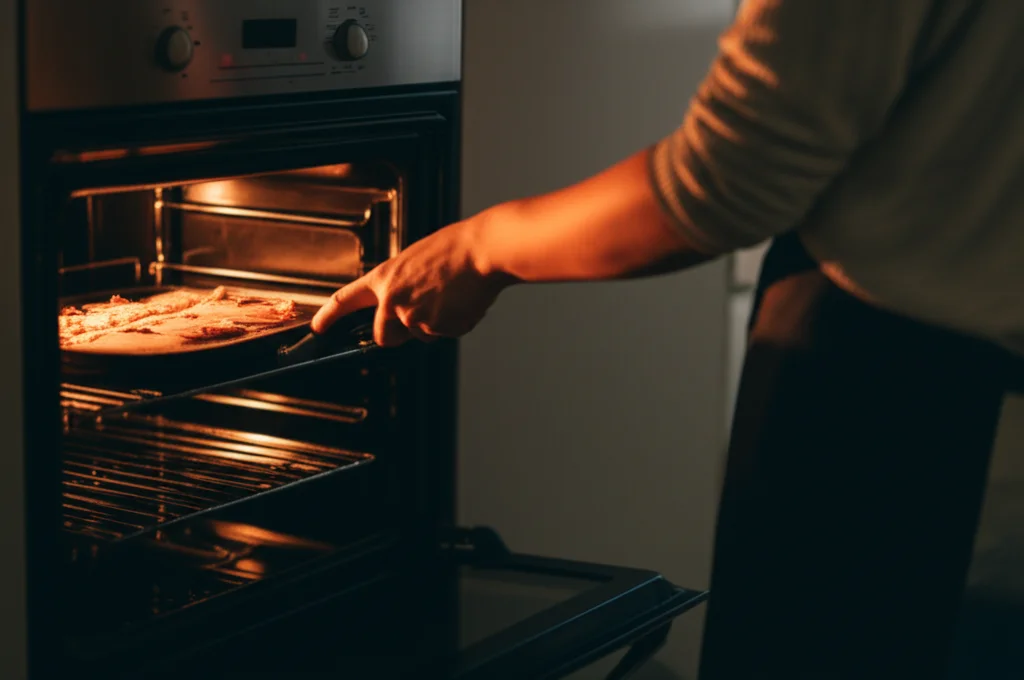
Within cooking, ovens are the real energy guzzlers, responsible for nearly two-thirds of cooking’s peak demand, even though they aren’t used quite as often as hobs during that time. Air fryers (lumped into ‘fryers’ here) also contribute a decent chunk.
Beyond cooking, other activities making a significant appearance during the evening peak include:
- Laundry: Washing machines and especially tumble dryers (which use a lot of juice!) contribute about 15% of the tracked peak demand.
- Water Heating: Immersion heaters, rather than electric showers (which are less common at peak), also account for about 15%.
- Electric Space Heating: While not super common overall, when it *is* used at peak, it’s a big energy user, adding about 13%.
- Dishwashing: This accounts for a smaller, but still noticeable, 6% of the tracked peak demand.
Activities like vacuuming, ironing, and hair appliance use were less prevalent or less energy-intensive during this window, and things like EV charging and electric blankets were much more likely to happen outside the peak.
So, the takeaway here is clear: cooking is king of the peak, but laundry, water heating, and space heating are also major players.
Who’s Doing What When? It’s Complicated!
Now, this is where it gets really interesting. It’s not just *what* activities happen, but *who* is doing them, and what factors influence that timing. The study modelled the likelihood of doing specific activities during the 4-7 pm peak compared to other times of the day, and the results show it’s not a one-size-fits-all situation.
Let’s break down some of the findings:
* Cooking: More likely at peak during darker months (makes sense, dinner time!), and less likely on weekends (maybe we eat out or differently?). People living with family were more likely to cook at peak than those living alone. Interestingly, men and those with a degree were less likely to cook at peak. Middle-aged and older groups were *more* likely than younger folks. And here’s a key point: the type of electricity tariff (standard, time-of-use, night-saver) or how much effort people *said* they made to avoid peak use didn’t seem to affect cooking times. This suggests cooking is pretty tied to routine and less flexible.
* Immersion Water Heating: Unlike cooking, no seasonal or weekday link here. Living as a couple or family made peak use more likely than living alone. People on night-saver tariffs were less likely to use their immersion at peak, and so were those who reported making a substantial effort to shift use. Time-of-use tariffs didn’t show this effect for immersion heating.
* Showering: Less common at peak, but men were more likely than women. Younger people were more likely than older groups. Again, night-saver tariffs were linked to less peak showering, as was having a degree. Time-of-use tariffs didn’t have a significant effect.
* Washing Machine: Slightly less likely at peak during darker months. Younger people were more likely to do laundry at peak than older groups. Night-saver tariffs and reporting substantial effort were associated with less peak washing, as was having a degree.
* Tumble Dryer: Fewer instances in the data, but clear trends. Middle-aged and older people were significantly *less* likely to use the tumble dryer at peak compared to younger folks. Night-saver tariffs had the *biggest* impact here, showing a 52% reduction in the odds of peak use compared to standard tariffs. Reporting higher effort also meant less peak tumble dryer use. Other time-of-use tariffs didn’t show a significant difference.
* Dishwasher: Night-saver tariffs were linked to less peak use. This was the *only* activity where people on *other* time-of-use tariffs were also significantly less likely to use it at peak compared to standard tariffs. People worried about the cost of living were less likely to use it at peak, as were those on the highest income level. Reporting higher effort was linked to less peak dishwashing. Interestingly, people who thought the *average* Irish person made a high effort to shift use were *more* likely to use their dishwasher at peak – maybe a bit of social comparison effect?

Overall, the study confirms that factors influencing peak use are really activity-specific. What makes someone shift their laundry might not make them shift their cooking. Also, living with others, especially as a family, significantly increased the *total number* of activities done during the peak window (excluding cooking, which is almost a given for families at dinner time).
Effort, Motivation, and Misconceptions
One fascinating finding was how much effort people *said* they put into avoiding peak electricity use. Most people reported making *some* effort, with almost a fifth saying they did everything possible. And this reported effort *did* correlate with less peak use for most activities (again, cooking was the outlier). So, people are trying!
But *why* are they trying? When asked, saving money was by far the top motivation for shifting use. Helping the environment and avoiding shortages were distant seconds. This makes sense, right? We all like saving a few quid.
Here’s the kicker though: very few of the people who said saving money was their motivation were actually on a tariff that would let them do that by avoiding peak times! This points to a big knowledge gap. People *want* to save money, and they *think* avoiding peak helps, but they might not be on the right tariff, or they might mistakenly believe avoiding peak saves money on *any* meter.
Despite high levels of worry about climate change, helping the environment wasn’t a major stated motivation for *shifting* peak use, and high climate worry didn’t predict less peak activity specifically (though it did predict less wasteful energy use generally). This suggests people might not connect the dots between shifting their demand and helping renewables. The link isn’t as obvious as “use less, save money.”
And speaking of tariffs, the study didn’t find strong evidence that standard time-of-use tariffs in Ireland currently lead to reduced peak consumption overall, unlike the more established night-saver tariffs which clearly influence behaviour (people shift use to the night). This could be because the savings offered by current ToU tariffs aren’t significant enough to motivate widespread behaviour change, or because people don’t fully understand them.

So, What’s the Takeaway?
This study gives us a really clear picture of what’s happening during that crucial evening energy peak in Irish homes. Cooking is the big one, but laundry, water heating, and space heating are also significant. More importantly, it shows that who you are and who you live with matters, and these factors influence different activities in different ways.
What does this mean for managing energy demand? It means we need to be smart and targeted.
- Activity-Specific Approaches: A campaign to encourage shifting laundry times might work, but you’ll need a different strategy for cooking (maybe promoting air fryers or batch cooking instead of shifting the *time*).
- Targeted Communication: Messages need to reach the right people for the right activities. Younger people might be more receptive to shifting laundry or showering times, while families might need solutions for managing multiple activities happening at once.
- Address Misconceptions: We need to educate people about how tariffs work and clearly explain the environmental benefits of shifting demand, not just the potential monetary savings (which aren’t always there with current tariffs).
- Consider the Full Picture: Flexibility isn’t just about shifting time. It’s also about using more efficient appliances, generating your own power (like solar), or using storage solutions.
The study has some limitations, of course – it relies on self-reported data from a single day, for instance. But by using a robust method and a large sample, it provides valuable insights that can help energy companies and policymakers design better ways to encourage us all to use electricity more flexibly, ultimately helping us integrate more clean, renewable energy into the grid. It’s about understanding our daily habits to build a greener future, one load of laundry or cooked meal at a time!

Source: Springer


