

Solar Homes e EVs in Jordan: Unidirectional vs. Bidirectional Charging Under TOU
Hey there! So, imagine this: you’ve got a sweet setup with solar panels on your roof, soaking up that glorious Jordanian sun. And, like more and more folks these days, you’ve got an electric vehicle parked in the driveway. Pretty neat, right? But then comes the big question: how do you charge that EV to get the most out of your solar power and play nice with the electricity grid, especially with Jordan’s specific electricity pricing rules?
That’s exactly what some clever researchers dug into, and I’m here to give you the lowdown on their findings. We’re talking about the difference between the two main ways to charge your EV at home: the straightforward, one-way street of unidirectional charging and the fancy, two-way highway of bidirectional charging.
The Two Charging Contenders
Think of unidirectional chargers as the classic, reliable option. They’re simpler, generally cheaper, and they do one thing really well: take power from your solar panels (or the grid) and put it into your car’s battery. Easy peasy. They’re like a hose filling a bucket – water goes in, but it doesn’t come back out.
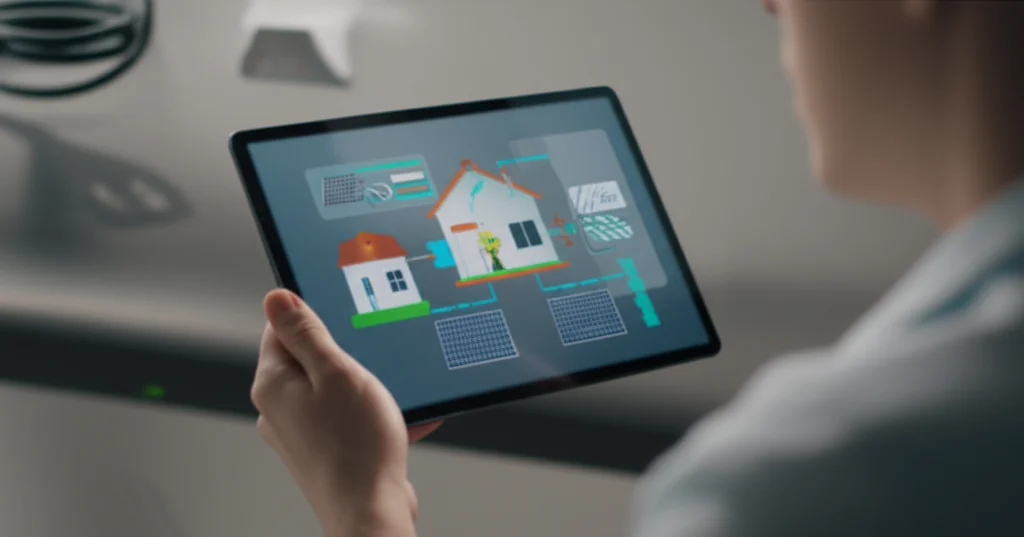
Now, bidirectional chargers are a bit more sophisticated. They can send power *into* the car (like unidirectional) but also pull power *out* of the car’s battery and send it back to your house (Vehicle-to-Home or V2H) or even potentially back to the grid (Vehicle-to-Grid or V2G). This opens up some cool possibilities, like using your car’s battery to power your home during an outage or selling excess energy back when prices are high. But, as you might guess, all that extra tech means they’re more complex, cost more upfront, and can have higher maintenance needs.
Why Jordan’s Pricing Matters
Here’s where things get interesting, especially in Jordan. The country has implemented a Time-of-Use (TOU) pricing system for electricity. This means the price of electricity isn’t fixed; it’s higher during peak demand hours (usually evenings) and lower during off-peak hours (like late at night or early morning).
This TOU system is a game-changer when you’re thinking about how to charge your EV. Can you strategically charge when electricity is cheapest? Can a bidirectional charger help you *use* your stored solar power (or even cheap grid power stored in your car) during those expensive peak hours? That’s the puzzle this research aimed to solve.
Putting it to the Test
So, these researchers used some serious simulation software (Polysun and Meteonorm, if you’re curious about the techy bits) to model residential buildings in Amman, Jordan, equipped with solar PV systems. They ran scenarios with different numbers of EVs – one, two, or three – and compared what happened over a full year using either unidirectional or bidirectional charging.
They tracked everything: how much energy was generated by the solar panels, how much the house and EVs consumed, how much power was pulled from the grid, how much was sent back to the grid, the CO2 emissions, and, crucially, the financial side of things (costs, profitability over 25 years). They even factored in real-world stuff like typical driving patterns and, of course, Jordan’s TOU tariffs.

The Energy Story
What they found was pretty insightful. When you add EVs to a solar-powered home, your total electricity consumption naturally goes up – more cars, more energy needed. And, as you add more EVs, you generally rely more on the external grid because your solar panels can only produce so much power.
Here’s where bidirectional charging showed its technical muscle: it was better at helping the household *self-consume* the solar energy. Instead of just letting excess solar power go unused once the car battery was full (which can happen with unidirectional), the bidirectional system could manage that energy flow more dynamically. This meant less reliance on buying power from the grid, even if the total energy *used* by the bidirectional system was sometimes slightly higher (maybe due to the tech itself or V2G/V2H functions). It’s like the bidirectional system is a smart energy manager, making sure the solar power is used as effectively as possible.
The Green Angle
From an environmental perspective, both charging methods are a win compared to fossil fuels, as they leverage solar power. However, the study found that bidirectional charging generally resulted in lower CO2 emissions compared to unidirectional for the same number of EVs. Why? Because it’s better at using that clean solar energy first, reducing the need to pull potentially dirtier power from the grid, especially during peak times when grid emissions might be higher.
That said, adding more EVs, regardless of the charging type, does increase overall CO2 emissions simply because more energy is being consumed, and some of that energy still comes from the grid. But the *rate* of increase was lower with bidirectional systems, highlighting their environmental benefit in optimizing renewable use.
Show Me the Money
Okay, let’s talk cash. This is where the picture gets a little less straightforward for bidirectional charging, at least in Jordan’s current setup. The study clearly showed that the initial investment cost for a bidirectional system is significantly higher than for a unidirectional system. Makes sense, right? More complex tech costs more.
And when they looked at the long-term financial viability using something called Net Present Value (NPV) over 25 years (the expected life of the solar system), the unidirectional system came out on top with a higher NPV. This means, purely from a financial return perspective *today* in Jordan, the simpler unidirectional setup is more profitable over the long haul. They also noted that bidirectional systems tend to have higher maintenance costs, which eats into that profitability.
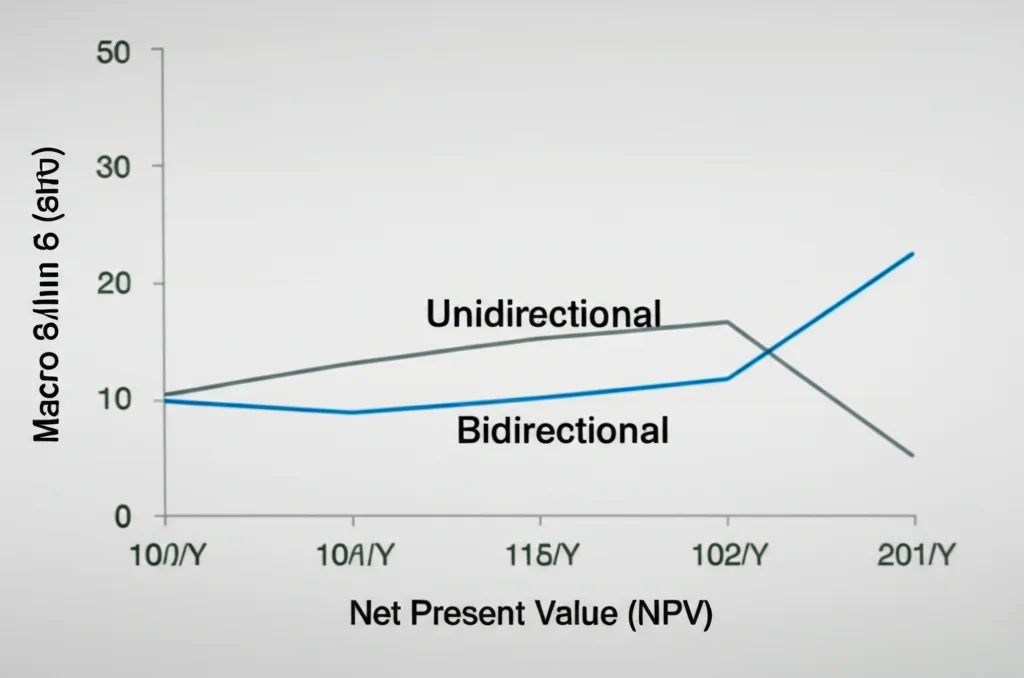
The TOU pricing system in Jordan plays a big role here. While bidirectional *can* help you avoid buying expensive peak power, the savings generated by that strategy, combined with the higher initial and maintenance costs, weren’t enough to make it financially outperform the simpler, cheaper unidirectional option in this specific simulation.
The Road Ahead
So, what’s the takeaway? Bidirectional charging is technically awesome. It’s better at using your solar power efficiently, it can help stabilize the grid (though the study focused more on the household side), and it’s generally better for the environment by maximizing clean energy use.
But, and it’s a big ‘but’ in places like Jordan with TOU pricing, the higher cost of bidirectional systems is a significant barrier to adoption. The financial benefits just don’t outweigh the costs *yet*.
This highlights a crucial point the researchers make: for bidirectional charging to really take off and contribute to a smarter, greener grid in places like Jordan, supportive policies and incentives are likely needed. Things like tax credits, grants, or even dynamic TOU rates that *really* reward V2G/V2H usage could help close that financial gap and make the technically superior option also the financially attractive one.
They also suggest future research could look into ‘hybrid’ charging models – maybe combining the best of both worlds – and exploring different tariff structures.
Ultimately, while bidirectional charging offers exciting possibilities for energy efficiency and grid support, especially with solar, its higher price tag makes unidirectional charging the financially smarter choice for homeowners in Jordan right now under the current TOU system. But with the right policies, that could definitely change, paving the way for a more dynamic and sustainable energy future!
Source: Springer


