
Putting the Lid Back On Sooner: Why Early Cranioplasty Might Be a Game Changer After Severe Stroke Surgery
Hey there! Let me tell you about something pretty important in the world of brain recovery after a really tough situation. We’re talking about folks who’ve had a severe stroke, specifically a **Malignant Cerebral Infarction** (MCI). These are strokes that cause a lot of swelling, and sometimes, to save a life, doctors have to perform a **Decompressive Craniectomy** (DC).
What’s a Decompressive Craniectomy?
Think of it like this: when the brain swells dangerously after a stroke, it’s stuck inside a hard skull. There’s nowhere for the swelling to go, which squeezes the brain and can cause more damage or even be fatal. A DC is a surgery where a piece of the skull is temporarily removed to give the swelling brain room. It’s a life-saving move, no doubt about it.
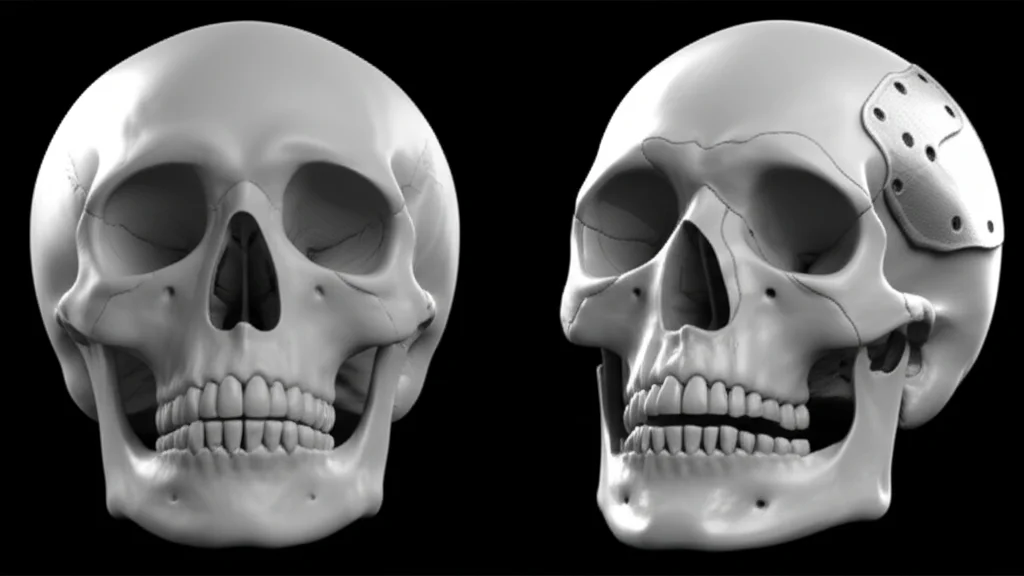
But, and it’s a big but, walking around with a missing piece of skull isn’t ideal long-term. It leaves the brain vulnerable and can even lead to something called “*syndrome of the trephined*” or “*sinking skin flap syndrome*.” Basically, without the skull’s support, the atmospheric pressure can affect the brain, messing with blood flow and cerebrospinal fluid dynamics. This can actually *delay* neurological recovery. Not what we want!
Enter Cranioplasty: Putting the Skull Back Together
This is where **Cranioplasty** (CP) comes in. It’s the surgery to repair that skull defect, either by putting the original bone back (if it was stored safely) or using a custom-made implant. It’s not just about looks; putting the skull back helps restore normal pressure, protects the brain, and is thought to promote better brain function recovery.
Now, here’s the million-dollar question: *When* is the best time to do this cranioplasty? Traditionally, doctors often waited quite a while – sometimes 3 to 6 months or even longer after the initial DC. Why the wait? Concerns about complications like infection, swelling, or wound healing issues. They wanted to make sure the patient was stable and the initial injury had settled down.
But waiting has its downsides too. The longer you wait, the more scar tissue can form between the scalp, the dura (the membrane covering the brain), and the underlying brain tissue. This can make the later cranioplasty surgery more difficult, potentially leading to longer operative times, more blood loss, and a higher chance of accidentally tearing the dura during the procedure.
The Big Question: Early vs. Traditional Timing
So, this creates a bit of a debate in the medical community. Is waiting really better, or could doing the cranioplasty *earlier* be just as safe and maybe even *more* beneficial for recovery? Especially for those specific MCI patients who’ve already been through so much?
That’s exactly what a recent study decided to investigate. They looked at 86 patients who had gone through DC for MCI and then had a cranioplasty. They split them into two groups based on *when* they had the CP:
- Early CP Cohort: Cranioplasty done less than 3 months after the DC.
- Traditional CP Cohort: Cranioplasty done more than 3 months after the DC.
They wanted to see if the timing affected surgical outcomes, like complications, and more importantly, if it impacted how well patients recovered their neurological function, their ability to do daily tasks, and their level of consciousness.
What Did They Find? Safety First!
Okay, let’s get straight to one of the biggest worries: complications. Doing surgery earlier might sound riskier, right? Well, the study found something pretty reassuring. The overall **complication rate** was similar between the two groups. About 24% in the early group and 28% in the traditional group. Statistically, that difference wasn’t significant (p > 0.05).
They looked at specific issues too, like intracranial hematoma, infection, poor wound healing, subcutaneous effusion (fluid build-up), hydrocephalus (fluid on the brain), dural tears, and seizures. While the numbers varied slightly for each specific complication, *none* of these differences were statistically significant between the early and traditional groups.
This is a big deal! It suggests that, at least in this study’s patient group, choosing **early CP** doesn’t necessarily mean you’re signing up for more problems down the line compared to waiting longer. It seems to be just as safe from a complication standpoint.

Surgical Benefits: Smoother Sailing with Early CP
Here’s where the early timing really started to look good. Remember how waiting longer can lead to more scar tissue and make the surgery harder? This study’s findings back that up.
The **operative time** (how long the surgery took) was significantly shorter in the early CP group – about 149 minutes on average compared to 168 minutes in the traditional group (p = 0.001). That’s nearly a 20-minute difference!
And the **intraoperative blood loss** was also significantly less in the early group (p = 0.046). Less time under anesthetic, less blood loss – these are tangible benefits during the surgery itself. It makes sense; if the tissues haven’t had months and months to scar down and stick together tightly, it’s going to be an easier job for the surgeon to separate everything and place the implant.
The Real Payoff: Better Functional Recovery?
Alright, safety and easier surgery are great, but the ultimate goal is helping patients recover and regain their lives. The study used several standard scales to measure this:
- NIHSS (National Institute of Health Stroke Scale): Measures neurological function (higher score = worse function).
- mBI (modified Barthel Index): Measures ability to perform daily living activities (higher score = better function).
- mRS (modified Rankin Scale): Measures disability and dependence (higher score = more severe disability).
- CRS-r (Coma Recovery Scale-Revised): Measures level of consciousness (higher score = better consciousness).
First off, the study confirmed that **Cranioplasty itself has a favorable effect**. Both groups showed significant improvement in NIHSS, mBI, mRS, and CRS-r scores after the CP compared to before the surgery. Putting the skull back *does* seem to help the brain recover.
But here’s the exciting part: when they compared the *amount* of improvement between the two groups, the **early CP cohort showed significantly greater improvement** in both neurological function (measured by the change in NIHSS, or ∆NIHSS) and daily living ability (measured by the change in mBI, or ∆mBI) compared to the traditional CP cohort (p < 0.0001 for both!).
Think of it like this: everyone got better after CP, but the folks who had it done earlier seemed to get *more* better, especially in terms of their neurological function and their ability to handle daily tasks.
Interestingly, while consciousness (CRS-r) improved in both groups after CP, there wasn't a significant difference in the *level* of consciousness between the early and traditional groups post-operation. However, the authors suggest early CP might help patients regain consciousness *sooner*.
The Linear Link: Timing Matters
The study also found a clear linear relationship between the time waited for CP and the amount of functional recovery. The longer the time span from the initial DC to the CP, the *worse* the improvement in neurological function (∆NIHSS) and the *worse* the improvement in daily living ability (∆mBI). This strongly suggests that delaying the cranioplasty could be hindering the potential for recovery.
Why might early CP boost recovery more? The researchers point to restoring normal cerebral blood flow and cerebrospinal fluid dynamics sooner. Without the skull, the brain is exposed to abnormal pressures and potentially damaging metabolic effects. Putting the “lid” back on earlier seems to protect the brain and create a better environment for recovery during that crucial post-stroke period.

Wrapping It Up: Sooner Seems Better
Based on this study’s findings, it looks like **early cranioplasty** (within 3 months of decompressive craniectomy) for patients with malignant cerebral infarction is a pretty compelling option.
Here are the key takeaways:
- Cranioplasty helps: It generally improves neurological function, daily living ability, and consciousness in these patients.
- Early CP is safe: It doesn’t significantly increase the overall risk of complications compared to traditional timing.
- Early CP makes surgery easier: It reduces operative time and blood loss.
- Early CP boosts recovery: It enhances the improvements seen in neurological function and daily living ability compared to traditional timing.
While the traditional approach of waiting had its reasons, this study adds to the growing evidence suggesting that for appropriate patients, an earlier cranioplasty could lead to smoother surgery and, more importantly, a better functional recovery. It’s a reminder that sometimes, putting things back together sooner rather than later can make a real difference in someone’s journey back to health.
Source: Springer