
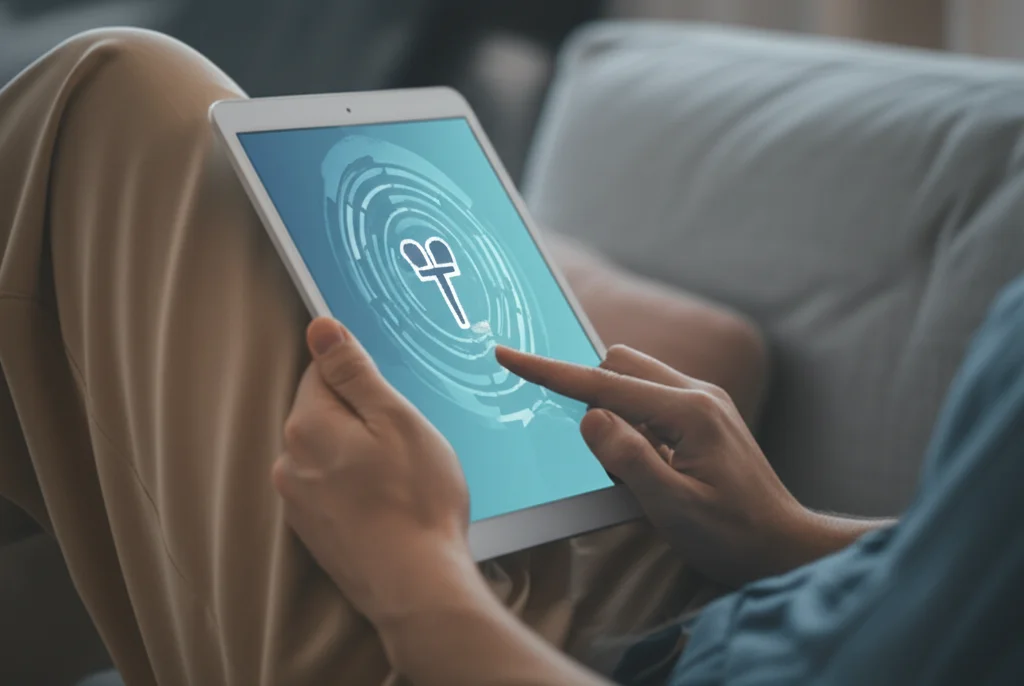
Home Comfort, Clinic Relief: Digital Counselling Revolutionizes CRC Screening Follow-Up
Hey there! Let’s chat about something pretty neat happening in healthcare, specifically how we’re making things a whole lot easier for folks going through colorectal cancer screening. You know, the kind that starts with a simple test at home? If that test comes back positive (meaning there’s blood detected, which needs checking out), the next step is usually a colonoscopy. And before that, there’s typically a face-to-face chat with a doctor or nurse to get you ready, explain everything, and get your consent. Sounds straightforward, right? Well, multiply that by thousands, and you see the pressure it puts on our healthcare systems and, frankly, on you, the patient, having to take time off, travel, and sit in a waiting room.
That’s where the cool part comes in! We’re seeing this awesome wave of digital transformation in healthcare, and it’s bringing solutions like telemedicine and digital counselling right to our fingertips. Think about it – getting care without leaving your living room. It’s not just convenient; it’s a game-changer for managing everything from chronic conditions to follow-up appointments. But what about that *initial* chat, the one before you’ve even seen a doctor about this specific screening result? Could digital tools handle that crucial first step?
Enter the Digital Intake Tool (DIT)
So, a bunch of smart folks developed something called the Digital Intake Tool (DIT). The big idea? To replace that traditional in-person pre-colonoscopy counselling visit for people who had a positive FIT result from the colorectal cancer screening program. These are participants who haven’t had a doctor’s visit specifically about this positive result yet. The DIT is basically a web application that guides you through medical questions and provides all the necessary information using spoken animated videos. It’s designed to triage you and give physicians a clear ‘red flag’ or ‘green flag’ result based on your answers, highlighting anything they need to follow up on.
I think this is brilliant because it tackles a specific bottleneck. Instead of everyone needing a 30-45 minute in-person consultation just to get information and consent, the DIT handles a big chunk of that upfront. Physicians can then focus their time on the ‘red flag’ cases or quick follow-up calls.
Putting the DIT to the Test
Naturally, you can’t just roll out a new healthcare tool without checking if it works. So, a study was conducted across multiple centres to see if the DIT could truly replace in-person counselling without compromising the important stuff, like making sure participants are properly prepared for their colonoscopy. This was a non-inferiority study, meaning they wanted to show the DIT was *not worse* than the standard approach.
They looked at over 1000 participants who used the DIT and compared their outcomes to a group who had traditional in-person counselling. The main thing they measured was whether the bowel preparation for the colonoscopy was adequate (basically, was it clean enough for the doctor to see everything properly?).

The Results Are In!
And guess what? The DIT totally held its own! Adequate bowel preparation was achieved in 96.5% of participants who used the DIT, compared to 97.6% for those who had the in-person chat. The study showed this difference was small enough to prove non-inferiority. So, the digital approach is just as effective at getting you ready for the procedure.
But here’s where it gets really exciting:
- Massive Reduction in Clinic Visits: This is the big win. Only a tiny fraction (3.4%) of DIT participants ended up needing a face-to-face consultation after using the tool. A huge number (over 40%) were cleared for their colonoscopy based *solely* on their digital intake! The rest needed just a quick phone call to sort out things like medications. This means 96.6% of participants avoided that traditional in-person visit. Think of the time saved, for both patients and clinics!
- Happy Patients: Patient satisfaction with the DIT was super high. Nearly everyone (98.8%) rated it above average, and the median score was 8 out of 10. A whopping 95.4% would recommend it to others. While in-person counselling got slightly higher scores, the digital experience was overwhelmingly positive.
- No Extra Stress: A common worry with digital health is whether it increases anxiety. The study found that using the DIT did not increase psychological distress or anxiety. In fact, many participants reported worrying *less* about potential findings after getting information through the DIT’s videos.
- Knowledge Transfer Works: Participants who used the DIT scored just as well on knowledge tests about the procedure and preparation as those who had the in-person counselling. The information got through effectively.
From the healthcare provider side, physicians found the DIT less time-consuming for the majority of cases and highly recommended it for future use. They did mention that integrating it better with existing electronic patient records would be key, which makes total sense.

Why This Matters
This isn’t just about cool tech; it has real-world impact. For patients, it means:
- Getting care from the comfort of your home.
- Flexibility to complete the intake at your own time (nearly half did it outside standard hours!).
- Saving travel time and costs.
- Having the ability to review information carefully.
For healthcare systems, it means:
- Significantly reducing the burden on outpatient clinics.
- Increasing capacity for other appointments.
- Potentially being more cost-effective in the long run (one estimate suggests digital counselling could be much cheaper per patient than in-person).
- Maintaining essential services, like screening follow-up, even during challenging times like pandemics.
Plus, less travel means less carbon emissions – a nice win for the environment too! And for folks in rural areas or those with mobility issues, this could really boost accessibility to crucial screening follow-up.

Looking Ahead
Of course, no solution is perfect right out of the gate. The study had its limitations – it wasn’t randomized, and the participants who chose the DIT might have been more comfortable with digital tools already (though interestingly, even those with lower digital literacy did well!). Language barriers were also a factor, as the tool was in Dutch, but digital tools can often be adapted for multiple languages, making them *more* inclusive potentially.
The takeaway? Digital counselling, like the DIT, is a really promising way to handle the pre-colonoscopy process for FIT-positive screening participants. It’s effective, patients love it, and it frees up valuable resources in our busy healthcare system. It shows that for many people, getting essential medical information and completing necessary steps can happen just as well, if not better, from the comfort of home.
It makes me optimistic about how technology can help us deliver better, more accessible, and more efficient healthcare in the future. This study is a fantastic example of that potential becoming a reality.
Source: Springer


