Cushion Willow Uncovered: Peeking into the Genes of an Alpine Superstar!
Hey there, plant enthusiasts and science buffs! Today, I’m thrilled to share some really cool news about a tiny but mighty plant: the Cushion willow, or as scientists call it, Salix brachista. We’ve just rolled out a super-detailed genetic map for this little guy, and trust me, it’s a game-changer for understanding how plants tough it out in extreme environments and even for improving those useful willow crops we rely on.
Meet the Cushion Willow: Nature’s Tiny Tough Cookie
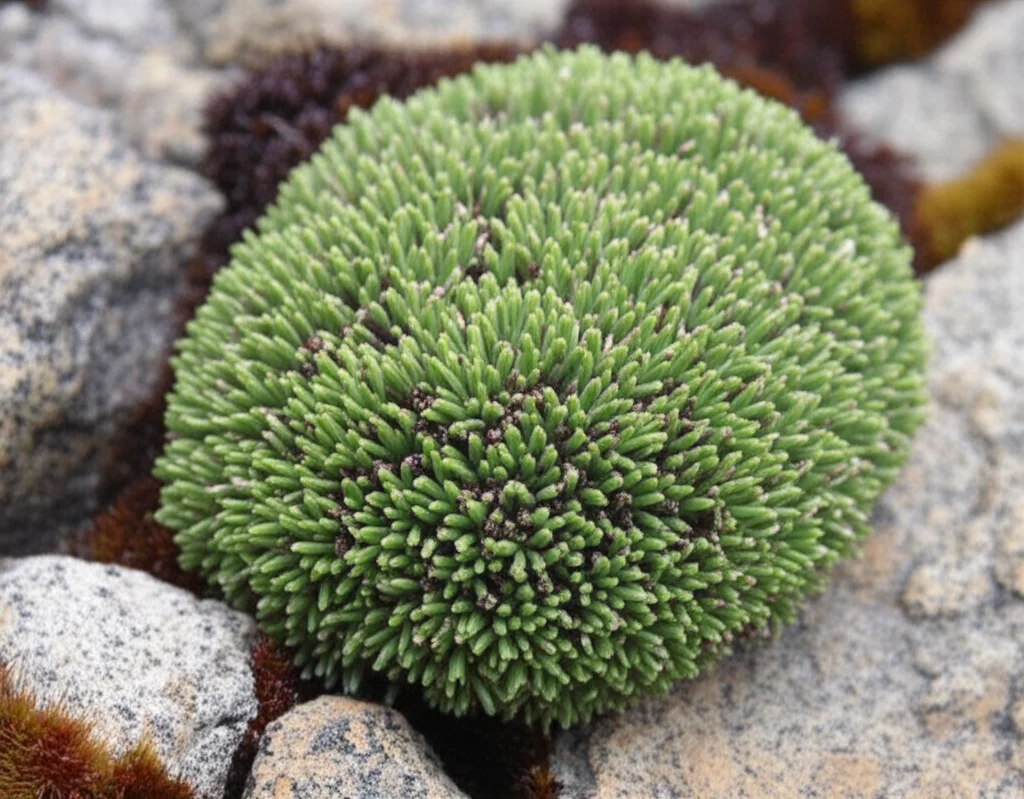
So, what’s the big deal about Cushion willow? Well, imagine a plant that’s basically a living, breathing pincushion, hugging the ground for dear life. That’s our Cushion willow! It typically grows no taller than 5 cm, with a creeping stem and tons of little branches. You’ll find it way up high in subnival alpine zones, around 4000 meters elevation – think the Hengduan Mountains and nearby areas. That’s like living on a mountain peak where conditions are, to put it mildly, brutal: intense sun, whipping winds, freezing temperatures, wild daily temperature swings, thin air, poor soil, and unpredictable moisture. Phew!
Because it’s so good at surviving these harsh conditions, Cushion willow has packed its genome with a treasure trove of stress-resistance genes. This makes it a fantastic model for studying:
- Adaptive evolution: How do plants even survive, let alone thrive, up there?
- Plant sex determination: Willows are fascinating because they can have different sex systems (XY like us, or ZW like birds), and Cushion willow even shows some hermaphrodite flowers, hinting at an evolving system. It’s mostly dioecious (separate male and female plants) but sometimes monoecious (male and female flowers on the same plant).
- Mining stress-resistance genes: We can learn from its genetic toolkit to help other plants, like bioenergy willows, become more resilient.
Plus, it’s easy to take cuttings from, which is super handy for experiments. So, it’s got potential for bioenergy crops, sprucing up our gardens, and as an ornamental plant.
The Genome Puzzle: Why We Needed a Better Map
Now, we had a version of the Cushion willow genome before, but it was a bit like a puzzle with some missing pieces and others jumbled up – especially those tricky repetitive sequences like telomeres (the caps at the end of chromosomes). Also, we didn’t have a comprehensive map of which genes are active (expressed) in different parts of the plant. This lack of detail was holding back its full potential for all that cool research I mentioned.
So, what did we do? We decided to give the Cushion willow genome a major upgrade! We’re talking a haplotype-resolved, near telomere-to-telomere assembly. Fancy words, I know! “Haplotype-resolved” means we’ve managed to separate out the two sets of chromosomes a plant inherits (one from each parent), giving us two distinct “haplotype” genomes. And “near telomere-to-telomere” means we’ve gotten incredibly close to mapping each chromosome from one end to the other. We also created a high-quality transcriptomic map, which is like an atlas showing where and when genes are switched on in different plant tissues.

How We Did It: The Techy Magic Behind the Map
Alright, let’s peek behind the curtain at how we pulled this off. It involved some pretty cutting-edge technology and a whole lot of data crunching.
First off, we collected fresh young leaves from Cushion willow plants on Tianbao Mountain in Yunnan, China, for the DNA. For the RNA (which tells us about gene expression), we gathered samples from seven different organs: roots, stems, young leaves, mature leaves, monoecious flowers, female flowers, and male flowers. Talk about a plant spa day, but with liquid nitrogen to freeze everything super fast!
Assembling the Genome Jigsaw
To build this high-quality genome, we used a combination of powerful sequencing technologies:
- PacBio Revio System: This gives us long reads of DNA, which are great for piecing together complex genomes. We got about 38.3 Gb of HiFi raw data – that’s a lot!
- Illumina Hi-C sequencing: This technique helps us figure out how chromosomes are organized in 3D space, which is crucial for assembling them correctly. We got around 49.7 Gb of Hi-C data.
- Illumina short-read sequences: We also used some existing data from NCBI to help polish things up.
We used smart software like Hifiasm, Juicer, and 3D-DNA to put the initial contigs (pieces of the genome) together. Then, like meticulous puzzle solvers, we manually checked and corrected any mistakes. We even used TGS-GapCloser to fill in gaps and special techniques to extend the sequences right out to the telomeres (those chromosome end-caps, remember?). After a couple of rounds of polishing with Nextpolish and removing redundant bits with Redundans, voila! We had two beautiful, chromosome-level haplotype genomes: Haplotype A and Haplotype B.
Haplotype A came in at 401.5 Mb (megabases, or million base pairs) with a contig N50 of 22.6 Mb (meaning half the genome is in chunks at least this big – a sign of good assembly). Haplotype B was slightly smaller at 386.2 Mb with a contig N50 of 21.8 Mb. Both have 19 chromosomes, matching what we knew from previous studies (2n=38). We even assembled the chloroplast (155,612 bp) and mitochondrial (630,081 bp) genomes, which are like the plant cell’s little powerhouses.
Mapping Gene Activity (The Transcriptome)
Knowing the genome sequence is great, but we also want to know what the genes are doing. That’s where the transcriptome map comes in. We extracted RNA from those seven different plant organs I mentioned earlier.
We used:
- Illumina RNA-seq: This gave us snapshots of gene activity in each organ, resulting in 28,587 non-redundant transcripts.
- Nanopore full-length transcript technology: This is super cool because it gives us the entire sequence of many RNA molecules, which is more accurate for spotting things like alternative splicing (where one gene can make multiple protein versions). We got a whopping 164.5 million full-length transcripts!
All these transcripts were then annotated using databases like KEGG (Kyoto Encyclopedia of Genes and Genomes) and GO (Gene Ontology) to understand their functions. We also looked for differentially expressed genes (DEGs) – genes that are more or less active in one organ compared to another. Plus, those full-length transcripts helped us find 33,414 alternative splicing (AS) events and 36,634 alternative polyadenylation (APA) sites, which are important ways genes regulate themselves.

Annotating the Genome: What Do All Those Genes Do?
Once we had the genome sequence, the next big step was annotation – basically, identifying all the genes and figuring out what they might do. This is like creating a detailed legend for our genetic map.
We started by identifying and masking repetitive sequences – bits of DNA that appear many times. These made up about 53.38% of the genome! Then, we used a pipeline of software tools (MAKER2, AUGUSTUS, Exonerate, EVidenceModeler, PASA) and evidence from homologous proteins (from 17 related species and the model plant Arabidopsis thaliana) as well as our own transcript data to predict where the genes are and what their structures look like. We also specifically looked for different types of RNA genes like tRNAs, rRNAs, and other noncoding RNAs.
In total, we annotated 57,169 genes in Haplotype A. This includes 53,238 protein-coding genes and 3,931 RNA genes. That’s a lot of information packed into this tiny plant! To understand their functions, we used databases like eggNOG-mapper for GO and KEGG annotations, and InterProScan to find structural domains within the proteins. We also compared our protein sequences to several large protein databases to find the best matches.
The Juicy Details: What Our New Maps Reveal
So, how good are these new maps? Pretty darn good, if I do say so myself!
- Genome Quality: The GC content (the proportion of G and C bases in DNA) for both haplotypes was around 34.88%. We checked for completeness using a set of core plant genes (BUSCO analysis), and found that 96.0% of them were present and complete in our assembled genome. This is excellent and suggests most of the genome has been captured. The Hi-C data also showed strong chromosomal clustering, confirming our assembly structure. When we compared our new assembly to the previously published one, the chromosome order was identical, which is reassuring! We also successfully identified characteristic sequences like telomeres and rDNA regions.
- Annotation Quality: The BUSCO assessment of our annotated proteins was also stellar, with 97.7% of complete BUSCOs found. This means our gene predictions are pretty solid.
- Alleles Uncovered: Because we have haplotype-resolved genomes, we could identify alleles – different versions of the same gene found on the paired chromosomes. We found 23,744 allele gene pairs, and for 17,885 of these, we could see both versions being expressed in mature leaves. This is super important for understanding genetic diversity and how it plays out in gene function.

Gene Expression Insights
Our transcriptomic map gave us a fantastic view of gene activity. On average, about 21,949 genes were expressed in each of the seven tissues we looked at (using a threshold of FPKM > 0.3, which is a measure of expression level). A good chunk of these (22.62%) were highly expressed (FPKM > 20).
We could see which genes were specifically active in certain organs – for example, genes only turned on in roots or only in flowers. We also identified 17,387 differentially expressed genes (DEGs) when comparing different organs. For instance, we could see which genes ramp up or down when comparing female flowers to male flowers, or young leaves to mature leaves. This kind of information is gold for understanding development and function.
When we looked at what these differently expressed genes do (using GO and KEGG pathway analysis), we found they were enriched in various metabolic pathways and functions. This makes sense – different parts of the plant have different jobs, so they need different sets of active genes.
And remember those alternative splicing (AS) events and alternative polyadenylation (APA) sites we found using the full-length transcripts? We cataloged 33,414 AS events, with intron retention being the most common type, and 36,634 APA sites spread across different gene regions. These are crucial regulatory mechanisms that add another layer of complexity to how genes work, and now we have a much better handle on them in Cushion willow.
Why This All Matters: A Big Leap for Willow Science!
Phew, that was a lot of information, right? But the bottom line is this: having this high-quality, haplotype-resolved genome and detailed transcriptomic map for Cushion willow is a huge step forward. It’s like we’ve been given a super-detailed blueprint and instruction manual for this amazing alpine plant.
This resource will be invaluable for:
- Studying alpine adaptation: We can now dig deeper into those stress-resistance genes and understand the strategies Cushion willow uses to survive in extreme environments. This could have implications for understanding how plants might cope with climate change.
- Investigating sex determination: The dynamic sex system in willows is a fascinating evolutionary puzzle, and Cushion willow is a prime candidate for cracking some of its secrets.
- Improving willow crops: By identifying beneficial genes in Cushion willow, we might be able to transfer those traits to economically important willows used for bioenergy, making them hardier and more productive.
- Broader Salix research: This genome can serve as a fantastic reference for studying other Salix species, especially those living in tough alpine conditions on the Qinghai-Tibet Plateau.
It’s really exciting to think about all the new research and discoveries that these resources will enable. We’ve basically laid a fantastic foundation for future studies, and I can’t wait to see what we learn next about this resilient little plant and its relatives!
All the raw data and assembled genomes/transcriptomes have been deposited in public databases like the National Genomics Data Center (NGDC) and NCBI, so other researchers can dive in and use them too. Sharing is caring, especially in science!

So, there you have it – a glimpse into the complex world of the Cushion willow genome. It’s a testament to how much information can be packed into even the smallest of organisms, and how much we can learn by looking closely.
Source: Springer