Compost Power: Growing Stronger Corn, Even When It’s Dry
Hey there! Let’s chat about something super important for anyone who cares about growing food, especially with our crazy weather these days. We’re talking about corn – that staple crop we all rely on – and how we can help it handle the heat and the lack of rain a bit better. Because, let’s be honest, drought is becoming a real headache, and it’s only getting worse.
I stumbled upon some pretty cool research that dives into how adding something as simple as compost to the soil can make a massive difference for corn plants, not just when they have plenty of water, but crucially, when things get dry. And it’s not just about dumping some organic matter; there seems to be a whole hidden world of tiny helpers in the soil making this magic happen.
The Big Problem: Thirsty Plants in a Changing World
So, picture this: climate change is throwing us curveballs, and one of the biggest is water scarcity. Droughts are hitting harder and more often. When plants don’t get enough water, they get stressed, their growth slows down, and yields drop. This is a massive challenge for feeding a growing global population. We need crops that can tough it out when water is scarce, without sacrificing performance when water is available. It’s a tough balancing act!
Plants have their own tricks, you know? Some close their tiny leaf pores (stomata) to save water, others grow super-fast to finish their life cycle before the worst of the drought hits, and some send their roots deep down to find water. Scientists and breeders are working hard to find or create plants that are naturally better at handling drought. But sometimes, these drought-tolerant champs don’t yield as much when water *is* plentiful. It’s like they’re so focused on survival mode, they forget how to really thrive.
This is where soil management comes in. We’ve known for a while that adding organic stuff like manure or biochar can help soil hold more water. It’s like giving the soil a sponge upgrade. Plants in this kind of soil tend to stay happier and more hydrated during dry spells. But this new study looks at something a bit deeper – how these soil amendments affect how plants *use* water, not just how much is available.
So, What Did They Do? A Peek Behind the Curtain
These clever researchers wanted to see exactly how compost affects corn. They set up an experiment using a specific type of soil (a Chromosol, which has a dense clay layer underneath) and grew corn plants in columns. They tested a few different scenarios:
- Regular fertilizer applied to the topsoil (this was their control group).
- Compost applied to the topsoil.
- Compost applied deep down in that tricky clay subsoil layer.
- Compost mixed with biochar (another helpful soil amendment) also applied deep down.
They made sure the nutrient levels were the same across all treatments, so they weren’t just seeing effects from extra food. Then, they grew the corn under two conditions: well-watered (plenty of H2O) and water-stressed (drying cycles to mimic drought).
They measured all sorts of things: how much the plants grew (shoot and root biomass), how much water they used (transpiration), how efficient they were at using water (Transpiration Efficiency or TE – basically, how much plant stuff they made per drop of water used), how open their stomata were, what hormones were in their leaves, how the microbes in the soil changed, and how deep the roots grew. Phew! They really went all in.
The Amazing Results: Compost is a Game Changer!
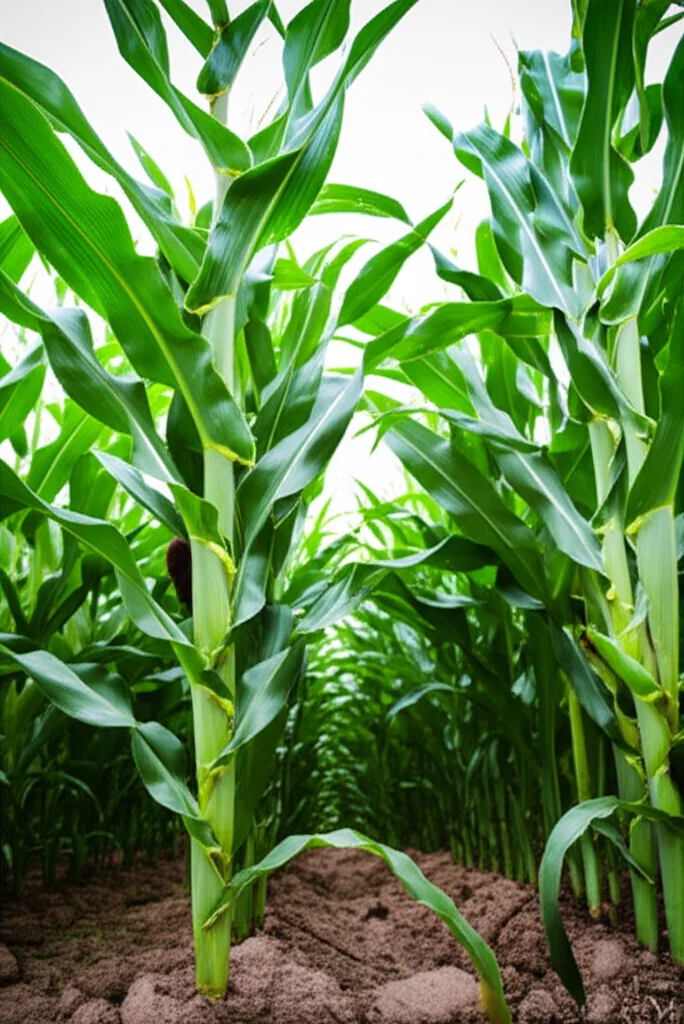
Okay, here’s where it gets exciting. The compost treatments, *all* of them – topsoil, deep, deep with biochar – significantly boosted corn growth compared to just using fertilizer. We’re talking over 7% more shoot and root biomass! And the deep compost treatments? Even better, with over 15% more shoot biomass and even more root growth. This happened regardless of whether the plants were well-watered or stressed. That’s huge!
But the real kicker was the Transpiration Efficiency (TE). The compost-treated plants were consistently about 13% more efficient at using water than the fertilizer-only plants. This means they were making more plant material for the amount of water they were losing through their leaves. And get this – this improved efficiency didn’t come with a penalty in growth, which is often the case with drought-tolerant plants. It’s like they got the best of both worlds!
How did they achieve this water-saving superpower? The researchers found that the compost treatments led to the plants having smaller stomatal openings and lower transpiration rates (that’s water loss through leaves). We’re talking over 30% lower on average! Yet, their CO2 assimilation rates (photosynthesis) were pretty similar to the fertilizer plants, especially when stomata weren’t wide open anyway. It seems compost helps plants be smarter about when and how much water to let out.
Digging into the ‘Why’: Hormones and Tiny Helpers
So, why did compost make the stomata behave differently? The study points to plant hormones. The leaves of compost-treated plants had higher levels of hormones like Abscisic Acid (ABA), Methyl Jasmonate (MJ), and Indole 3 Acetic Acid (IAA). ABA is a big deal because it tells stomata to close, especially when water is scarce. MJ also plays a role in stress responses and can affect stomata. IAA is more of a growth promoter. The levels of ABA shot up dramatically under water stress, as expected, but compost boosted them even under well-watered conditions.
Now, where do these hormones come from, or what triggers their production? This is where the soil microbes come in. The compost treatments significantly increased the number of fungi in the soil layers where the compost was added. More importantly, in the deep compost layer, they saw a big increase in specific types of bacteria known to be plant-beneficial, particularly from the *Bacillus* and *Streptomyces* genera. These are well-known good guys in the soil world!
Guess what? Studies have shown that these very microbes (*Bacillus*, *Streptomyces*) can either produce plant hormones themselves or trigger the plant to produce more of them, including ABA and IAA. So, the theory is: Compost feeds and encourages these beneficial microbes -> these microbes influence the plant’s hormone levels -> higher ABA/MJ lead to smarter stomatal control and lower water loss -> higher IAA potentially helps with growth -> boom, better TE and growth!
The Deep Root Connection
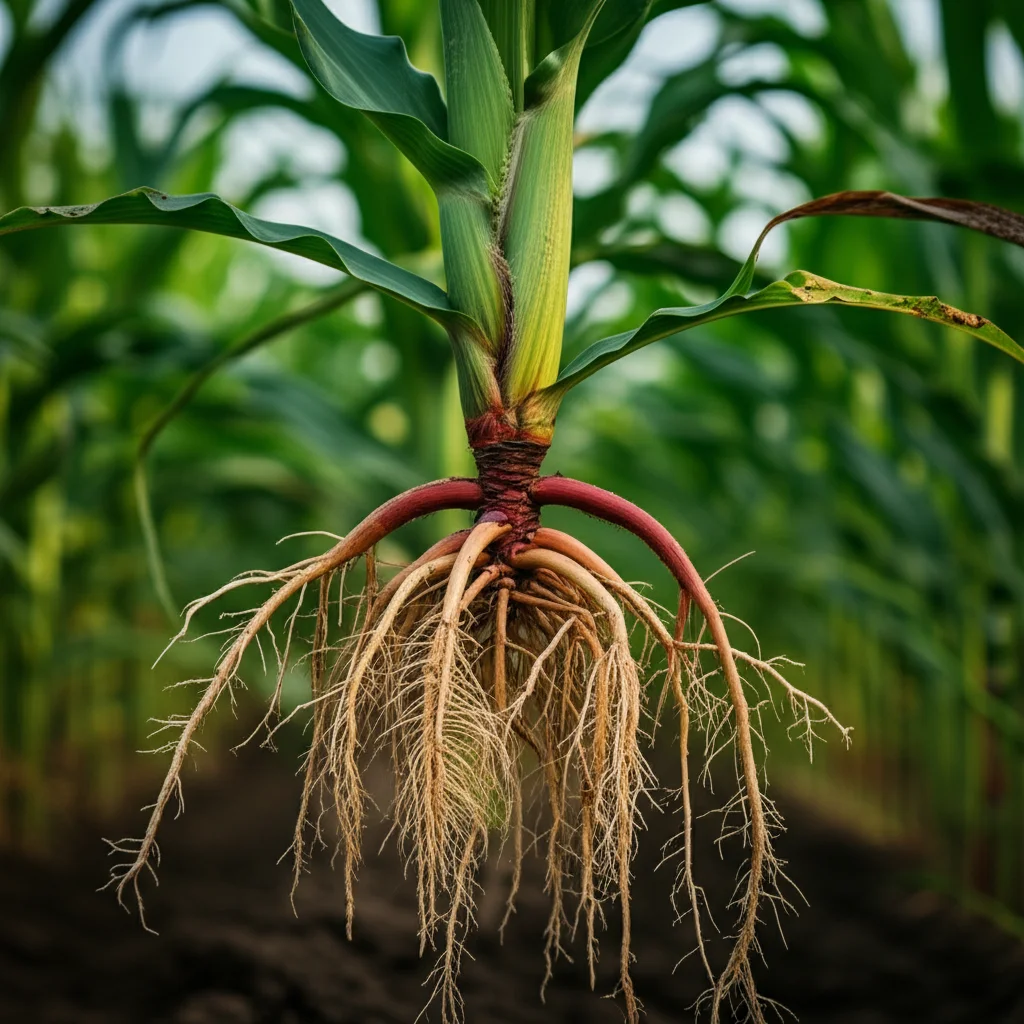
Remember that dense clay subsoil? That’s often a barrier for roots. But the deep compost treatments made a huge difference here. Corn plants with deep compost or deep compost/biochar had significantly more root length density (basically, more roots packed into a given volume of soil) in the deep layers compared to the fertilizer control, especially under water stress.
Why did the roots go deeper with compost? It could be a few things. The compost band itself might be easier for roots to penetrate than dense clay. It provides a localized patch of nutrients that encourages roots to grow towards it and beyond. Plus, the compost might improve aeration in that tough subsoil, making it a nicer place for roots to be.
And those deeper roots? They’re like straws reaching down into a deeper water reservoir. The study showed that plants with deep compost were able to extract water from the subsoil faster and dry it out more completely during the drying cycles. More access to water, especially when the topsoil is dry, helps the plant stay hydrated and maintain its functions, contributing to better growth under stress. The biochar added to the deep compost seemed to give an extra boost to this deep root growth, possibly by improving water availability in that amendment zone even further.
Putting It All Together: A Biological Boost
So, it looks like adding compost does a few wonderful things for corn. It doesn’t just add nutrients (though that helps too, even if controlled for here). It doesn’t just help the soil hold more water (though that’s a known benefit). Crucially, it seems to kickstart a biological process in the soil.
By fostering beneficial microbes like certain fungi, *Bacillus*, and *Streptomyces*, the compost helps the plant regulate its water use more efficiently through hormone signaling. This means the plant loses less water for the same amount of CO2 taken in, boosting that all-important Transpiration Efficiency. On top of that, especially when placed deeper, compost encourages roots to explore and utilize water from deeper soil layers, acting as a buffer against drought.
This study really highlights that soil health, particularly the microbial life within it, is intimately connected to plant health and its ability to handle stress. It suggests that simple soil management practices like adding compost could be a powerful tool for making crops like corn more resilient in a world facing increasing water challenges. It’s a pretty exciting thought – that by nurturing the soil, we can help our plants thrive, even when the going gets tough!
Source: Springer