
Farming the Future: How Trees Help Land Thrive Under Climate Change
Hey there! Let’s chat about something super important for anyone who cares about where our food and timber come from, especially in places like Northern Ireland with its cool, damp vibes. We’re talking about how our farms and woodlands might fare as the climate gets a bit… well, different.
It’s a bit of a puzzle, isn’t it? Climate change isn’t just one simple thing. Sure, some folks might get a longer growing season or a little boost from more CO2 in the air (plants kinda like that, believe it or not!). But then you’ve got the flip side: scary stuff like more extreme weather – think heatwaves, droughts, or crazy storms.
So, how do we even begin to figure out what the future holds for our fields and forests? That’s where models come in handy. Think of them like really sophisticated crystal balls, but powered by science and data. They help us play out different scenarios and see how things like crops, trees, and the environment interact.
We recently got our hands on a study that used a cool model called EcoYield-SAFE. This model is pretty clever because it actually accounts for that CO2 boost plants get. The researchers calibrated it using tons of real-world data – field measurements and weather records stretching back over 30 years from a specific spot in Northern Ireland. Then, they pointed the model towards the future, looking at two different climate scenarios (basically, how much more greenhouse gas we might pump into the atmosphere) for the periods 2020–2060 and 2060–2100.
#### What the Model Predicted for Yields
Okay, so the big headline from this study is actually quite interesting. For grass, arable crops, and trees, the model predicted that yields would generally go *up* under these future climate scenarios. Why? Mostly because of that CO2 fertilization effect we talked about. It seems that boost was strong enough to more than cancel out the negative impacts of things like higher temperatures and potential drought stress.
Let’s break it down a bit for the different systems they looked at:
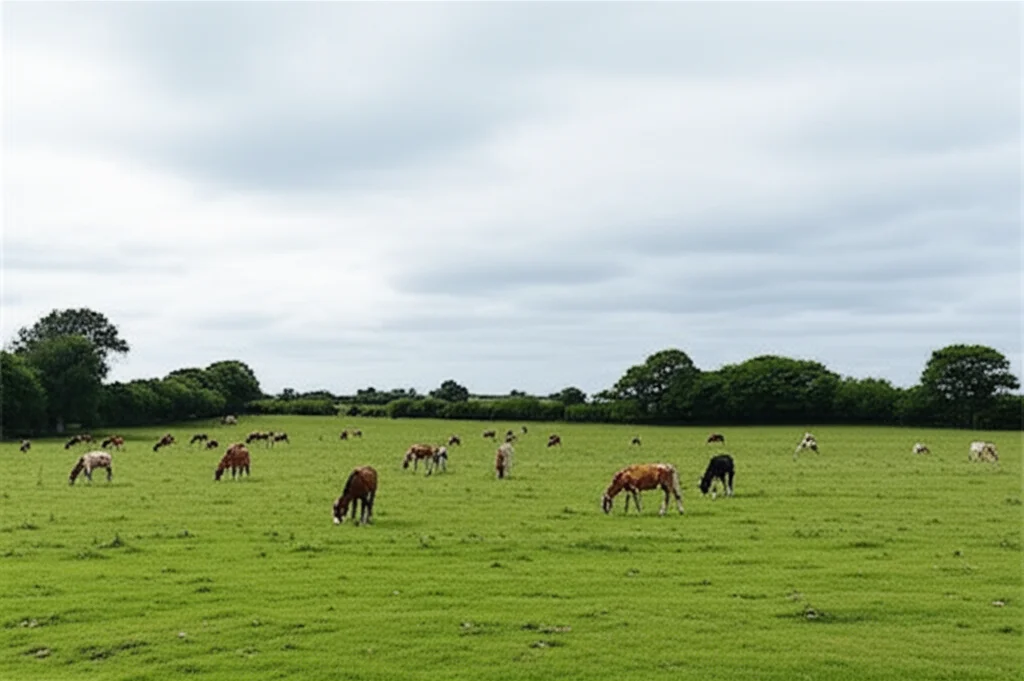
* Grassland: The model suggested plain old grassland would see higher yields in the future thanks to climate change and increased CO2.
* Woodland: Trees in a dedicated woodland setting were also predicted to grow more timber. Warmer, longer growing seasons in cooler regions seem to be a plus here.
* Agroforestry (Trees + Grass/Crops): This is where it gets really fascinating. They looked at two types: silvopastoral (trees with grazing animals/grass) and silvoarable (trees with crops).
* In the silvopastoral system, timber growth was predicted to increase, again, thanks to CO2. The grass growing underneath also saw a predicted increase in yield overall, although as the trees got bigger, they did start competing with the grass for resources, which is totally understandable.
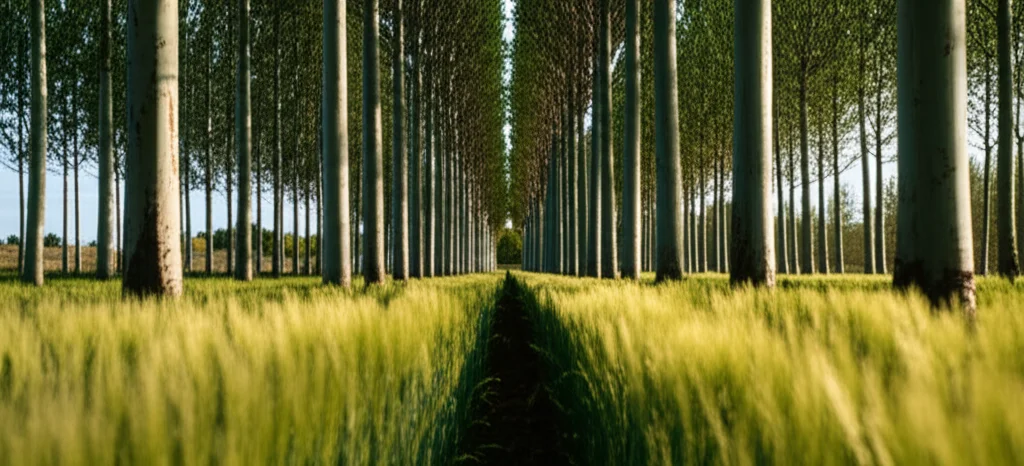
* For the silvoarable system, the arable crop yields (like barley) were also predicted to increase, especially later in the century under the higher emissions scenario. Timber volume from the trees in these systems also went up.
The study also looked at something called the Land Equivalent Ratio (LER). This is a neat way of seeing if growing things together (like in agroforestry) is more efficient than growing them separately on different pieces of land. The model predicted that for the silvopastoral and silvoarable systems they studied, the LER stayed pretty constant under the future climate scenarios compared to today. For the silvopastoral system, the LER was consistently above 1.0, meaning you needed less land overall to get the same amount of grass and timber compared to growing them separately. For the silvoarable system in this study, the LER was sometimes below 1.0 if you *only* counted the barley and timber, but if you included the grass that followed the barley crop, the LER also went above 1.0. This suggests agroforestry can be a pretty efficient way to use land, and that efficiency seems resilient to climate change according to the model.
#### What About the Soil?
Now, let’s dig into the soil organic carbon – basically, the good stuff in the soil that makes it healthy and helps store carbon. This is a different story than yields.
The model predicted that under the baseline climate, there would be a loss of soil organic carbon over 40 years in both arable and grassland systems. Arable systems saw bigger losses than grassland. And honestly, the future climate scenarios didn’t change this general trend much – there were still predicted losses, with only relatively small differences between the baseline and the future climates.
However, here’s where the trees make a big difference!
* Woodland: In the dedicated woodland system, the model predicted an *increase* in soil organic carbon over the 40 years, especially after the first decade or so.
* Silvopastoral: This system showed an intermediate effect. There was a predicted decrease in soil carbon in the initial years after planting trees, then a period of stability, followed by an increase later on (from about year 20 onwards). This temporal pattern is really interesting and highlights that the benefits take time to show up.
* Silvoarable: Similar to silvopastoral, the silvoarable system showed an intermediate loss of soil carbon compared to the arable-only system, but it wasn’t predicted to increase as much as in the silvopastoral or woodland systems over the 40 years in this specific simulation. However, the presence of trees definitely reduced the *loss* compared to arable land without trees.
The takeaway here is pretty clear: planting trees seems to be a key way to help maintain or even increase soil organic carbon over the long term, which is super important for soil health and climate mitigation. Warmer temperatures predicted under climate change can actually make it harder to keep carbon in the soil, so the role of trees might become even more crucial.
#### The Balancing Act: Tree Density
The study also did some virtual experiments with the model, playing around with different numbers of trees per hectare in the agroforestry systems under the high emissions scenario (RCP 8.5) later in the century (2060–2100). This is where you really see the trade-offs.
* Grass Yield vs. Timber: In the silvopastoral system, the highest grass yield was predicted with no trees (obviously!). As you added more trees, the grass yield went down because the trees competed for light and water. On the flip side, the total timber volume per hectare went up significantly with increasing tree density. So, if your priority is grass, you want fewer trees. If it’s timber, you want more. It’s a balancing act depending on what the farmer wants.
* Crop Yield vs. Timber: Similarly, in the silvoarable system, the highest crop yields were with no trees. Increasing tree density meant lower crop yields but much higher timber volume per hectare.
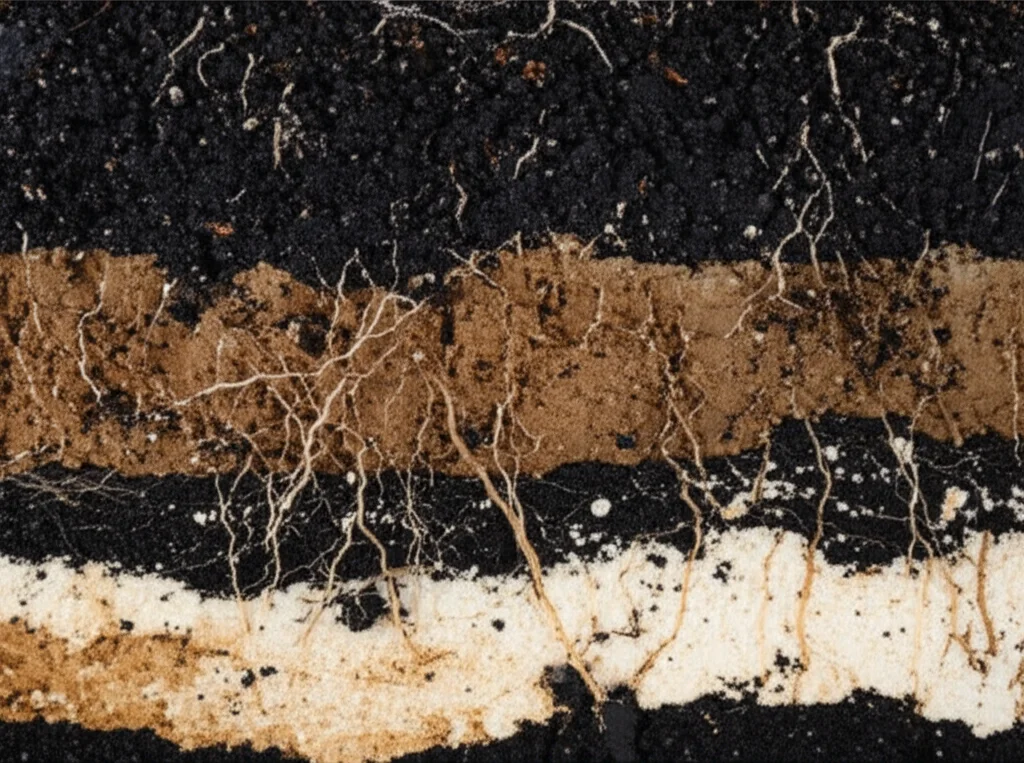
* Soil Carbon vs. Density: Interestingly, the effect of different tree densities on soil organic carbon wasn’t as dramatic as the effect of simply *having* trees versus not having them. In both silvopastoral and silvoarable systems, going from no trees to even just 50 trees per hectare was predicted to increase soil organic carbon significantly over 40 years compared to the no-tree scenario. While there were some differences between higher densities, the biggest jump in SOC benefit came from just introducing trees into the system. The model also showed that how much grass residue is left on the soil surface makes a big difference to SOC levels in grassland and silvopasture – leaving more grass helps build carbon.
#### Agroforestry: A Resilient Option?
So, what’s the big picture here? This study, which is apparently the first of its kind to calibrate and validate a model for all these different systems at the same site in Europe and then run future climate scenarios, gives us some valuable insights.
It suggests that in a cool temperate Atlantic climate like Northern Ireland, climate change might actually boost yields in many systems, largely thanks to the CO2 fertilization effect offsetting negative impacts. However, maintaining soil organic carbon is a challenge, especially in arable and grassland systems without trees.
This is where agroforestry really shines in the model’s predictions. While there are challenges (like managing the competition between trees and crops/grass, or the upfront costs), integrating trees into farming systems appears to:
- Help maintain or increase soil organic carbon over the long term.
- Offer a resilient land-use system, with the Land Equivalent Ratio staying relatively stable under different climate futures.
- Potentially make more efficient use of resources like light and water compared to separate monocultures.
The model also lets us see how management choices, like how many trees to plant or how to prune them, can influence the balance between timber production, crop/grass yields, and soil carbon benefits. This kind of information is gold for farmers and policymakers trying to figure out the best ways to adapt to and mitigate climate change.
#### A Note on the Model
Of course, no model is perfect. The researchers noted that EcoYield-SAFE doesn’t currently account for things like nitrogen limitations (plants need nitrogen too, and sometimes the CO2 boost can be limited if there isn’t enough nitrogen) or the potential increase in pests and diseases that might come with warmer temperatures. These are complex factors that could influence the real-world outcomes.
But even with those caveats, this study provides a powerful look into the potential future of land use under climate change. It highlights the complex interactions at play and reinforces the idea that integrating trees into farming landscapes isn’t just about growing timber or crops; it’s also a crucial strategy for building healthier soils and creating more resilient systems in the face of a changing climate.
It’s pretty cool to see how these models, combined with long-term field data, can give us a clearer picture of the path forward. It seems ‘farming with trees’ might just be a key part of that future, helping us grow what we need while also looking after the land itself.
Source: Springer


