
Is the Chinese Zurich Questionnaire a Game-Changer for Back Pain Sufferers? Let’s Find Out!
Hey everyone! Today, I want to chat about something that might sound a bit technical, but trust me, it’s super relevant for a whole lot of people dealing with a common type of back and leg pain. We’re diving into the world of medical questionnaires, specifically the Chinese version of the Zurich Claudication Questionnaire (Ch-ZCQ). Sounds like a mouthful, right? But it’s a tool that could really help doctors understand how patients with Lumbar Spinal Stenosis (LSS) are doing, especially when they’re not going under the knife.
So, What’s Lumbar Spinal Stenosis (LSS) and this ZCQ Thingy?
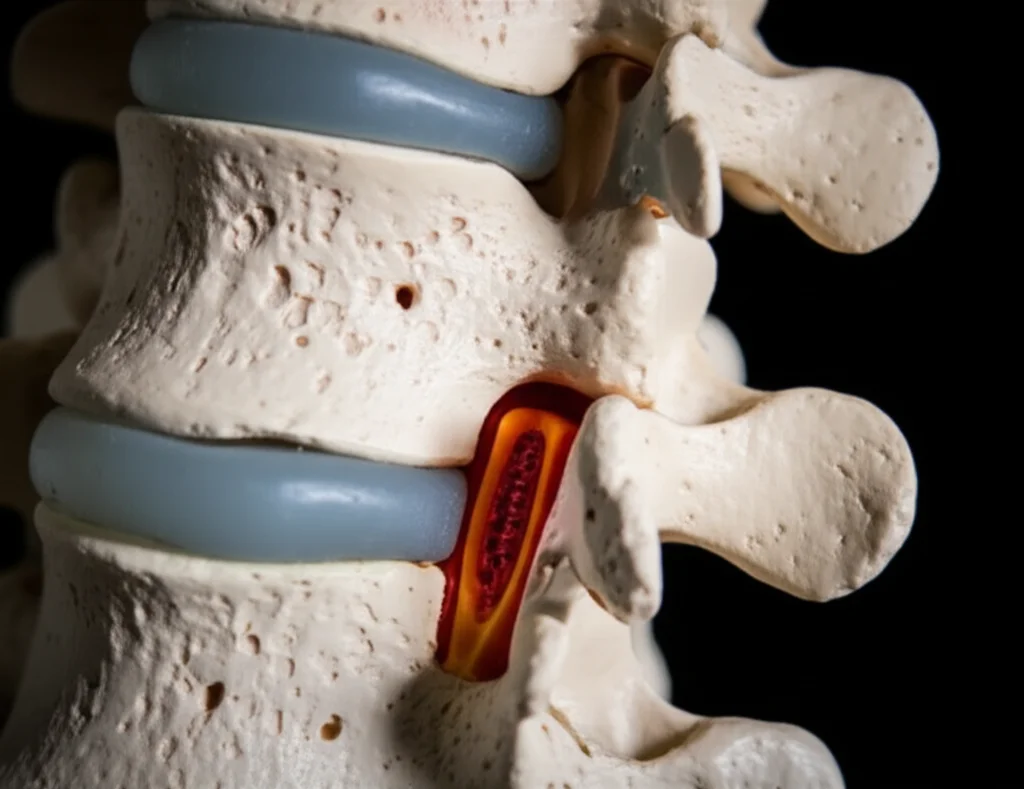
First off, LSS. Imagine the tube in your lower back that your spinal nerves run through gets a bit squeezed. That’s LSS in a nutshell. It’s often due to wear-and-tear changes as we get older – think facet joints, ligaments, and those cushiony intervertebral discs getting a bit out of shape. The classic symptom? Something called neurogenic claudication. This means you get pain in your buttocks and legs that kicks in when you walk or stand for too long. Annoying, to say the least! And get this, a whopping 60-80% of us will experience low back pain at some point, making LSS a pretty common culprit.
Now, the Zurich Claudication Questionnaire (ZCQ). It’s a self-administered questionnaire, meaning patients fill it out themselves. Developed back in 1996, it’s designed specifically for LSS. It usually has three parts:
- Symptom Severity (SS) – how bad are the symptoms?
- Physical Function (PF) – how much do symptoms affect daily activities?
- Satisfaction (SAT) – usually just for after surgery, to see how happy patients are with the outcome.
For folks not having surgery, researchers often just use the SS and PF bits. It’s been translated into a bunch of languages, which is awesome for global research!
Why Bother Validating the Chinese Version (Ch-ZCQ)?
Good question! While the ZCQ is well-regarded, and there’s been a Chinese-adapted version (the Ch-ZCQ) since 2014, there hasn’t been a ton of work to really double-check its performance with the Chinese population, especially for non-surgical treatments. Think about it – cultural nuances and different healthcare experiences can affect how people understand and answer questions. Plus, knowing how much change in a score is actually *meaningful* to a patient (that’s the Minimally Clinical Important Difference, or MCID) is crucial. Without this, it’s hard to say if a treatment is truly making a difference from the patient’s perspective.
So, a recent study set out to rigorously assess the Ch-ZCQ for LSS patients in China undergoing non-surgical treatments like acupuncture, cupping, physical therapy, and medication. They wanted to check its:
- Reliability: Does it give consistent results?
- Validity: Does it actually measure what it’s supposed to measure?
- Responsiveness: Can it detect changes in a patient’s condition over time?
- MCID: What’s the smallest score change that patients would consider important?
They even looked at something called ceiling/floor effects – that’s when too many people score the absolute highest or lowest, which can make it hard to see changes.
How’d They Do It? The Nitty-Gritty of the Study
This was a single-center study, meaning it happened at one hospital. They used the COSMIN checklist, which is like a gold standard guide for evaluating these kinds of measurement tools. Patients aged 50-85 with diagnosed LSS who were getting non-surgical treatment for three months were roped in (with their consent, of course!). They made sure to exclude folks with other serious conditions that could muddy the waters.
The researchers needed at least 100 patients to get robust results. These patients filled out the Ch-ZCQ, the Oswestry Disability Index (ODI – another common measure for back-related disability), and the SF-12v2 (a shorter health survey) before treatment and then again 1.5 to 3 months later. The Ch-ZCQ itself has 12 items: 7 for symptom severity (scored 1-5) and 5 for physical function (scored 1-4). Higher scores mean more severe LSS. It’s all about seeing if this questionnaire is up to snuff for the Chinese LSS population.
Drumroll Please… What Did They Find?
Okay, let’s get to the juicy bits – the results! Overall, the Ch-ZCQ seems to be a pretty solid tool.
Reliability: Thumbs Up!
The internal consistency (do the questions within each section hang together well?) was good. Cronbach’s alpha, a fancy stat for this, was 0.874 overall, with 0.793 for Symptom Severity (SS) and 0.870 for Physical Function (PF). Generally, anything above 0.7 is acceptable, and above 0.8 is good, so we’re in good shape here!
Test-retest reliability (do patients score similarly if their condition hasn’t changed?) was also good. The ICCs (another stat!) were 0.836 for SS and 0.741 for PF. This means the questionnaire gives consistent scores over time when the patient’s condition is stable.
Validity: Mostly Positive News!
Content validity (do experts agree the questions cover what they need to?) was generally good (index of 0.764). However, a few items related to walking distance (items 10, 11, 12) got lower scores from experts, who felt they might be a bit repetitive or not perfectly suited for Chinese patients. This is an important point for future tweaks!
Structural validity (does the questionnaire’s structure make sense statistically?) was good. Confirmatory Factor Analysis (CFA) showed the model fit well.
Construct validity (does it correlate with other similar measures as expected?) was also looking good. The Ch-ZCQ scores correlated strongly with the ODI (which also measures disability due to LSS) and moderately with the SF-12v2 (a general health measure). This is what you’d hope to see – it measures something related but distinct.
Discriminative validity (can it tell the difference between patients with mild versus moderate/severe LSS?) was also a win! The Ch-ZCQ could indeed distinguish between these groups based on their ODI scores.
Responsiveness: A Bit of a Mixed Bag
Responsiveness is all about how well the questionnaire picks up on actual changes in a patient’s condition after treatment. Here, the results were a bit more modest. The Effect Size (ES) for the SS domain was moderate (0.46), but a bit lower for the PF domain (0.35). The Standardized Response Mean (SRM) was also on the lower side. The researchers think this might be because they were looking at non-surgical treatments over a relatively short follow-up (1.5-3 months). Surgical treatments often show bigger, faster changes. Also, those ceiling/floor effects on some items might have dampened the responsiveness a bit.
MCID: What’s a Meaningful Change?
This is super important for clinicians and patients! The study found the MCID for Symptom Severity (SS) to be -0.21 and for Physical Function (PF) to be -0.16. This means a decrease of about 0.21 in the SS score, or 0.16 in the PF score, is the smallest change that patients themselves would likely perceive as a genuine improvement. Knowing these numbers helps doctors interpret treatment effects much better.
Ceiling and Floor Effects: Room for Improvement
They did find some ceiling and floor effects. This means for certain questions, a noticeable number of patients scored either the best possible score (ceiling) or the worst possible score (floor). When this happens, it’s hard to measure if someone at the “ceiling” gets even better, or someone at the “floor” gets even worse. Specifically, 6 items had this issue at baseline, and 8 items at follow-up. This mainly affected those walking-related questions again (items 10, 11, 12).

So, What’s the Big Takeaway?
I think this study is pretty neat! It shows that the Chinese version of the Zurich Claudication Questionnaire (Ch-ZCQ) is largely a reliable and valid tool for assessing LSS patients undergoing non-surgical treatments in China. It can effectively evaluate how these treatments are working from the patient’s point of view, especially when we consider the MCID values they’ve established.
The fact that it correlates well with other established measures like the ODI and SF-12v2, and can distinguish between different severity levels of LSS, is a big plus. It gives clinicians more confidence in using this tool.
However, it’s not perfect. The study highlights that the responsiveness was a bit low, possibly due to the nature of non-surgical treatments or the follow-up time. And those ceiling/floor effects, particularly for items about walking distance, suggest that some refinement might be needed to make the Ch-ZCQ even better for the Chinese population. Experts pointed out that these items might feel repetitive or not fully capture the experience of Chinese patients. It’s a great example of how cross-cultural adaptation is an ongoing process!
Strengths and Limitations – Keeping it Real
One of the big strengths of this research is that it’s one of the first to really dig deep into the Ch-ZCQ for non-surgically treated LSS patients in China, including looking at content validity and, crucially, the MCID. They also used the rigorous COSMIN guidelines, which adds a lot of credibility.
But, like all studies, it has its limitations. It was done in Beijing, so it might mostly reflect an urban population. It would be great to see if these findings hold up in other parts of China. Also, they only used the ODI to check known-group validity, though ODI is a solid choice. Finally, assessing test-retest reliability when patients are undergoing treatment is always a bit tricky, even if they try to account for it by looking at patients whose overall health status (on one SF-12v2 item) didn’t change.
Final Thoughts
Overall, I’d say this study is a valuable piece of the puzzle. It gives a green light for using the Ch-ZCQ in China for LSS patients not having surgery, but with a little asterisk suggesting some items could be fine-tuned. Knowing the MCID is a huge step forward for making treatment decisions and understanding what truly matters to patients. It’s all about making sure we have the best tools to help people manage their LSS and live better lives. And that, my friends, is always something to get excited about!
Source: Springer