
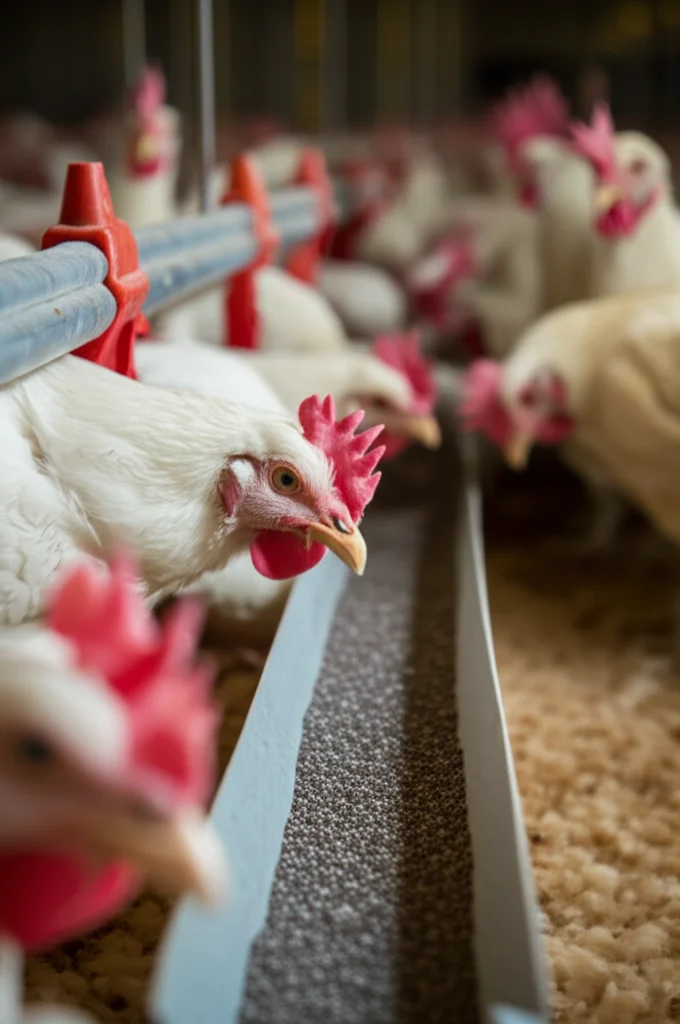
Chia Seeds: A Game Changer for Broiler Health?
Hey everyone! Let’s chat about something pretty cool happening in the world of poultry farming. You know how there’s a big push these days to find natural ways to keep animals healthy, especially with all the concerns about antibiotics? Well, scientists are looking everywhere, and guess what popped up on their radar? Yep, those tiny little powerhouses you might sprinkle on your yogurt or put in your smoothie: chia seeds!
I mean, who knew these little guys were so packed with good stuff? We’re talking fiber, protein, those amazing omega-3 fatty acids, and a whole bunch of vitamins and minerals. They’re basically a superfood for us, so it makes sense to wonder if they could be a superfood for chickens too, right? Especially broilers, the chickens raised for meat, because everyone wants them to be healthy and grow efficiently.
Why Chia for Chickens?
The big challenge in modern farming is keeping birds healthy and growing fast without relying so much on antibiotics. Antibiotic resistance is a real worry for human health, and consumers are asking for meat produced more naturally. So, researchers are exploring all sorts of alternatives – plants, seeds, probiotics, you name it.
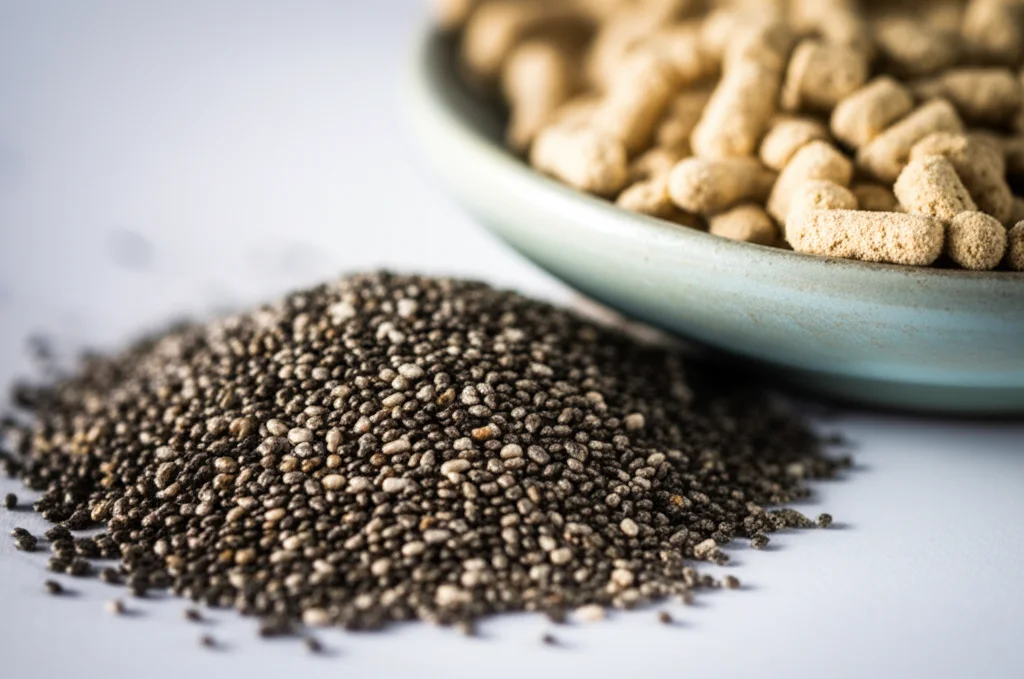
Chia seeds, specifically *Salvia hispanica L.*, stand out because of their incredible nutritional profile. They’re loaded with antioxidants and those healthy polyunsaturated fats (omega-3 and omega-6). Plus, they’ve got a great protein punch with essential amino acids. They even contain bioactive compounds that might help with gut balance and immunity. Basically, they seem like a natural fit for boosting bird health and performance.
Past studies have had mixed results, though. Some saw better growth and meat quality in broilers or quail with chia or chia oil, while others didn’t see much effect on performance. This got me thinking – maybe it’s all about the *amount* and *when* you give it?
The Experiment Setup
So, a team of researchers decided to really dig in and see what different levels of chia seed supplementation would do to broiler chickens. They took sixty day-old chicks and split them into five groups:
- One group got a standard commercial diet.
- Another got a basic hand-mixed diet (like a control).
- The remaining three groups got the hand-mixed diet plus chia seed powder at different concentrations: 1%, 5%, and 10%.
They started adding the chia when the chicks were 14 days old, which is after that super-critical early growth phase, and continued until day 35. They kept everything else super consistent – housing, temperature, humidity, even vaccination schedules. Strict biosecurity was a must!
They measured all sorts of things:
- Body weight and feed conversion ratio (FCR) weekly.
- The nutritional breakdown (proximate composition) of the breast meat.
- Hematological (blood cell counts) and biochemical parameters (like cholesterol, glucose, liver/kidney markers) from blood samples.
- Gut health, looking at the types of bacteria in the gut and the structure of the intestinal lining (villi and crypts).
They used chia seeds from a specific variety and prepared them carefully – cleaned, dried, powdered, and mixed into the feed. It was a pretty thorough setup to see exactly what the chia was doing.
Growth and Meat Quality
Okay, let’s get to the results! Initially, all the chicks started at about the same weight. But once the chia kicked in, things got interesting. The group getting 5% chia seeds really took off! They had the highest body weight compared to all the other groups, especially in the first couple of weeks of supplementation. Their feed conversion ratio (how efficiently they turned feed into weight) was also better around day 28.
Now, here’s the twist: after day 28, the weight gain in the 5% and 10% chia groups started to slow down. By day 35, the 10% group actually had the highest FCR, meaning they weren’t as efficient anymore. This suggests there might be a sweet spot for *duration* as well as dose.
Why the initial boost? The researchers think it could be the antioxidants, vitamins, and minerals in chia reducing stress and improving digestion. The high fiber might also help with nutrient absorption. But why the later slowdown? They speculate it could be linked to chia reducing fat accumulation (which is good for meat quality, but maybe impacts overall weight gain later on) or the fiber affecting how other nutrients are absorbed over time.
Speaking of meat quality, this is where the 5% group shone again. Their breast meat had a slightly higher dry matter content and, importantly, the highest crude protein percentage (over 81%!). The lipid (fat) percentage was lower in the chia groups overall, which is great news for consumers looking for leaner meat. So, 5% chia seemed to give the best balance of growth (initially) and meat composition.
Blood and Biochemistry Insights
Time for the blood work! This tells us a lot about the birds’ internal health. The 5% and 10% chia groups showed some really positive changes in their blood counts. They had a significant increase in:
- Red blood cells (RBCs)
- White blood cells (WBCs)
- Hemoglobin (HGB)
- Hematocrit (HCT%)
This is fantastic! More RBCs, HGB, and HCT mean better oxygen transport, which is crucial for growth and overall vitality. The increase in WBCs and specific types like neutrophils and eosinophils suggests their immune system might be getting a boost too. The antioxidants in chia could be playing a role here, protecting blood cells and stimulating their production.
On the biochemical side, things looked good too. Liver and kidney function markers (ALT, ALP, creatinine) didn’t change significantly, which is a relief – it means the chia wasn’t causing any obvious stress to these vital organs. Total protein and cholesterol levels stayed pretty stable across groups.
But here’s another highlight: the chia-supplemented groups, especially 5%, had significantly higher levels of HDL (the “good” cholesterol!). Triglyceride levels also tended to decrease with chia supplementation. This aligns with what we know about omega-3s being good for lipid profiles. Plus, the chia groups had slightly lower blood glucose levels, possibly thanks to the fiber slowing down sugar absorption.
Inside the Gut
Now, let’s talk guts! A healthy gut is key for chickens – it’s where they digest food, absorb nutrients, and fight off bad bugs. The researchers looked at the bacteria living in the cecum (part of the large intestine) and the structure of the small intestine (duodenum) and cecum lining.
The good news on the bacterial front: the 5% chia group had a higher population of Lactobacillus species. These are the “good” bacteria, often used as probiotics, that help keep the gut balanced and can fight off harmful bacteria like *E. coli*. The total number of bacteria and *E. coli* levels didn’t change much overall, but boosting the good guys is definitely a win. Bioactive compounds in chia might be helping to shape the gut microbiome positively.
However, the structure of the intestinal lining told a slightly different story. In the duodenum (where most nutrient absorption happens), the little finger-like projections called villi (which increase surface area for absorption) seemed to get shorter, and the crypts (glands at the base of villi where new cells are made) got deeper, especially at the 5% and 10% doses. The ratio of villi height to crypt depth decreased. This *could* potentially impact nutrient absorption if it’s severe or long-lasting.
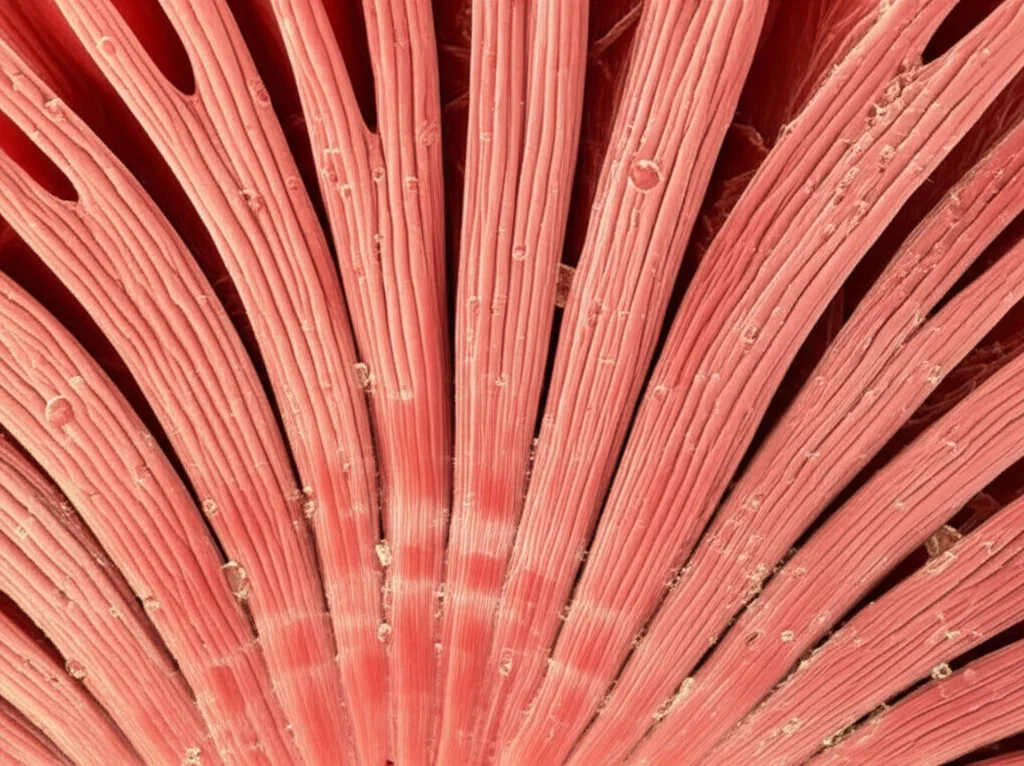
Why might this happen? The researchers suggest it could be related to the fiber and polyphenols in chia. These compounds can form complexes that might interfere with protein digestion, and proteins are needed for cell growth in the villi. On the flip side, the increased crypt depth and mucosal thickness (seen in the cecum, especially with 5% chia) might be due to the fiber increasing gut motility and secretions. Deeper crypts can sometimes mean increased secretion, which isn’t always ideal for performance.
The Long-Term Question
So, we’ve got a mixed bag, right? Initial growth boost, better meat composition, improved blood parameters, more good gut bacteria… but then a slowdown in growth and changes in gut structure, particularly after two weeks of supplementation.
This study used supplementation from day 14 to 35. The results suggest that 5% chia is fantastic for the first couple of weeks, leading to that peak body weight around day 28. But continuing it until day 35 seemed to reverse some of the growth benefits, possibly due to those gut structure changes and maybe the fat reduction effect becoming more dominant.
It seems like the key might be finding the *optimal duration* and *dose*. Maybe a shorter period of supplementation, or cycling it, could maximize the benefits without hitting the point where growth declines.
What’s Next?
This study is a great step, showing the potential of chia seeds as a natural feed additive. It confirms that 5% is a promising level for enhancing growth (short-term), meat quality, blood health, and beneficial gut bacteria. The stable liver/kidney markers are also reassuring.
They even did a taste test on the meat, and people couldn’t tell the difference from regular broiler meat – important for consumer acceptance!
But as the researchers point out, more work is needed. We need to figure out:
- The absolute best dose and how long to give it.
- If it’s financially viable for farmers on a larger scale.
- Exactly *how* chia is influencing growth and those omega-3 levels in the meat (which is a big plus for human health!).
Large-scale trials with different doses and durations are the next logical step.
Overall, I’m pretty excited about the potential here. Using natural ingredients like chia seeds to improve broiler health and produce healthier meat is a win-win. This study gives us a solid starting point, highlighting that 5% chia for a couple of weeks looks particularly promising. It’s a fascinating glimpse into how we can use nature’s pantry to support sustainable and healthy food production!
Source: Springer


