
Cashmere’s Light Switch: How Tiny RNAs Control Goat Hair Growth
Hey There, Let’s Talk About Cashmere!
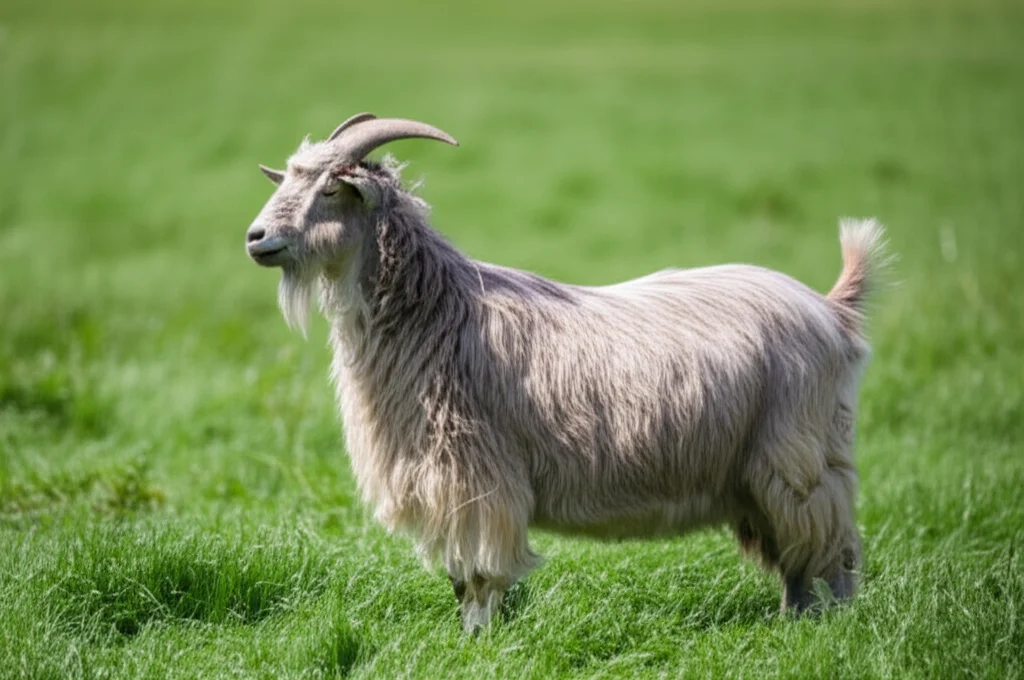
Okay, let’s dive into something pretty fascinating: the secret behind that super soft, luxurious cashmere fiber we all know and love. You know how cashmere goats produce this amazing stuff? Well, it’s not just a year-round thing. Their cashmere growth is totally seasonal, and it’s all tied to the changing lengths of daylight – what scientists call the photoperiod. It’s like their bodies have a built-in calendar synced to the sun!
But here’s the mystery: exactly *how* does this light switch flip the growth on and off at a molecular level? We’re talking about the tiny genetic instructions and regulators inside the goat’s skin. Specifically, there’s a whole class of molecules called long non-coding RNAs, or lncRNAs for short. These aren’t the genes that make proteins (like the building blocks of the hair fiber itself), but they’re like the conductors of an orchestra, telling other genes what to do and when. Their role in this seasonal hair cycle has been a bit of a puzzle.
So, a team of clever researchers decided to take a deep dive. They wanted to figure out which specific lncRNAs are involved in this incredible process, especially how they help the hair follicles transition through their growth cycle in response to light changes. Pretty cool, right?
The Goat Hair Follicle Cycle: A Yearly Affair
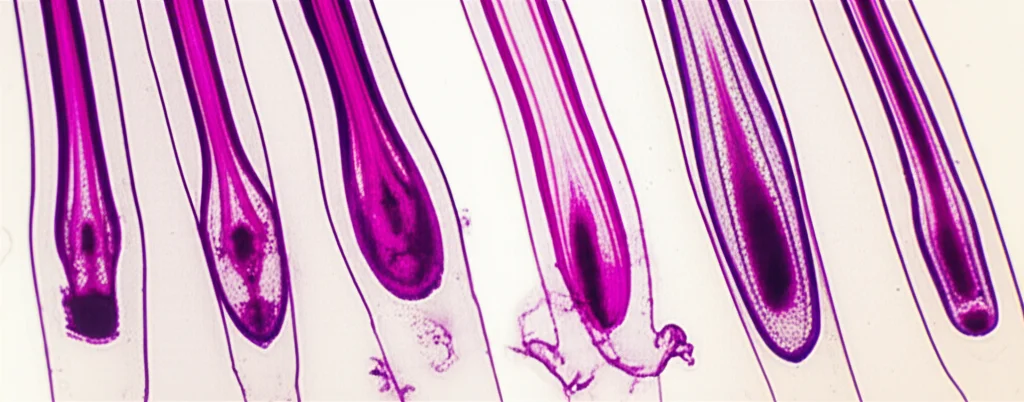
Think of hair growth on your head – it’s pretty random, right? Some hairs are growing, some are resting, some are falling out. But for cashmere goats, it’s a much more synchronized, dramatic event. Their hair follicles, which are these miniature organs in the skin, go through distinct phases:
- Anagen: The active growth phase. This is when the cashmere fiber is actually being produced. For Inner Mongolia Cashmere Goats, this is typically from May to December.
- Catagen: A short regression phase. The follicle starts to shrink and break down. This happens around January to March.
- Telogen: The resting phase. The follicle is dormant, waiting for the signal to start growing again. April is usually the telogen month.
This annual cycle is heavily influenced by environmental cues, and as we mentioned, photoperiod is the big boss here. Shortening days in the fall signal the start of growth, and lengthening days in the spring signal the end. While we know some signaling pathways like WNT and BMP are involved in hair follicle development generally, the specific players, especially lncRNAs, in this light-controlled seasonal cycle weren’t fully mapped out.
Hunting for LncRNAs in Goat Skin
To crack this code, the researchers got their hands on skin samples from 39 Cashmere goats. These samples covered all the different stages of the hair follicle cycle throughout the year. They also included samples from goats where the photoperiod was artificially shortened, to see how that specifically impacts things.
Using some high-tech sequencing magic (called RNA-seq), they analyzed all the RNA molecules present in these skin samples. Their goal was to identify the lncRNAs and see which ones were expressed differently depending on the hair follicle stage or the light conditions. After a lot of data crunching, they identified a whopping 1,591 lncRNAs in the goat skin!
LncRNAs Are Stage-Specific Stars
One of the first cool findings was that these lncRNAs aren’t just randomly hanging around. Many of them showed stage-specific expression patterns. That means certain lncRNAs were much more active during the growth phase (Anagen), while others peaked during the resting phase (Telogen), and so on. This strong correlation between lncRNA expression and the hair follicle stage really suggests they play a crucial role in guiding the cycle.
They looked at the transitions between stages – like going from resting to early growth, or growth to regression. They found thousands of genes (both protein-coding mRNAs and lncRNAs) that were expressed differently during these transitions. The transition from early anagen to anagen (the start of serious growth) showed the most changes, highlighting it as a key period.
Light Speeds Things Up!
Now, what about the light? When they compared the goats under normal light conditions to those with shortened photoperiods, they found hundreds of genes and lncRNAs that were expressed differently. Interestingly, June (which is typically early anagen) showed the biggest response to the shortened light treatment. This suggests June is a critical time when light cues really influence the cycle.
And here’s the kicker: a large percentage (68%) of the genes that responded to the shortened light treatment showed expression patterns similar to the natural transition from early anagen to anagen. This strongly indicates that artificially shortening the light exposure essentially *mimics* or *accelerates* the natural process of entering the growth phase. It’s like tricking the goat’s body into thinking winter (and growth time) is coming sooner!
Finding the “Hubs” of the Network
To figure out which lncRNAs might be the most important players, they used a technique called Weighted Gene Co-expression Network Analysis (WGCNA). Imagine genes and lncRNAs as dots, and lines connecting them show how their expression levels rise and fall together. WGCNA helps find clusters (or “modules”) of molecules that are highly connected and likely working together.
They identified two main gene clusters (modules) that were strongly linked to the hair follicle cycle stages – one associated with early anagen and another with anagen. Within these clusters, they pinpointed 10 “hub” lncRNAs. These are the lncRNAs that were most highly connected to protein-coding genes in the network, suggesting they might be major regulators.

What Are These Hub LncRNAs Doing?
So, what kind of work might these hub lncRNAs be doing? LncRNAs can regulate genes in a couple of ways:
- Cis-regulation: Affecting genes located nearby on the same chromosome.
- Trans-regulation: Affecting genes located far away, even on different chromosomes.
By looking at the genes located near the hub lncRNAs and the genes whose expression patterns were highly correlated with the hub lncRNAs, they started to build a picture of their potential roles. They found that these hub lncRNAs seem to be interacting with genes involved in a bunch of critical cellular processes and signaling pathways known to be important for hair follicle development and cycling. We’re talking about pathways like:
- WNT/β-catenin
- TGF-β
- MAPK
- PI3K-Akt
- JAK-STAT
- …and others like ECM-receptor interaction and Oxytocin signaling.
They also found links to circadian clock genes (like ARNTL2, PER2, CRY1, PER1), which makes total sense given that the cycle is controlled by light! It seems the shortened photoperiod might alter the expression of these clock genes, influencing the hair cycle through the body’s internal timing system.
One particularly interesting finding was the lncRNA lnc-XLOC_018730. It seems to be strongly linked to the gene DLX3, which is known to be important for hair follicle development. lnc-XLOC_018730 might be regulating DLX3 through both cis and trans mechanisms. Imagine this lncRNA acting like a molecular scaffold, bringing regulatory proteins like DLX3 to the right place at the right time to tell the hair follicle genes what to do.
Why This Matters
So, why is all this important? Well, understanding the intricate molecular dance that controls cashmere growth could have practical implications. If we know exactly which lncRNAs and pathways are the key regulators, especially how they respond to light, it might open doors for developing strategies to optimize cashmere production. Maybe we could find ways to encourage the growth phase to start earlier or last longer, simply by manipulating light or targeting these specific molecules (though that’s still a long way off!).
This study really highlights that lncRNAs are not just bystanders; they are active participants in the complex process of hair follicle cycling in cashmere goats, acting as crucial links between environmental cues (like light) and the underlying genetic machinery. They interact with important signaling pathways and even the circadian clock to orchestrate the seasonal growth of that valuable fiber.
Wrapping It Up
In a nutshell, this research gives us a much clearer picture of the molecular players involved in the cashmere goat’s amazing seasonal hair cycle. They’ve identified key lncRNAs and the gene networks they interact with, showing how light can influence these regulators to push hair follicles into the growth phase. It’s a complex system, but studies like this are slowly unraveling the secrets behind one of nature’s most luxurious fibers. Pretty fascinating stuff!
Source: Springer