
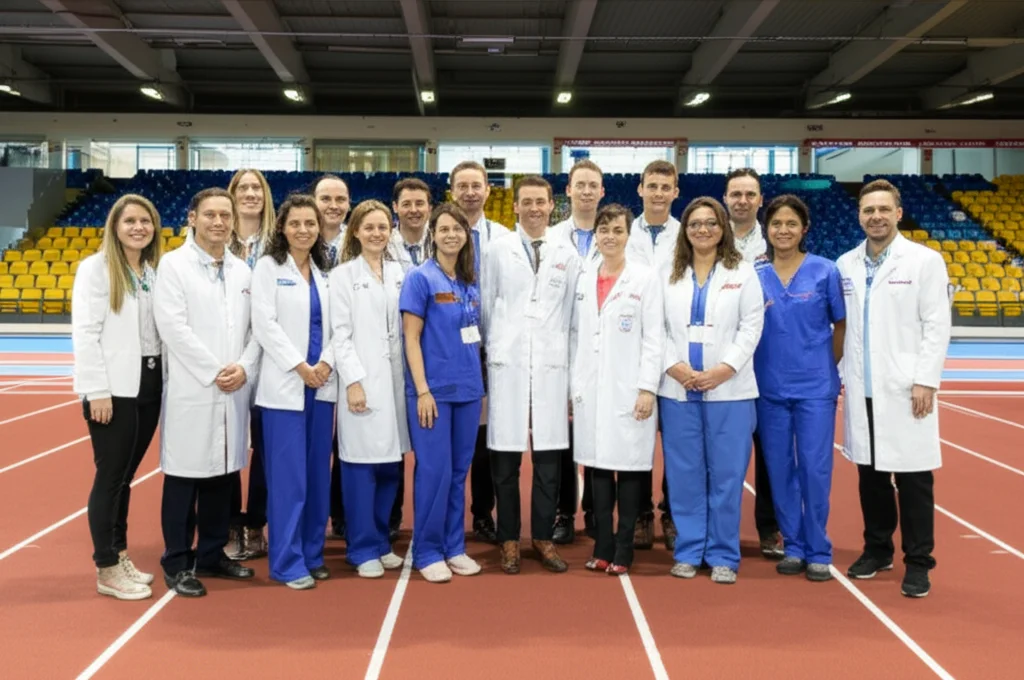
Behind the Medals: Unpacking the Medical Teams at European Athletics
Hey there! Let me tell you about something pretty fascinating I stumbled upon – the folks working tirelessly behind the scenes to keep our amazing athletes on track at the European Athletics Championships. We’re talking about the national medical teams, the unsung heroes, really. You know, the ones patching up injuries, keeping spirits high, and generally ensuring everyone’s in tip-top shape to perform their best.
It got me thinking, and apparently, some smart folks did too: what do these teams actually look like? Who’s on them? Is it all men, or are there women too? And, dare I ask, does having a certain kind of medical team actually make a difference to how many medals a country brings home? Turns out, there’s been a deep dive into just that, looking back at 15 years of European Athletics Championships, both indoors and out, from 2009 right up to 2024. Pretty cool, right?
This study basically pulled back the curtain on who was registered as part of the national medical teams for loads of countries over these championships. They looked at professions (mostly physicians and physiotherapists, it seems), gender, and how many athletes each medical team member was looking after. Then, they cheekily compared that with how many medals the team won per athlete. It’s a bit like trying to find the secret sauce, isn’t it?
Who Was There? The Lay of the Land
So, over this long stretch, 54 different European countries popped up at one or more championships. That’s a whopping 726 country-participations! And guess what? About two-thirds of the time (68.5%, to be exact), these countries showed up with a national medical team. If a country had more than 10 athletes, it was almost guaranteed they had a medical team – like, 98.7% of the time. Makes sense, right? More athletes, more potential for needing a helping hand.
The size of these medical teams varied wildly, from just one person all the way up to 21 for a single country at a championship. On average, though, a country with a medical team had about 8 athletes for every medical team member. But, and this is a big “but,” there was a *huge* range here, from 1 athlete per medical member all the way up to 31!
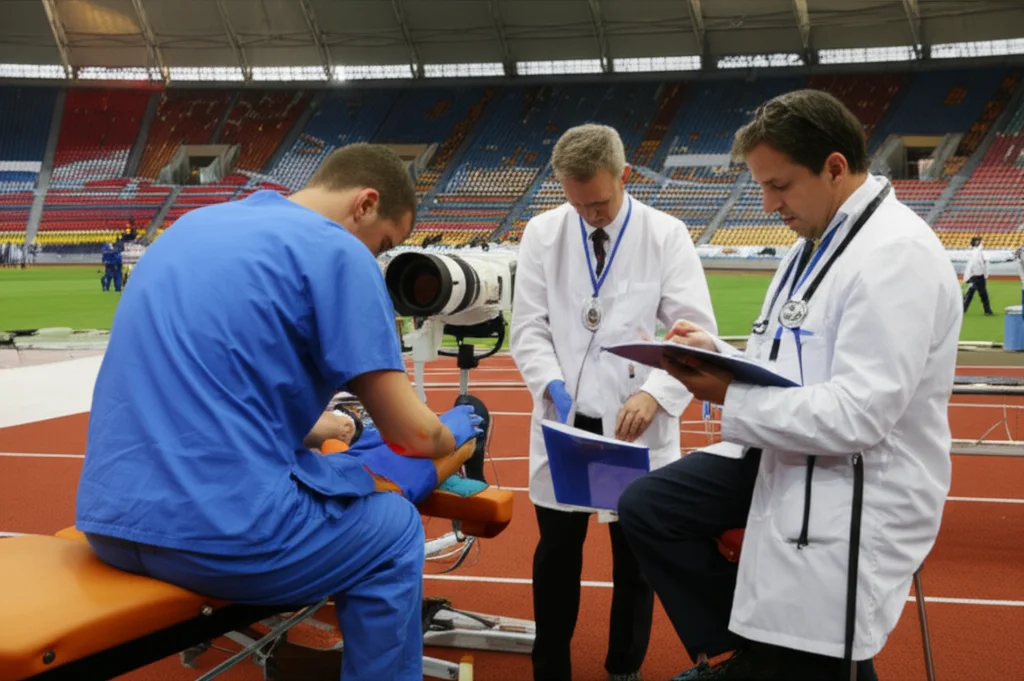
Physios vs. Docs: The Professional Mix
Now, let’s talk about who was actually *on* these teams. The vast majority were physiotherapists – about 71% of the total medical team members across all these years. Physicians made up the remaining 29%. So, for every physician, there were roughly 2 to 3 physiotherapists. It seems like having at least one physiotherapist was super common; if a country had a medical team, 97.2% of the time there was at least one physio there.
When you break it down by how many athletes each type of professional was looking after, the numbers are different. There was a median of 11 athletes per physiotherapist (ranging from 1 to 43!), and a median of 23 athletes per physician (ranging from 3 to 64!). This suggests physios are often the first line of physical support, looking after a slightly smaller group of athletes each.
Interestingly, the study found that bigger teams tended to have a less dramatic difference between the number of physios and physicians. Also, countries where sports medicine is a recognized specialty seemed to have more physicians on their teams. This makes sense – if sports medicine is a proper career path, you’d expect more qualified docs to be involved in elite sports.
And get this, the type of championship mattered too! Outdoor championships, which are usually bigger and longer, had larger medical teams. However, indoor championships actually had *more* medical team members *per athlete* compared to outdoor ones. Maybe because the teams are smaller overall, they can afford a better ratio? Just a thought!
The Not-So-Level Playing Field: Gender Distribution
Okay, let’s talk about something that really stood out: the gender balance, or lack thereof. Looking at all 1,726 medical team members registered over these years, only 20.7% were women. That means roughly *one out of every five* medical team members was a woman. When you look at the median for individual teams, it’s even more stark: about 1 woman for every 9 men. Yikes.
Half of the countries participating with a medical team didn’t have *any* women medical team members at all. Only a tiny fraction (3.8%) had *only* women on their medical team.
The proportion of women was slightly higher among physicians (24.4%) than among physiotherapists (19.2%). Why the difference? The study mentions a few potential reasons, echoing findings from other sports:
- Long, demanding hours, including nights and weekends, which can be tough with family commitments.
- Lack of women mentors.
- Different perceptions of expectations and work-life balance.
- Traditional gender roles (sadly, still a thing).
- The travel commitment – physios might travel more frequently for camps and smaller events than physicians, making it a bigger barrier.
- And, let’s not ignore the possibility, discrimination or a desire to keep teams predominantly male.
It’s clear there’s a significant gap here, and it’s important because athletes might feel more comfortable discussing certain health issues (like sexual health, mental health, or specific women’s health problems) with a medical professional of a specific gender. Having a diverse team seems pretty crucial for providing the best care.

Does More Medical Support Mean More Medals?
Now for the million-dollar question (or maybe medal-winning question): does the medical team setup actually influence performance? The study found a statistically significant link, but it’s a bit nuanced.
They saw a negative correlation between the number of medals won per athlete and the ratio of athletes per medical team member. Stick with me here – this means that when a country had *more* athletes for each medical team member (i.e., the medical team was spread thinner), they tended to win *fewer* medals per athlete. Conversely, when there were *fewer* athletes per medical team member (a more concentrated medical team), they tended to win *more* medals per athlete.
It sounds compelling, right? Like, “Aha! More medics equals more medals!” But hold your horses. The study authors are super careful to point out that performance is incredibly complex and depends on *so* many things (talent, training, funding, luck, you name it). They explicitly say this study *cannot* prove that the medical team composition *causes* a team to win more or fewer medals. It’s just an association they observed. Think of it as a piece of the puzzle, not the whole picture.
Still, it’s a fascinating piece of data. It *suggests* that having better access to medical support *might* play a role in overall team performance, perhaps by keeping more athletes healthy and ready to compete at their peak.
Taking it Forward: What We Learned
So, what’s the takeaway from all this? Well, first off, we now have a much clearer picture of what national medical teams at European Athletics Championships have looked like over the past 15 years. This hasn’t really been documented before, so it’s a great starting point.
While the study can’t tell us the *perfect* way to build a medical team, it gives us some real-world numbers. If you’re a country planning your team, you could look at the median ratios found here – maybe aiming for around 1 physiotherapist for every 11 athletes and 1 physician for every 23 athletes as a rough guide. But remember, the variation was huge, and what works best will depend on the specific country, the athletes’ needs, and the resources available.
It also really highlights the need to address the gender imbalance. Actively working to include more women health professionals on these teams isn’t just about fairness; it’s about providing comprehensive, athlete-centered care that meets everyone’s needs.
Ultimately, putting together an effective medical team is a complex decision. This study gives us a valuable snapshot of current practice and some interesting correlations to consider, all with the big goal of helping athletes stay healthy and perform their best on the world stage.
Source: Springer