
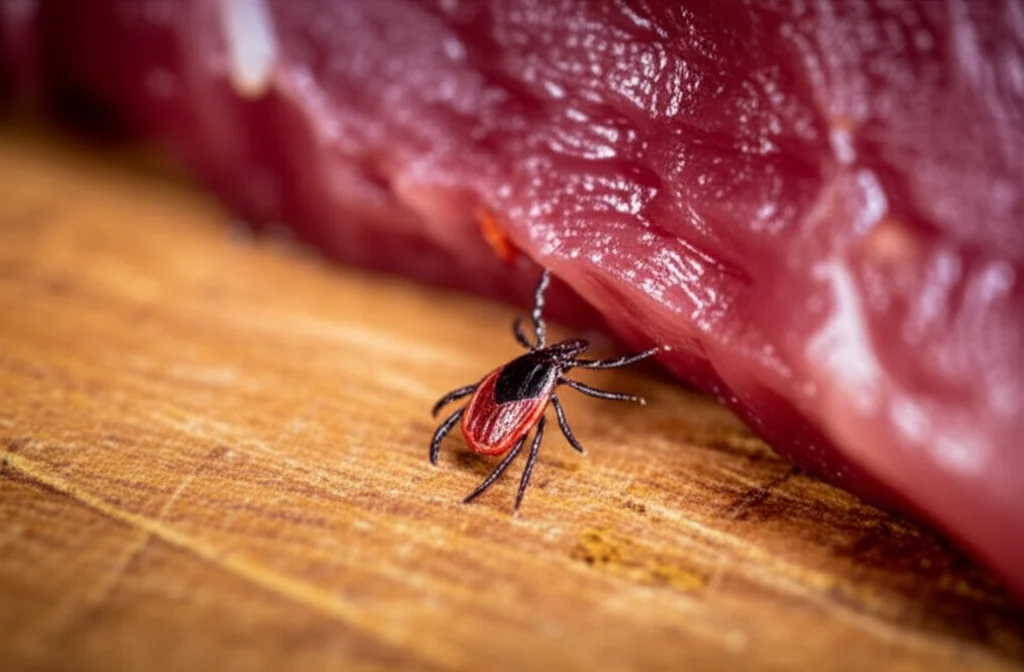
Unpacking Alpha-Gal: The Delayed Meat Allergy Mystery in Sri Lanka
Hey There, Let’s Talk About Allergies!
So, you’ve heard of food allergies, right? Like, eat a peanut and bam! Reaction within minutes. But what if I told you there’s an allergy that’s a bit of a sneaky one? It waits. It hides. And it’s linked to something you might not expect: tick bites and red meat. We’re diving into the world of Alpha-gal syndrome (AGS), and specifically, what we’ve learned about it in a South Asian country, Sri Lanka.
Historically, allergies to red meat were thought to be pretty rare. We mostly heard about primary beef allergy or maybe something called pork cat syndrome. But then came AGS, a whole different beast. It’s a delayed reaction, caused by your body making a specific type of antibody (IgE) against a sugar molecule called galactose-alpha-1,3-galactose – let’s just call it alpha-gal for short. This little sugar is found in most non-primate mammals, and guess what? It’s also in ticks!
The story goes that a tick bite can sensitize you. The tick’s saliva, containing alpha-gal, gets into your system, and your immune system goes, “Whoa, what’s this?” and starts producing IgE antibodies. Then, later on, when you eat red meat (like beef, pork, or lamb), which also contains alpha-gal, those antibodies react, but not right away. Nope, they wait, typically 3 to 8 hours. Sneaky, right?
AGS has been popping up in places like the US, Europe, Australia, Japan, and South Korea. But reports from the Indian subcontinent? Pretty rare, until now. A recent study from Sri Lanka decided to take a closer look, and what they found is super interesting.
Digging into the Sri Lankan Experience
This study reviewed records from an allergy clinic in Sri Lanka, looking at patients diagnosed with AGS between 2018 and 2024. They wanted to figure out who was affected, what their symptoms were like, how they compared between kids and adults, and if there was a link to vaccine allergies. Because, yes, some vaccines contain bovine products (stuff from cows) that can also have alpha-gal.
To be diagnosed with AGS in this study, patients had to have allergic symptoms happening up to 8 hours after eating red meat, positive IgE tests specifically for alpha-gal (and higher than their IgE to the meat itself), and negative IgE to something called BSA (bovine serum albumin), which helps rule out other types of beef allergy.
What They Found: Some Surprises!
Out of nearly 3,000 patients with acute allergic reactions reviewed, 57 were diagnosed with AGS. That’s about 1.9%, which tells us it’s definitely present and causing issues.
Here’s where it gets particularly interesting compared to other parts of the world: most of the patients were children! Sixty-six percent were under 18, and over half (54.3%) were 12 years old or younger. This is quite different from studies in places like the US, where adults tend to make up the majority of AGS cases.
Gender-wise, among the adults, more females were affected (63.2%), which is similar to some findings elsewhere. But among the children, it was pretty much a 50/50 split between boys and girls. The study notes this difference wasn’t statistically significant, but it’s a detail worth noting.
What about the meat causing the trouble? Beef and pork were the most common culprits, implicated in over half and nearly two-thirds of cases, respectively. Mutton was involved for about one-fifth of patients. And yes, even some more exotic meats like venison, sambar deer, and porcupine meat caused reactions for a few unlucky folks.
The Symptoms and Timing
The symptoms they saw were pretty typical for allergic reactions: urticaria (hives), angioedema (swelling), respiratory issues (coughing, wheezing), and anaphylaxis (a severe, potentially life-threatening reaction). Gastrointestinal symptoms like abdominal pain, vomiting, and diarrhea were also common, often happening alongside other symptoms.
One key characteristic of AGS is that delayed onset, right? The 3-8 hour window. This study confirmed that many patients had this delayed reaction. However, interestingly, a significant number (43%) had an earlier onset, within 2 hours, similar to typical food allergies. This early onset was seen in both children and adults in the study. A few patients even experienced both immediate and delayed reactions.
Comparing children and adults, the types of clinical features were generally similar. Both groups experienced urticaria, anaphylaxis, and GIT symptoms. However, when it came to severe anaphylaxis (the really serious kind), 5 out of 6 adults experiencing it were females. The study mentions the sample size for severe cases is small, so it’s hard to draw firm conclusions, but it’s something to keep an eye on.
Tick bites are the usual suspects for sensitization. In this study, a history of tick bites was reported more often in children (56.2%) than adults (33.3%), though this wasn’t statistically significant. It’s worth remembering that tick bites can be painless, so people might not even know they were bitten. The specific tick species responsible for AGS in Sri Lanka isn’t confirmed yet, but species known to cause AGS elsewhere (like Amblyomma and Ixodes) are present on the island.

The Unexpected Link: Vaccine Allergy
Now, here’s another fascinating piece of the puzzle: the link to vaccine allergy. The study identified six patients with AGS who also had allergic reactions to vaccines. These included vaccines like MMR (Measles, Mumps, Rubella), rubella alone, varicella (chickenpox), and the anti-rabies vaccine.
Why would a red meat allergy cause a reaction to a vaccine? Well, some vaccines contain ingredients derived from animals, specifically bovine products like gelatin or bovine serum albumin (BSA). Gelatin, in particular, can contain alpha-gal epitopes – those little sugar molecules that trigger the AGS reaction. The study suggests that the alpha-gal in the gelatin used in these vaccines is the likely culprit for the reactions seen in these AGS patients.
This is a big deal because it means that for someone with AGS, getting certain vaccines could potentially trigger an allergic reaction, including anaphylaxis. The study highlights the importance of asking patients (or their caregivers) about any history of immediate *or* delayed red meat allergy before giving them vaccines containing bovine products.
Wrapping It Up (and Acknowledging the Bumps)
So, what’s the big takeaway from this study? AGS is definitely a real and significant cause of allergy in Sri Lanka. It seems to affect children more often than in other parts of the world, which is a key finding. The symptoms are similar to what’s seen elsewhere, though severe anaphylaxis might be more common in adult females. And importantly, there’s a potential link between AGS and allergies to certain vaccines containing bovine ingredients.
Of course, like any study, this one had its limitations. Testing for all types of red meat wasn’t always possible due to costs. Some testing methods used might be less sensitive than others. The sample size, especially for adults, was relatively small. And they couldn’t do all the fancy tests (like inhibition studies) to confirm the vaccine allergy link with absolute certainty, nor did they skin test with the actual vaccines.
But even with these points, this research gives us crucial insights into how AGS is showing up in South Asia. It tells us that doctors and patients in the region need to be aware of this delayed allergy, especially when considering unexplained allergic reactions or vaccine reactions. It’s a reminder that the world of allergies is complex, and sometimes, a tick bite can lead to a surprising reaction hours after your dinner plate is clean!

Source: Springer