
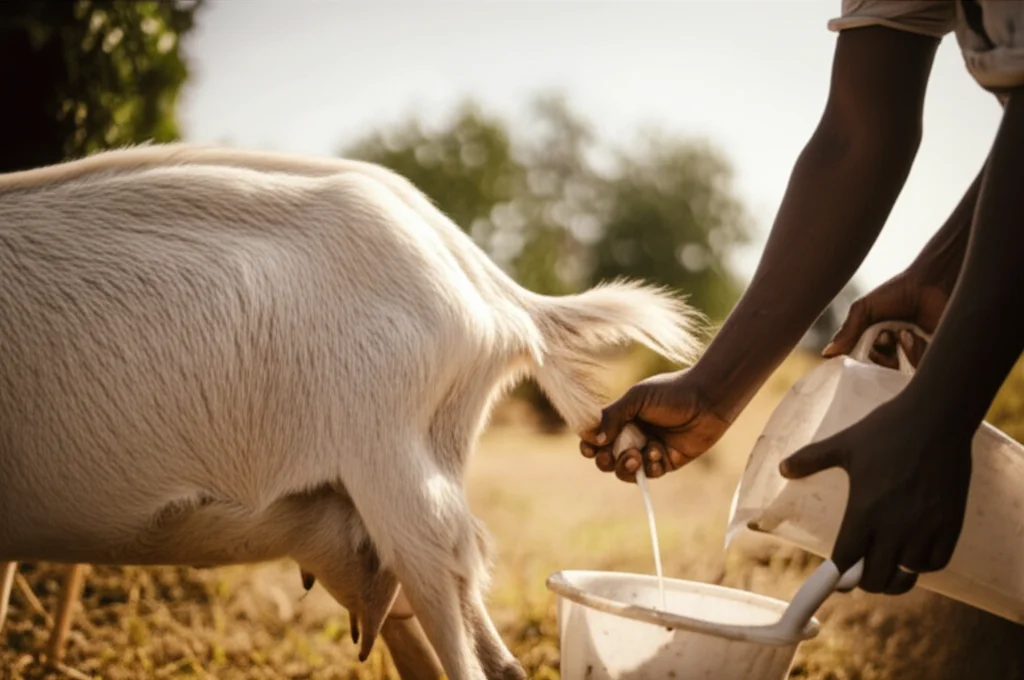
Abergelle Goat Milk Quality: Unpacking Season and Lactation Effects
Hey there, fellow milk enthusiasts and curious minds! Let’s dive into something fascinating: the milk from Abergelle goats in Ethiopia. Now, I’ve been looking into a study that really dug deep into what makes this milk tick, specifically how the time of year (season) and how far along a goat is in her milking cycle (lactation stage) might change its quality. Spoiler alert: the results were a bit surprising!
Goats, as it turns out, are a really big deal in places like Ethiopia. They’re not just cute faces; they’re a lifeline for many smallholder farmers. They provide income, security, and are super adaptable to tough conditions – way more so than some other farm animals we know. While cow milk gets most of the global spotlight, goat milk is gaining traction, and for good reason! It’s packed with nutrients, easy to digest, and even has some cool potential health benefits.
In the area where this study took place, raw goat milk and its products are pretty common. But here’s the catch: raw milk can sometimes carry unwanted hitchhikers – those pesky pathogenic microorganisms. This raises some serious questions about safety. Factors like how the goats are managed, how aware farmers are of hygiene, and available resources can all mess with milk quality. So, evaluating the milk’s quality, especially the microbial side, is super important.
Breed, season, and lactation stage are often thought to influence milk composition and microbial load. Previous studies on *other* goat breeds have shown these factors can matter. But what about the local Abergelle goats in this specific Ethiopian region? That’s exactly what this study set out to uncover.
How We Looked Into It
So, how did they figure all this out? The researchers went to the central zone of Tigray in Northern Ethiopia, where Abergelle goats are common. They visited 40 households, selecting two lactating goats from each, and collected a whopping 240 milk samples early in the morning. They made sure to get samples from goats at different stages of lactation.
They collected data not just from the milk itself but also by talking to the farmers about things like household characteristics, milking hygiene, and how they manage their goats. The goats they studied were typically mature (2-7 years old), had kidded at least once, and weighed around 25 kg.
For the milk analysis, they split each sample: 35ml for the physico-chemical tests and 5ml for the microbiological ones. They used some neat tech like a Lactoscan for things like fat, protein, lactose, total solids (TS), solid-not-fat (SNF), density, and electrical conductivity (EC). An automatic cell counter checked the somatic cell count (SCC).
For the microbial side, they used standard lab methods to look for specific troublemakers like S. aureus and E. coli. This involved plating samples on different types of agar and doing biochemical tests to identify the bacteria.
The data was then crunched using statistical software to see if season or lactation stage had any significant effect on the milk parameters. They also looked for correlations between these factors.
The Physico-Chemical Picture
Now, for the juicy details! The study found something quite interesting: season and lactation stage *didn’t* significantly affect most of the physico-chemical properties of the Abergelle goat milk. This includes fat, protein, SNF, lactose, total solids, density, and EC. That’s right, whether it was the dry season or the wet season, or if the goat was early, mid, or late in her lactation, these core components stayed pretty consistent.
Let’s look at the average values they found:
- Fat: 5.87%
- Protein: 3.46%
- SNF: 9.18%
- Lactose: 5.06%
- Total Solids: 15.05%
- Density: 1029.25 kg/m³
- EC: 5.68 mS/cm
Comparing these numbers to other goat breeds mentioned in the study, the Abergelle milk seems to be quite rich, especially in fat, SNF, and total solids. This high total solids content is particularly noteworthy because it suggests this milk could be excellent for making cheese!
Why this stability across seasons and lactation stages? The researchers suggest it might be down to the Abergelle goats’ natural ability to maintain their body condition throughout lactation. Also, the goats in this area rely heavily on local browse plants, many of which are evergreen. This means they likely get a pretty consistent diet year-round, which could help keep milk composition stable. Only a small number of households provided extra feed.
Interestingly, while not statistically significant overall, fat and protein were slightly higher in the dry season. The study speculates this could be linked to water scarcity in the dry season, which can reduce milk yield. Lower milk yield is often associated with a concentration effect, making the remaining milk components like fat and protein appear higher.
However, the EC finding (5.68 mS/cm) was above the threshold (5.20 mS/cm) often used to indicate mastitis in goat milk. This suggests that udder health might be a concern in the study area.

Looking at the Microbes
Now, let’s talk about the less desirable stuff – the microorganisms. The average somatic cell count (SCC) was 286.69 × 10³ cells/mL. This number is right around the threshold (300 × 10³ cells/mL) that also points towards potential mastitis issues in the goat herd.
Just like the physico-chemical traits, neither season nor lactation stage had a significant statistical effect on SCC or the presence of specific bacteria.
However, the presence of bacteria itself was significant. A notable percentage of the samples tested positive for pathogenic organisms:
- S. aureus: 30.84% of samples were positive across lactation stages, and 26.67% across seasons.
- E. coli: 20.84% of samples were positive across lactation stages, and 20.42% across seasons.
Finding these pathogens, especially at these levels, is a big deal. It strongly suggests that the raw milk in the study area is generally of low microbiological quality. Consuming such milk raw could pose health risks to people. The researchers point out that this likely reflects unhygienic milk production practices and the potential presence of mastitis in the goat herds.
Correlations and the Big Picture
While season and lactation stage didn’t independently shake things up much, the study did find some interesting correlations between the milk components themselves. Total solids, for instance, showed a strong positive correlation with both fat (r = 0.837) and SNF (r = 0.632). This makes sense – if you have more fat and SNF, your total solids will be higher. Lactose had a weak negative correlation with density (r = -0.344).
The overall takeaway? The Abergelle goats’ milk composition seems pretty resilient to changes in season and lactation stage, possibly thanks to their breed characteristics and consistent diet from browse plants. That’s the good news!
The less-than-great news is the microbiological quality. The high EC, SCC, and the presence of *S. aureus* and *E. coli* indicate that hygiene and husbandry practices need some serious attention. Improving these practices is crucial for making the milk safer and higher quality, especially since raw consumption is common.
So, while the natural factors like season and lactation stage aren’t the main drivers of quality variation here, human practices around hygiene are key. Routine monitoring of both physico-chemical and microbiological parameters is definitely needed to protect the health of the people consuming this milk.
It’s a reminder that even with a hardy, adaptable breed like the Abergelle goat, the journey from the udder to the cup requires care and attention to detail, especially when it comes to cleanliness!
Source: Springer